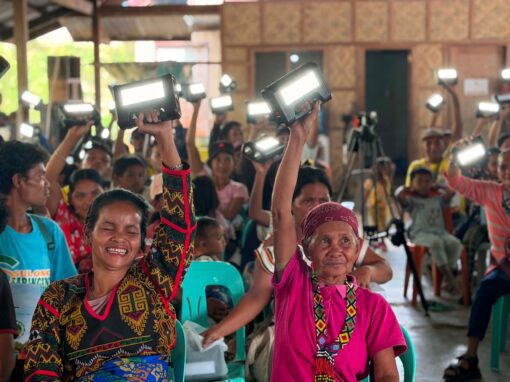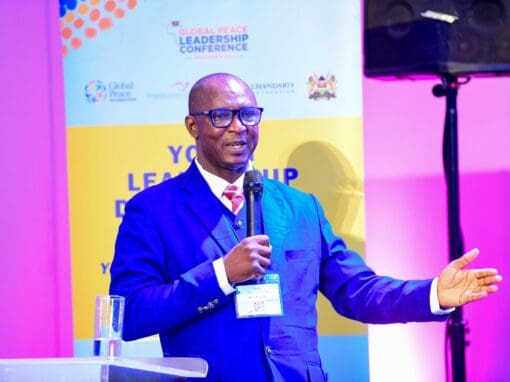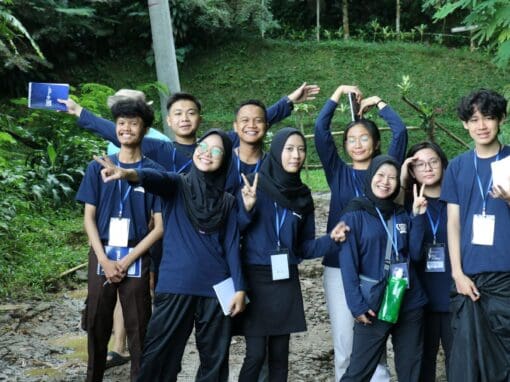
A solar light can change what happens after sunset. A rooftop garden can change what a family eats. A new farming method can change how a village earns a living. A trusted channel between residents and police can change how a community responds to insecurity.
But the most significant change happens when people begin to see these solutions as theirs.
Across Global Peace Foundation’s (GPF) work in communities from Tanzania and the Philippines to Malaysia and Nepal, this can be seen in what happens after a new resource, skill, or opportunity reaches a community. People adapt it, build on it, connect with others, and carry it forward.
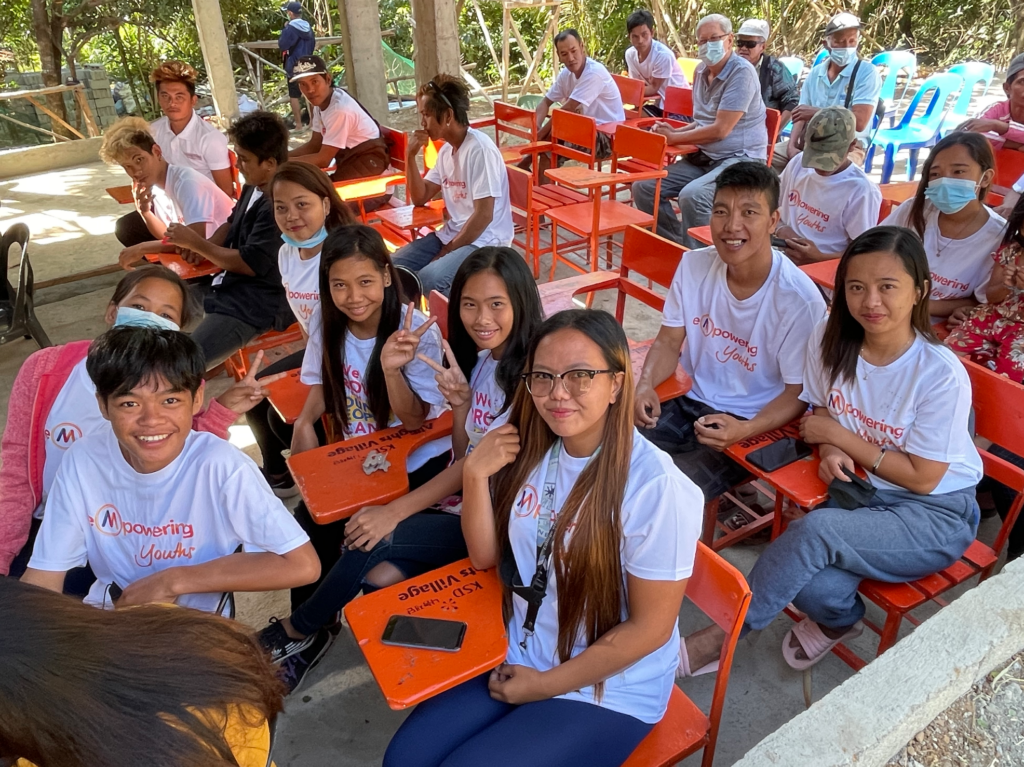
Volunteers and locals come together for the All-Lights Village project in Sitio Tamale.
In the Philippines, the All-Lights Village initiative began with solar lighting for communities without reliable electricity. In Sitio Tamale, Nueva Ecija, the work grew into livelihood development, including an organic mushroom production center. When the center was handed over to the community, local leaders and youth representatives formally accepted responsibility for it and committed to its future.
The significance of the handover was not simply that a building had changed hands. The community now had an asset around which it could organize economic activity and create opportunities for its members. In later All-Lights Village work, communities have continued developing livelihoods around organic farming, mushroom production, handicrafts, and small businesses while building connections with government agencies and other partners.
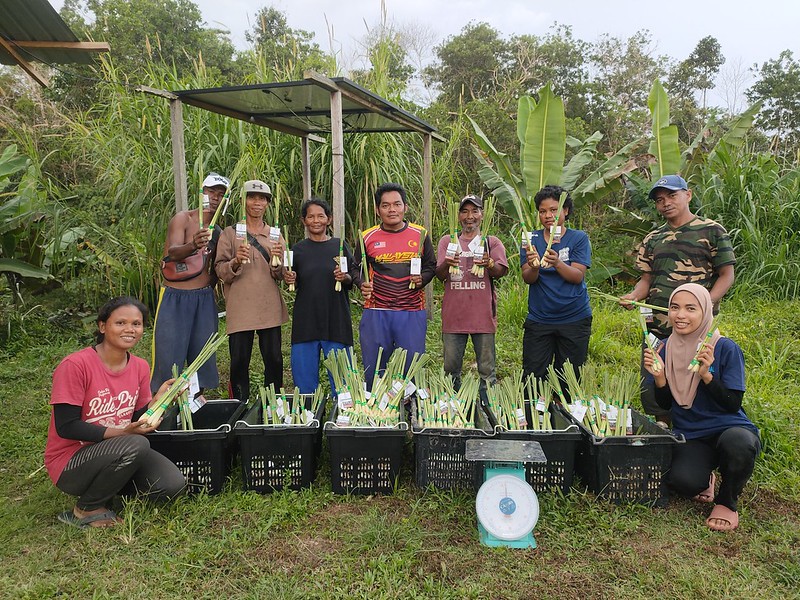
The villagers of Kg. Bukit Biru are preparing lemongrass for distribution and sale.
The same approach appears in GPF’s work with Orang Asli communities in Malaysia. In Kg. Bukit Biru, families who had depended on a nearby landfill after losing access to traditional sources of livelihood began exploring regenerative farming. GPF Malaysia worked with villagers to introduce syntropic agroforestry, while farmers learned through practical experience on their own land. Within a year, farms were producing vegetables and fruits, and the creation of the Kebun Amai marketplace helped farmers reach customers beyond their villages.
The work has since expanded. GPF Malaysia reports that its regenerative farming initiative has reached 21 villages and trained 126 farmers, with farmers exchanging knowledge and developing new ways to process and sell their produce.
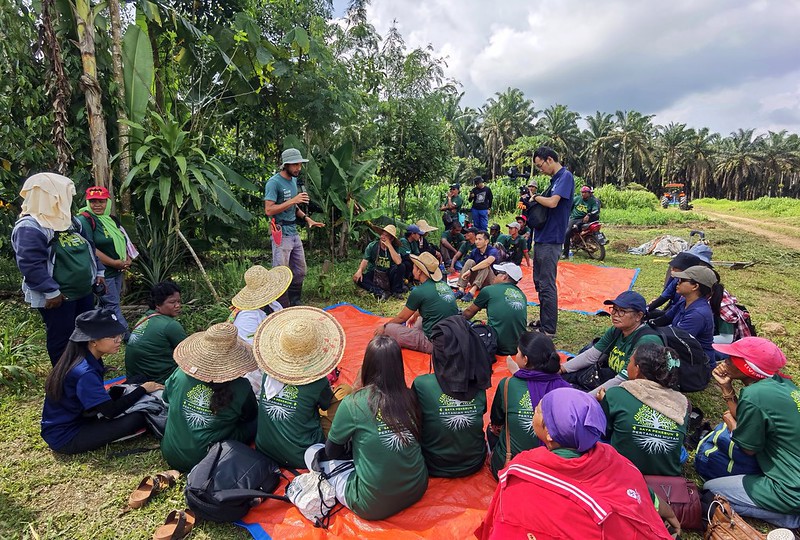
Orang Asli farmers learning about syntropic farming at A Little Wild, Kota Tinggi
What makes this significant is the knowledge that stays with the farmer. A technique learned in one field can be tested in another. A successful harvest can encourage another family to begin farming. Experience becomes something the community can share rather than something that remains with an external trainer. In Kathmandu, Nepal, the Green Homes: Green Kathmandu initiative brings this approach into the household. Families have learned rooftop gardening, rainwater harvesting, waste management, upcycling, and sustainable farming. Participants have applied these skills in their homes and businesses, turning environmental practices into everyday habits and, in some cases, additional income.
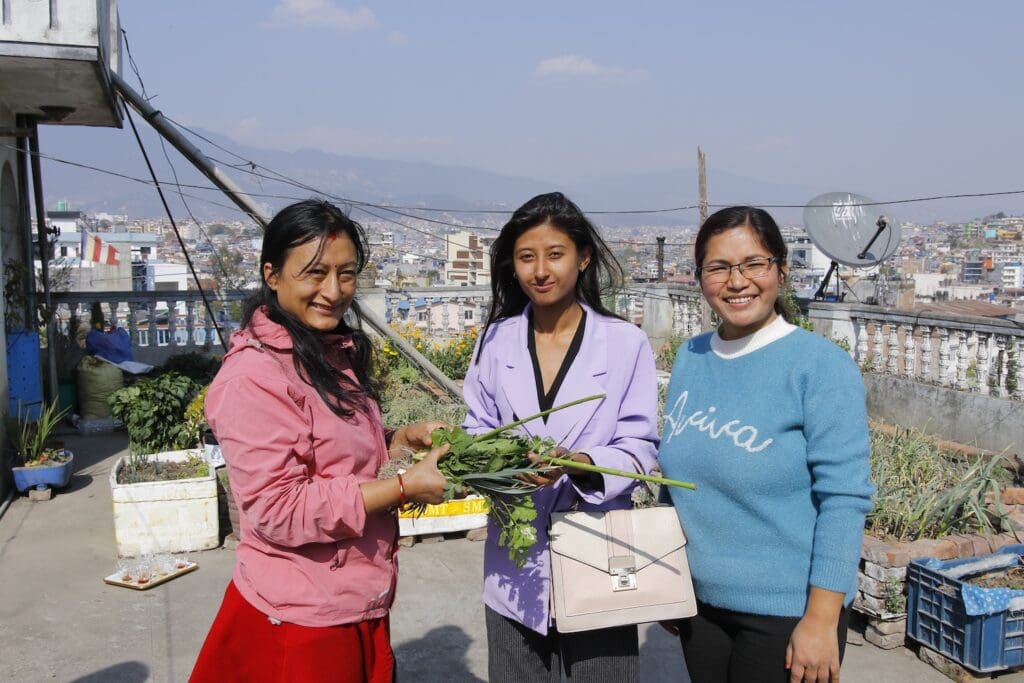
On the rooftop garden of participants of the Green Homes: Green Kathmandu program.
The initiative has continued to grow through women, students, educators, and community partners. In 2026, participants were learning to transform discarded materials into useful products, with many demonstrating that they could independently reproduce the products taught during training.
The value of this model is visible at the household level. A compost bin is useful because a family uses it. A rooftop garden matters because someone tends it. A new skill creates value when someone puts it into practice and teaches another person. The EKN Project in Tanzania takes the same thinking into peacebuilding. Through community policing activities, radio programs, and mobile communication, residents were connected with community mobilizers, local leaders, and police. The technology provided channels for communication, but those channels became useful because people used them to report concerns, exchange information, and work with local authorities.
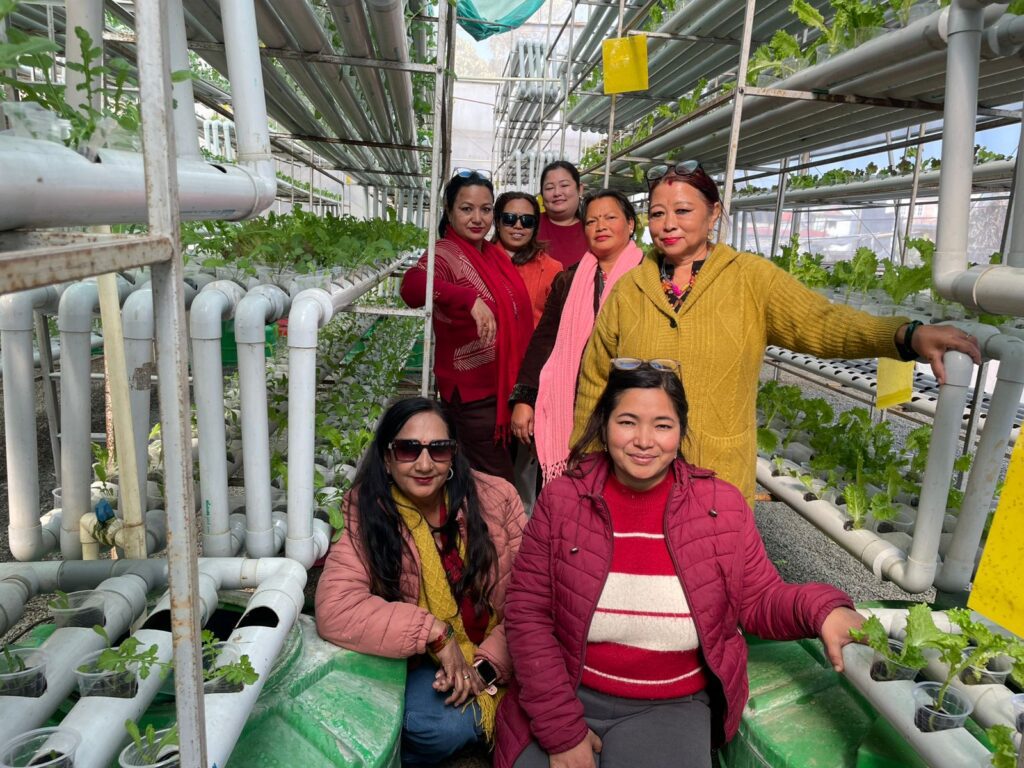
Participants at the rooftop farming training
Here, ownership means more than possessing a physical asset. It means having a role in maintaining the relationships that keep a community safe.
This has important implications for organizations working in development and peacebuilding. Their strongest contribution may not be the project that bears their name. It may be the local capacity that remains when their direct involvement becomes smaller.
GPF’s community-driven approach places local stakeholders at the center of this process, working alongside communities, faith leaders, government institutions, and other partners. The organization can bring resources, technical knowledge, and connections, but communities bring something equally important: knowledge of their own circumstances and the relationships needed to make solutions work.
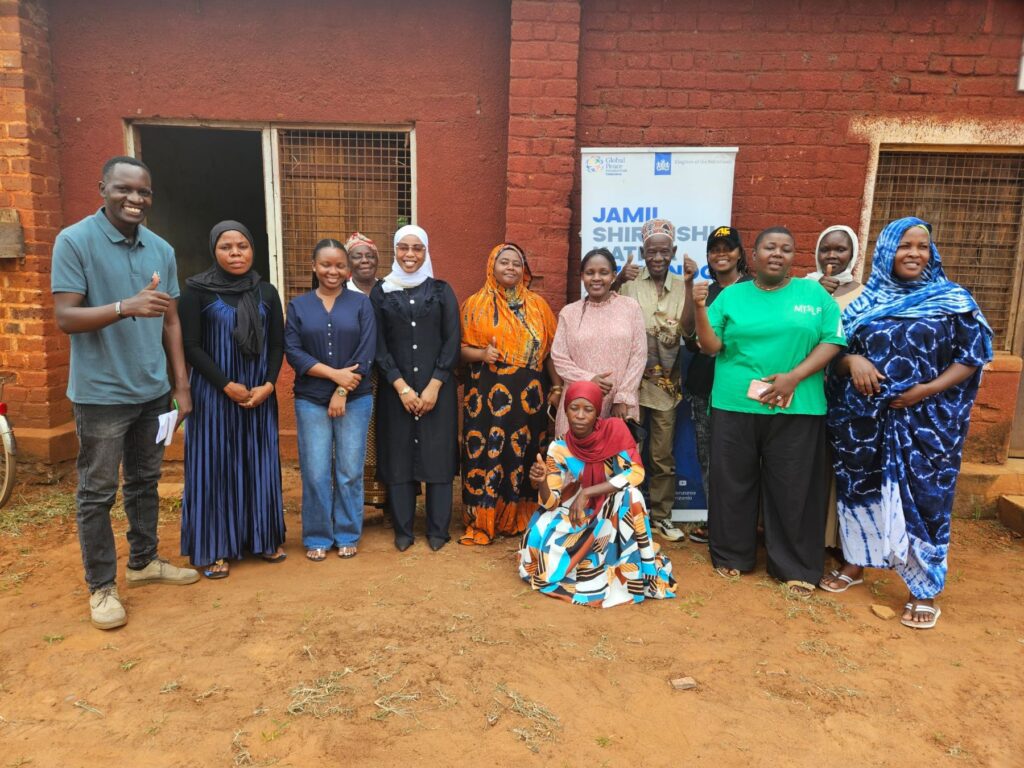
Participants of the EKN Project monitoring visit
That changes how success is understood. A successful livelihood project is not simply one that distributes equipment. It is one where people can operate, improve, and expand what they received. A successful environmental initiative is not simply one that delivers training. It is one where families continue the practices and share them with others. A successful peacebuilding initiative is not simply one that convenes people. It is one where relationships continue to solve problems after the meeting is over.
Local ownership gives development its continuity. It allows a livelihood center to become a community enterprise, farming knowledge to move from one household to another, sustainable practices to spread across neighborhoods, and residents to become active partners in peace. When communities have the space to shape solutions, strengthen relationships, and carry their own ideas forward, change becomes part of the community’s fabric. That is how local ownership turns participation into lasting capacity and gives peace the roots to endure.
Explore how Global Peace Foundation puts community-driven peacebuilding into practice by placing local people at the heart of building more peaceful, resilient communities: GPF | Community-driven Peacebuilding