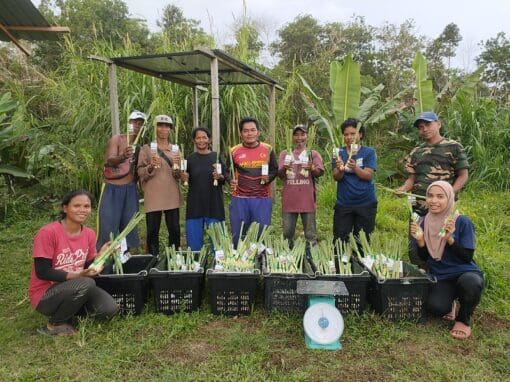
Community leaders participate in a workshop on conflict analysis hosted by Global Peace Foundation.
Peace shapes the quality of life in every society. It creates the conditions for people to raise families, pursue opportunities, work together, and contribute to the communities around them. When peace is present, it can be easy to take these conditions for granted. When they begin to weaken, their value becomes much clearer.
This is what makes the question “What does it mean to invest in peace?” relevant to everyone.
The United Nations’ 2026 theme for the International Day of Peace, “Invest in Peace: For Everyone, Everywhere, Every Day,” puts attention on something easy to overlook: the fact that peace requires more than a desire for an end to violence. It requires people and communities to develop the relationships, values, and capacities that make peaceful societies possible.
For most people, this does not begin with a large financial contribution or a formal peacebuilding program. It begins with what we choose to strengthen around us.
Peace begins with what we practice

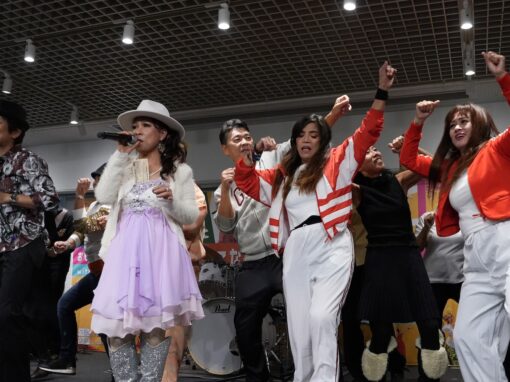
Japanese families for Peace Begins in the Home
Consider the home. Long before children encounter political debates, social tensions, or international conflicts, they learn from the relationships around them. They watch how adults disagree, whether apologies are offered, whether people listen to one another, and how decisions are made.
A parent who teaches a child to express frustration without insulting others is already laying a foundation for peaceful relationships. So is a family that encourages children to ask questions about people who are different from them rather than making assumptions. These seemingly ordinary experiences influence how young people understand respect, responsibility, empathy, and disagreement.
The same principle extends into the community. A disagreement between neighbors can become a lasting source of resentment, or it can become an opportunity to find common ground. A community meeting can reinforce existing divisions, or create space for people who rarely interact to work towards a shared solution. The difference often comes down to whether people are willing to invest the time and effort required to build trust.
Small choices can strengthen or weaken social cohesion
Peace is also shaped by what happens when nobody is watching.
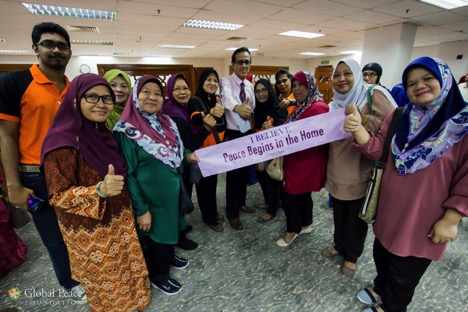
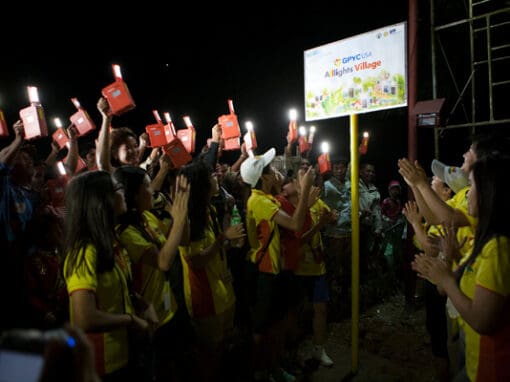
Families show their support for the Peace Begins in the Home campaign launched in Malaysia
Every day, people make decisions about what information to share, whose experiences to take seriously, and how to respond when confronted with opinions they disagree with. A misleading message forwarded without checking can deepen suspicion between groups. A stereotype repeated often enough can become accepted as fact. A hostile response can turn an ordinary disagreement into something much harder to repair.
The opposite is equally true. Pausing before reacting, checking information before sharing it, listening to someone with a different perspective, and refusing to reduce an entire group to a single stereotype are practical contributions to a healthier social environment.
These actions may not look like traditional peacebuilding. But they influence whether the people around us experience difference as something that can be navigated or something that must be fought over.
Communities need people who choose to participate
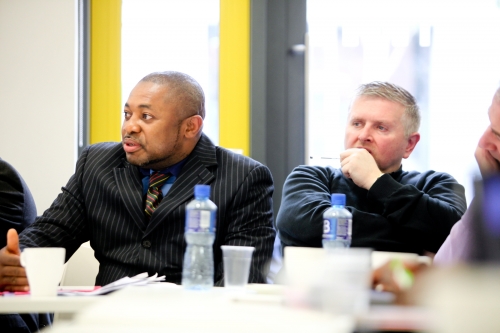
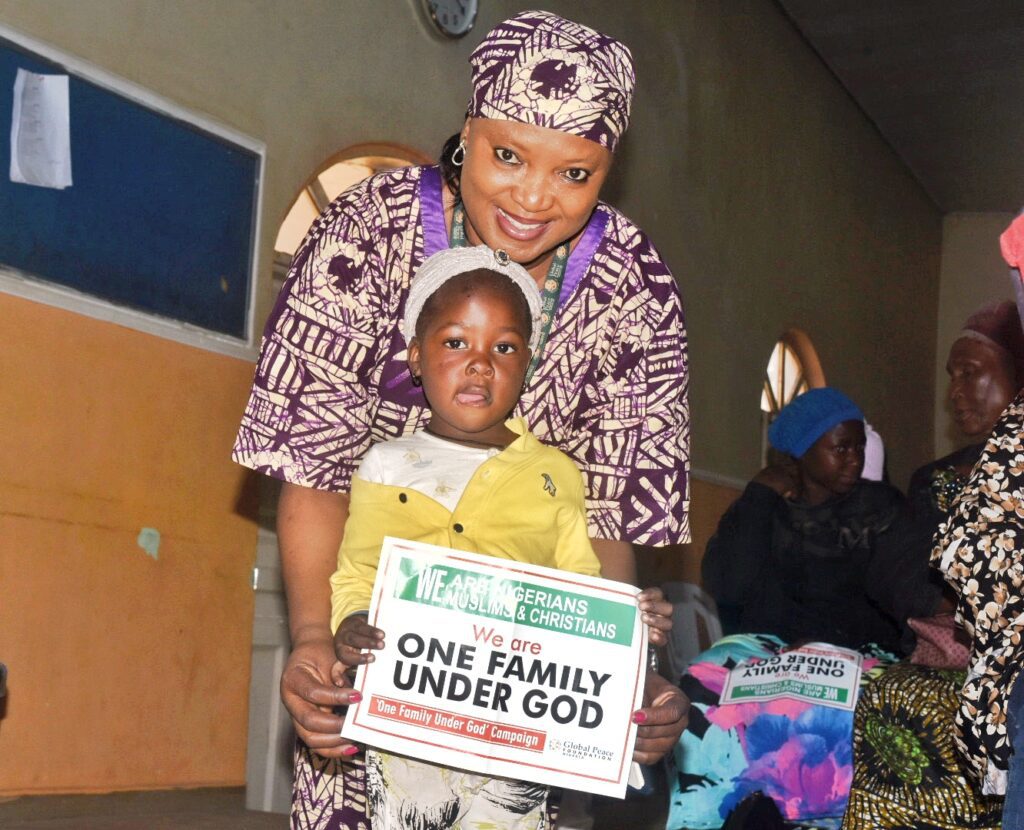
Participants from Nigeria, the United Kingdom, the Republic of Ireland and the United States at the forum ‘Cross-community Engagement: The Role of Faith Leaders in Conflict Resolution and Peace-building’
Investing in peace also involves moving beyond the expectation that someone else will solve community problems.
A young person who organizes peers around a local issue, a teacher who creates space for respectful dialogue, a neighbor who brings people together to address a shared concern, or a community leader who includes voices that are often overlooked is strengthening the ability of people to work together.
This matters because resilient communities are not defined by the absence of disagreement. They are defined by their ability to handle disagreement without allowing it to destroy relationships. That capacity does not appear automatically when a crisis begins. It develops through repeated opportunities to cooperate, communicate, and solve problems together.
Peace deserves attention before crisis demands it
There is a practical reason to take this seriously. By the time violence erupts, the underlying problems are often much harder to address. Trust may already have broken down. Relationships may have become deeply divided. Misinformation and fear may have taken hold. Preventing that deterioration requires attention before the crisis.
For individuals, this can mean strengthening relationships and modeling constructive ways of dealing with difference. For families, it can mean raising children who understand that disagreement does not require hostility. For schools and community organizations, it can mean creating spaces where people learn to collaborate across differences. For all of us, it can mean paying greater attention to the environments we help create through our words, choices, and actions.
Where will you invest?
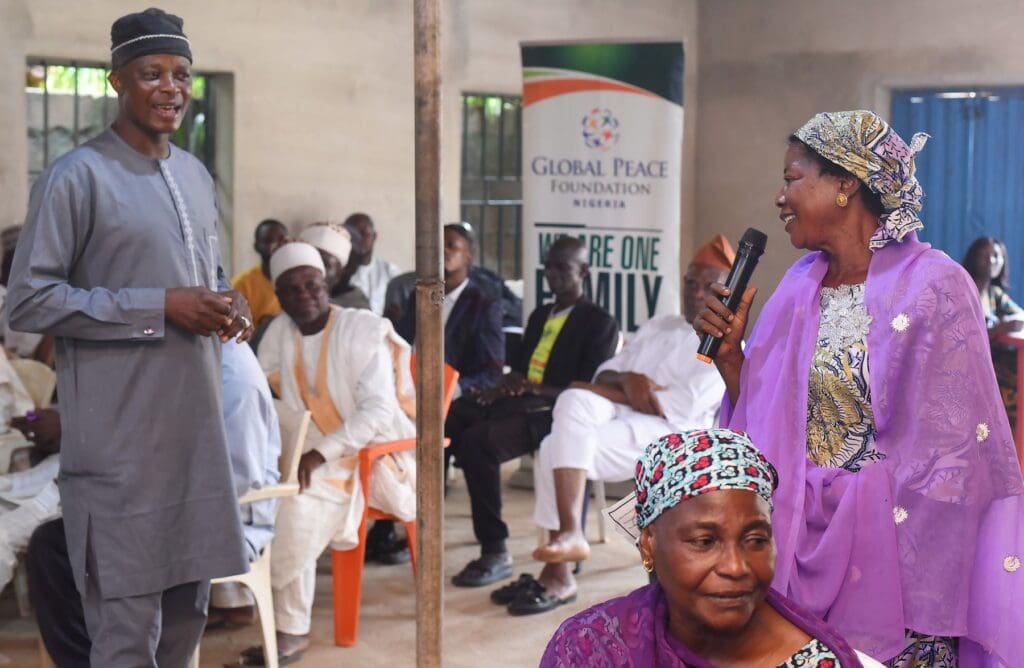
GPF Nigeria hosts peacebuilding dialogue forums to foster peace in Kaduna.
The 2026 UN theme offers a useful starting point because it brings peace out of the realm of distant institutions and into everyday life. Everyone, everywhere, every day includes the places where each of us has influence.
Look at your own sphere of influence. What happens in your home when people disagree? How are differences discussed in your workplace or community? What do you share online? Who is being left out of conversations and decisions? Where could you help create greater trust or cooperation?
Your contribution may be a conversation you choose to have, a relationship you choose to repair, a young person you choose to encourage, a community initiative you choose to support, or simply a harmful narrative you choose not to pass on.
Peace is built through choices that accumulate, so this year, rather than asking only what the world needs to do for peace, ask a more immediate question: What can I strengthen, repair, support, or change in the place where I am?
That is where investing in peace begins.
Personal action can also support the wider work of building peace. Global Peace Foundation (GPF) works alongside communities, faith leaders, and local officials to build dialogue, strengthen trust, and develop locally led approaches to addressing division and conflict. Explore GPF’s community-driven peacebuilding work, and consider supporting this work through a donation. Your contribution can help strengthen the local relationships, leadership, and community capacity that make lasting peace possible.