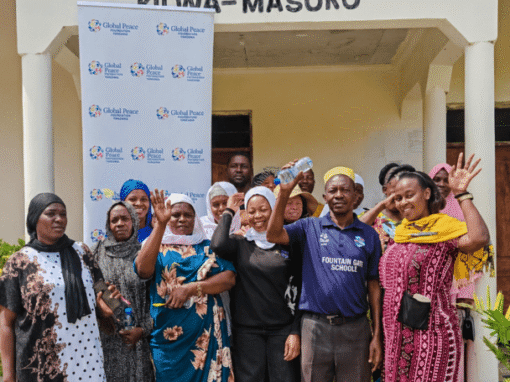
Where does peace truly begin?
Does it begin when world leaders come together for talks, when negotiations happen, and agreements are signed? Or does it begin when people forgive one another, listen to one another, and choose to look beyond their differences?
Talks and agreements matter. But lasting peace is also built much closer to home: in our everyday lives, in our communities, in small interactions, acts of kindness, and moments of understanding that help people live together with dignity and trust.
As UN Secretary-General António Guterres says, “On this International Day of Peace, let us all be inspired by the courage of those who champion peace in neighborhoods, classrooms, and communities. And let’s call on world leaders to invest in a peaceful future for all people.”
So, how can we start? How can we build peace in our everyday lives?
Perhaps it begins with simple choices: a kind word, a listening ear, a helping hand, or the willingness to understand someone different from us. These may seem small, but they can become the beginning of something much bigger.
This International Day of Peace, the Global Peace Foundation (GPF) invites us to look closer to home and recognize the many ways we can contribute to building more peaceful communities. Here are five simple, practical ways to begin.
1. Create Spaces for Dialogue

Participants sign in at the Hayin Banki Peace and Reconciliation Committee inauguration ceremony.
Peace begins when people are willing to listen to one another, even across differences. Differences are natural. People may differ in views, backgrounds, cultures, and experiences. The goal is not to erase these differences but to create spaces where people can express them openly, respectfully, and peacefully.
GPF in action: In Hayin Banki, Kaduna, Nigeria, GPF Nigeria partnered with Bethel Candle of Hope for the Vulnerable to establish the Hayin Banki Peace and Reconciliation Committee. The initiative brought together people from different faith communities for conflict-resolution training, dialogue, and community activities. More recently, Christian and Muslim leaders and residents
gathered for an interfaith iftar, creating an opportunity for direct interaction, shared experience, and relationship-building.
Start small: The next time someone sees an issue differently from you, listen to understand before responding. Ask questions, stay curious, and give the conversation room to breathe. Sometimes, peacebuilding begins by making someone feel heard and understood.
2. Give Young People a Voice
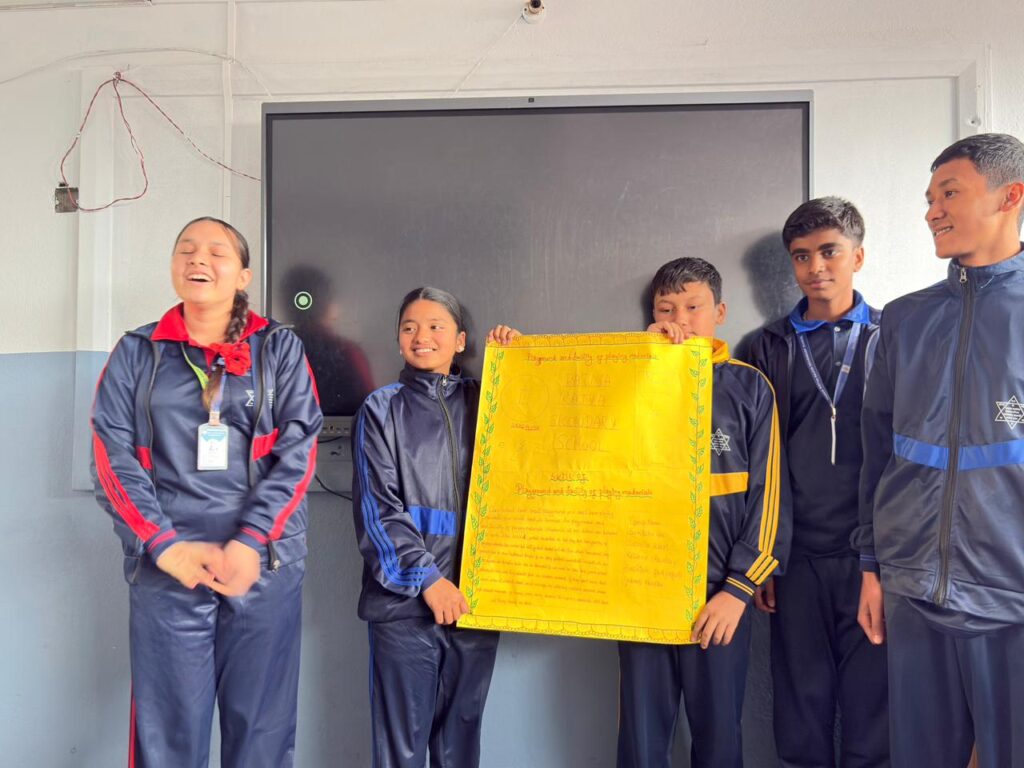
Students at Ratna Rajya School practicing public speaking, prototyping, and idea pitching.
Young people are not only the leaders of tomorrow; they are contributors to peace today.
They bring fresh perspectives, creativity, energy, and the courage to imagine a future beyond existing divisions. When young people are given meaningful opportunities to participate, lead, and contribute ideas, they become active partners in shaping more peaceful communities.
GPF in action: GPF Nepal is raising the next generation of peacebuilders through its flagship Project Saksham. Through the program, youth develop leadership skills rooted in peacebuilding, responsibility, teamwork, humility, and service while creating solutions to real-life community issues.
Start small: Listen to young people. Take their ideas seriously. Give them a voice in the conversation and real opportunities to lead.
3. Strengthen Families
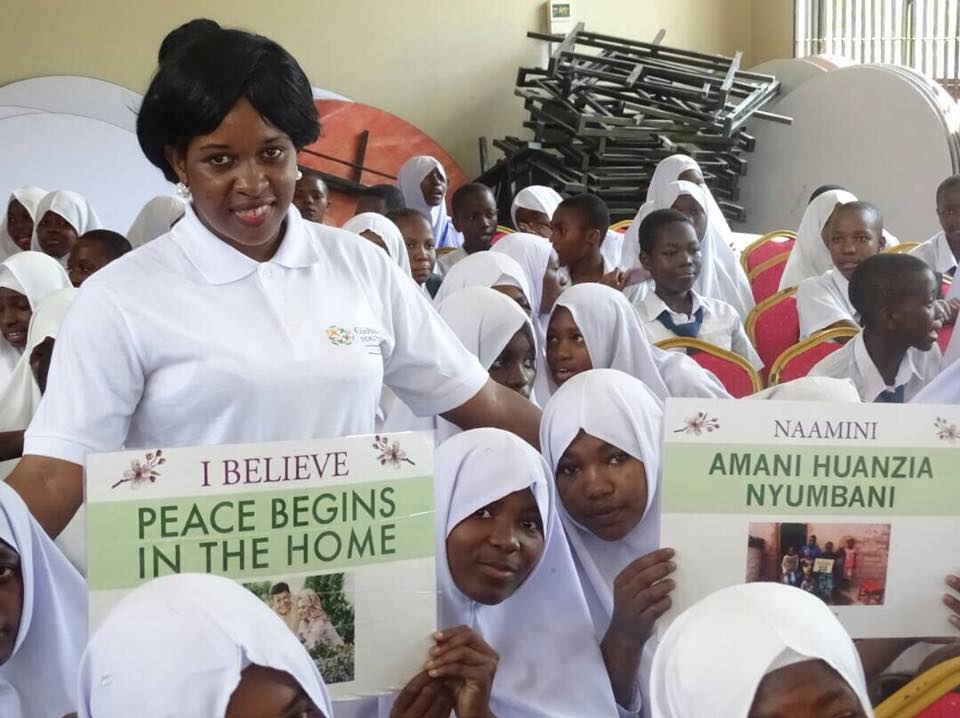
Youth at the Tanzania leadership summit show support for the global Peace Begins in the Home campaign
Families are where many of our first lessons are learned. A family that encourages openness, patience, and understanding nurtures individuals who carry those values into schools, workplaces, and wider communities.
Peace in families does not mean families never disagree. It means learning how to disagree without allowing differences to break relationships.
GPF in action: GPF and Global Peace Women (GPW) believe that Peace Begins in the Home. Over the years, GPF and GPW have advanced programs that strengthen peacebuilding in families. One example is the Global Network Call, “The Power of Family in Peacebuilding: Why Peace Begins in the Home?” The program brought people from around the world into meaningful discussion on the role of families in creating peaceful communities.
Start small: Peace at home can be as simple as putting aside our phones, sitting together, and asking, “How are you?” Making time to listen, acknowledge different perspectives, and say “I’m sorry” or “I understand” can strengthen relationships over time.
4. Care for the Spaces We Share
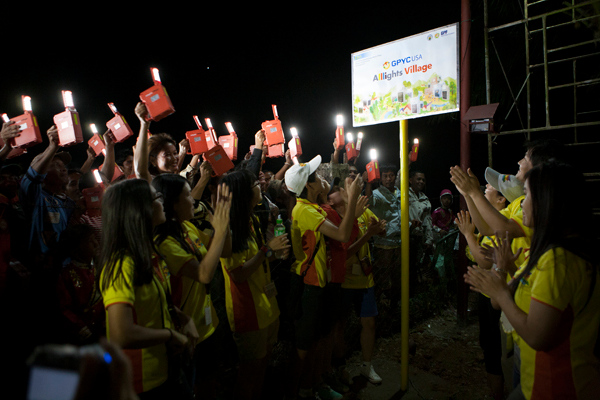
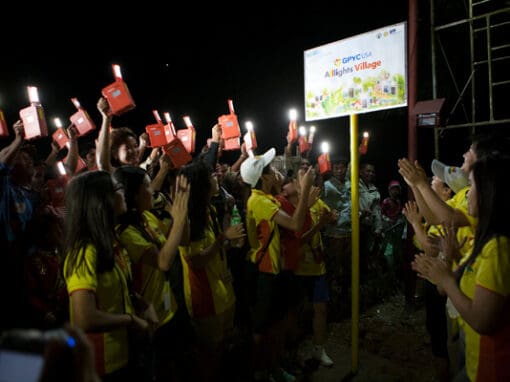
Villagers hold up solar lanterns donated by the All Lights Village project.
Our streets, parks, schools, community centers, and shared spaces belong to all of us. The way we care for them reflects our shared responsibility and respect.
Keeping shared spaces clean, safe, and welcoming does more than improve our surroundings. It creates opportunities for people to come together and develop a stronger sense of belonging.
GPF in action: GPF Philippines’ All-Lights Village Project demonstrates this kind of community-driven development. What began with solar lighting and access to electricity has grown into broader community engagement, encouraging local ownership, environmental stewardship, and shared spaces that serve families, learners, and teachers while creating opportunities for connection, education, and livelihood.
Start small: Look around your community and ask, “What is one thing I can do to make this shared space better for everyone?” It may be a neighborhood clean-up, tree-planting activity, or community project. Invite someone to join you. What begins as an effort to improve a place can become an opportunity for people to work side by side, get to know one another, and build trust.
5. Build Partnerships
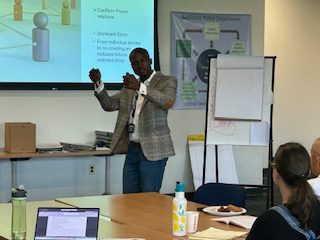
Prof. Baissou Sissoko leads an interactive session on conflict, peace, and restorative approaches.
No individual, organization, or community has every answer. Schools, businesses, youth groups, civil society organizations, local authorities, and residents all bring different experiences and resources.
When these strengths come together around a shared purpose, small efforts can become collective action. We do not have to agree on everything to work together on something that matters to everyone.
GPF in action: GPF’s partnership with the University of Baltimore for the Baltimore Cross-Community Reconciliation Project shows how institutions can combine their strengths for peacebuilding. The partnership brought residents from different racial and social backgrounds together for structured dialogue, relationship-building, and reconciliation. It later expanded into educational initiatives, applied research, leadership development, and community engagement, showing how collaboration can turn shared values into sustained peacebuilding efforts.
Start small: Identify one issue in your community and ask, “Who else cares about this?” That question could be the beginning of a meaningful partnership.
Peace Starts Where People Choose to Practice It
Peacebuilding can seem too large for one person. But perhaps we underestimate the weight of everyday choices.
Beyond treaties and agreements, peace also depends on how people treat one another after the meeting ends, how communities respond when differences surface, and whether we choose to repair what has been strained instead of walking away from it.
Peace is not only something we ask leaders to protect. It is something we practice in the places where we already have influence: our homes, our schools, our workplaces, our neighborhoods, and our communities.
This International Day of Peace, we do not need to wait for the perfect moment or the perfect plan. We can begin with one action: one conversation handled with more care, one young person encouraged to lead, one family relationship strengthened, one shared space cared for, or one partnership started.
That may not change the whole world in a day.
But it can change the place where we stand.
And that is where peace has to begin.