“When I first met Rev. Hayab, my first thought was that I had met someone from my original family, the family of Adam and Eve.”
Sheik Abdulahi Maraya was describing his first encounter with Reverend Joseph Hayab, a Christian reverend from Kaduna State, Nigeria. Today, the two are known as the “Kaduna Twins” and work together through Global Peace Foundation’s (GPF) One Family under God campaign. Their friendship has brought together people from different religious and ethnic communities in a region marked by conflict. Read the GPF story, “The Kaduna Twins: Finding Common Ground for the Common Good.”
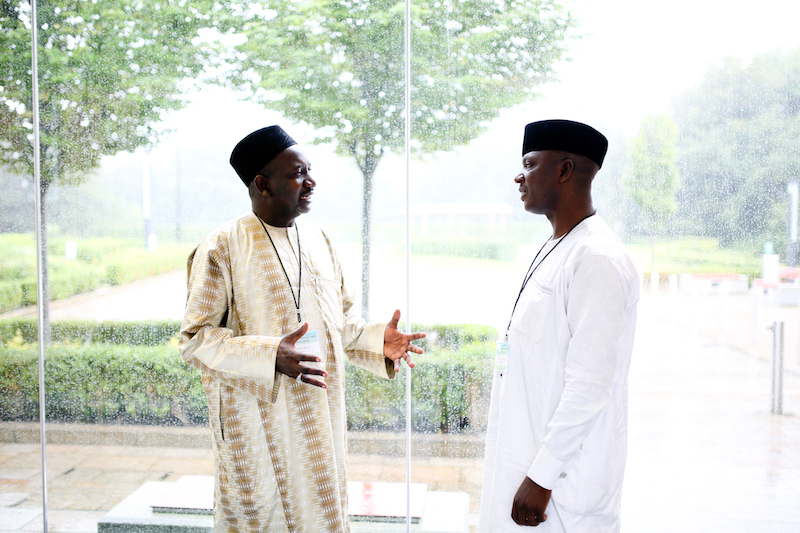
Sheik Maraya and Rev. Hayab share an equal passion for interfaith harmony and peace
Their story captures an essential truth about peacebuilding: relationships can change how people see one another. When people who have been separated by religion, ethnicity, race, or history begin to know one another personally, suspicion can give way to trust, and division can create space for cooperation.
This is why relationships are not simply an outcome of peacebuilding. They are part of how peace is built.
Trust Grows through Sustained Engagement
Trust rarely develops in a single conversation. It grows when people have repeated opportunities to listen, challenge assumptions, and discover common ground.
GPF’s Cross-Community Engagement Project in Baltimore brought varied participants together for 10 sessions over six months to examine race relations, develop empathy, and strengthen relationships. The extended engagement gave participants time to move beyond initial assumptions and develop genuine connections. Read “Baltimore Cross-Community Engagement Project.”
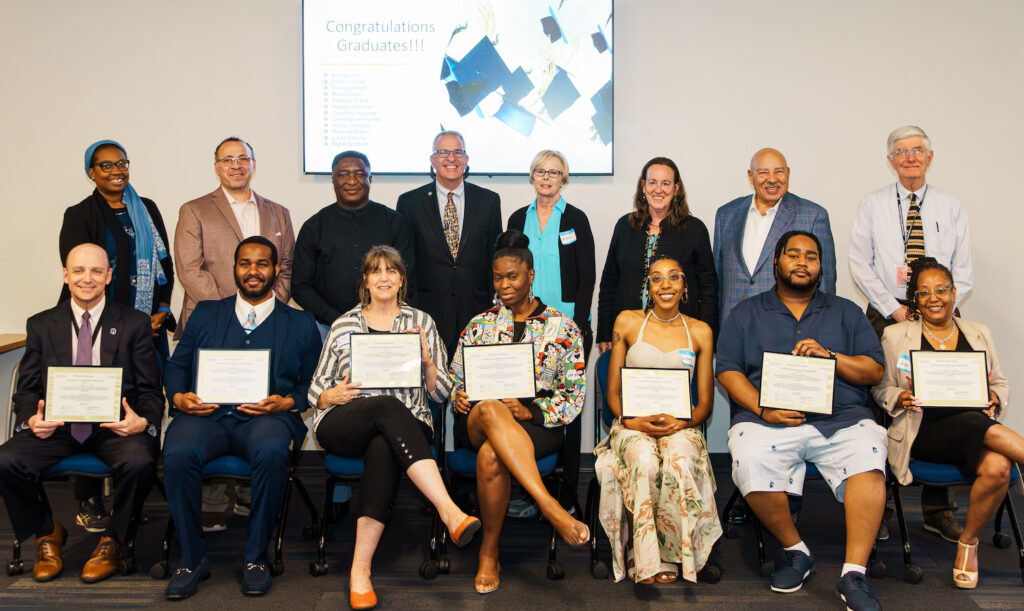
Group photo of Baltimore Cross-Community Engagement participants
This is an important lesson for peacebuilders. Bringing divided communities into the same room is only the beginning. The real work happens when people continue meeting, listening, and working through difficult questions together.
Listening can Transform Reconciliation
Relationships also create space for people to encounter histories and experiences different from their own.
GPF’s Cross-Community Reconciliation initiative in Montana brings Native American and non-Native participants together to engage with one another across historical and cultural divides. In a 2026 gathering, participants learned from Indigenous voices and shared cultural experiences, creating opportunities for understanding and connection. Read “From Tradition to Connection: Indigenous Voices Lead Cross Community Reconciliation.”
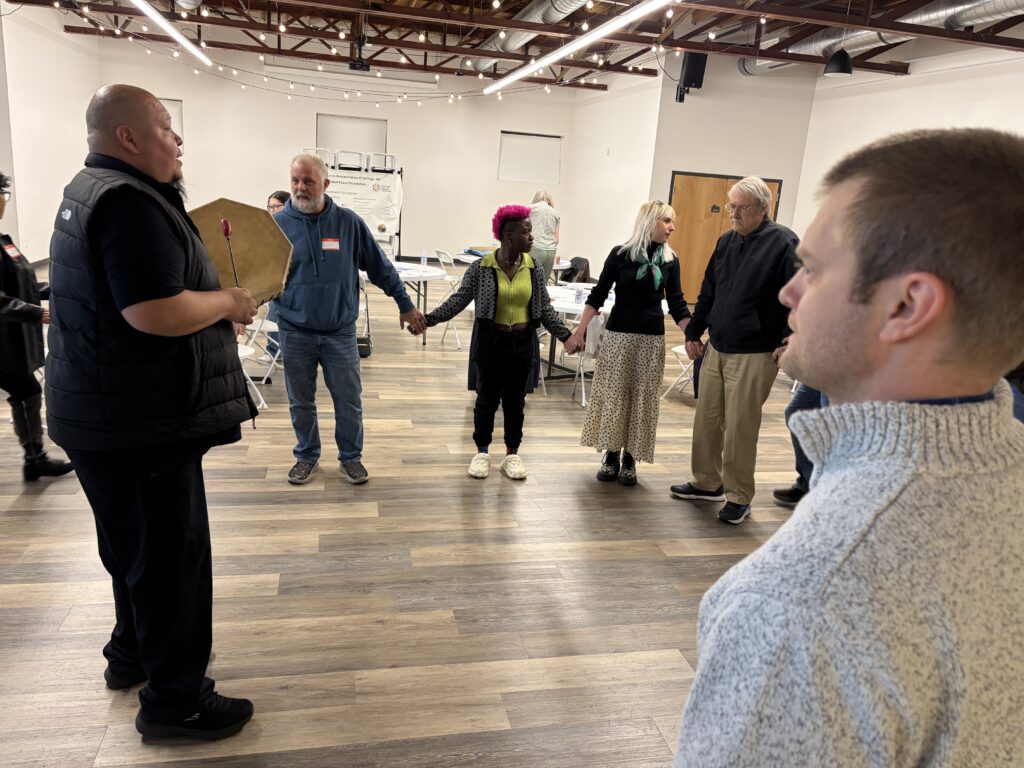
Josiah Hugs, an elder of the Crow Nation (also known as Apsáalooke), leads the group in a friendship dance.
Listening does not require people to agree on everything. It creates an opportunity to understand why another person sees the world differently. When people know one another’s stories, it becomes harder to reduce one another to a label.
Connection can Begin with Celebration
Relationships do not always begin with difficult conversations about conflict. Sometimes, they begin with something as simple as sharing food, music, or culture.
For more than a decade, GPF Japan’s Multicultural One Family Festival has brought people from different cultural backgrounds together through performances, food, exhibitions, and activities. The festival creates opportunities for communities that might otherwise remain separate to meet and interact as individuals. Read about GPF Japan’s Multicultural One Family Festival.
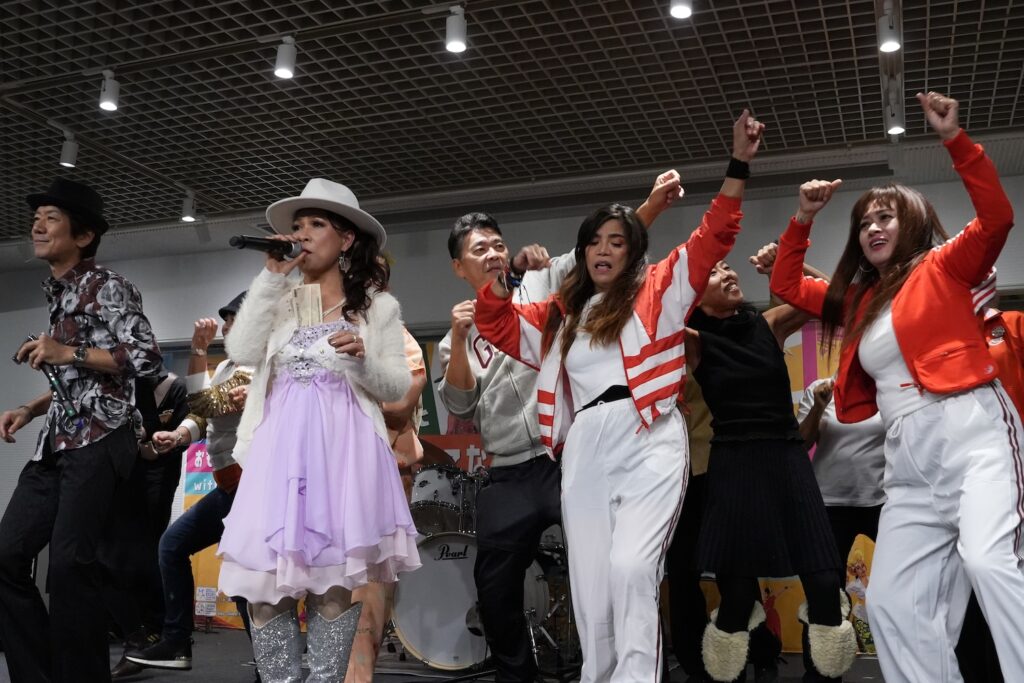
Singer Yolanda Tasico leads a celebration at the Multicultural One Family Festival 2025 held in Japan.
This kind of engagement matters because familiarity can challenge stereotypes. When people encounter one another through shared experiences, difference becomes something to understand rather than something to fear.
From Relationships to Cooperation
The strongest relationships eventually move beyond conversation.
The Kaduna Twins demonstrate this in Nigeria. Their relationship has become a bridge between Christian and Muslim communities and a practical example of the cooperation that One Family under God seeks to encourage. Their work shows that peacebuilding becomes more credible when communities see trusted leaders demonstrating respect and partnership across religious lines.
The same principle runs through GPF’s other community-driven initiatives. People are brought together not simply to talk about peace, but to develop the relationships that allow them to work together on shared concerns.
That is where relationships become a foundation for sustainable peace.
Building Peace One Relationship at a Time
Across these initiatives, the contexts are different, but the lesson is consistent.
In Kaduna, a Christian reverend and a Muslim cleric have built a friendship across a religious divide. In Baltimore, people from different racial backgrounds have developed trust through sustained engagement. In Montana, communities are creating space for reconciliation through listening and cultural understanding. In Japan, people from diverse backgrounds are building connections through shared experiences.
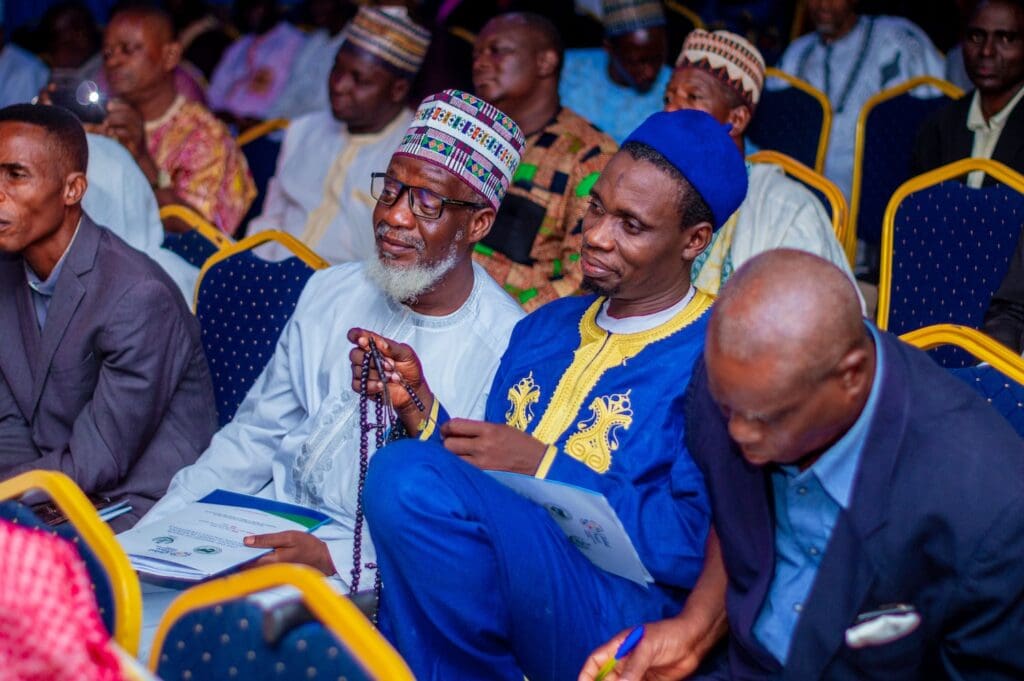
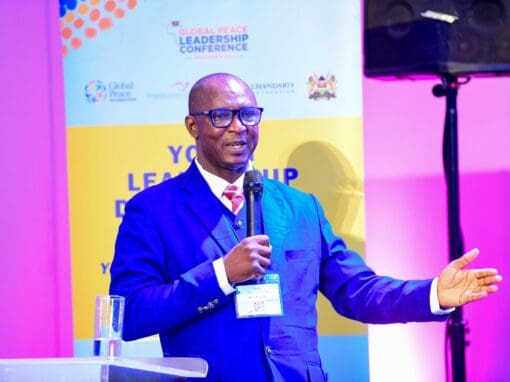
GPF Nigeria hosts a one-day peace conference in Kaduna.
Together, these examples reflect GPF’s mission to build a culture of peace by strengthening relationships across differences. They point to a powerful idea that peace is built between people before it can be sustained between communities.
Policies can create frameworks for cooperation, and agreements can end conflict. But people still have to live together after the agreement is signed. They have to decide whether to trust, listen, cooperate, and stand against narratives that divide them.
Those choices are shaped by relationships.
Peacebuilding, therefore, is not only about bringing divided groups to the same table. It is about helping the people at that table know one another well enough to build something together.