Empowering youth to reach their full potential as positive change agents and peacebuilders starts with providing them with the knowledge, skills, and values needed to become productive members of society. With 70 percent of Uganda’s population under the age of 30, young people represent the country’s future. The Global Peace Foundation’s (GPF) Transforming Education initiative aims to create a transformative learning environment that cultivates the development of character and skills in young people, equipping them to enter the workforce and become moral and innovative leaders.
To increase awareness and support for the Transforming Education Program, which aligns with Uganda’s Vision 2040 to achieve socioeconomic transformation, GPF Uganda sponsored four events in August 2025. These events brought together diverse participants, including students, teachers, cultural and faith leaders, policymakers, and other stakeholders, to foster cross-sectoral and public support for educational transformation.
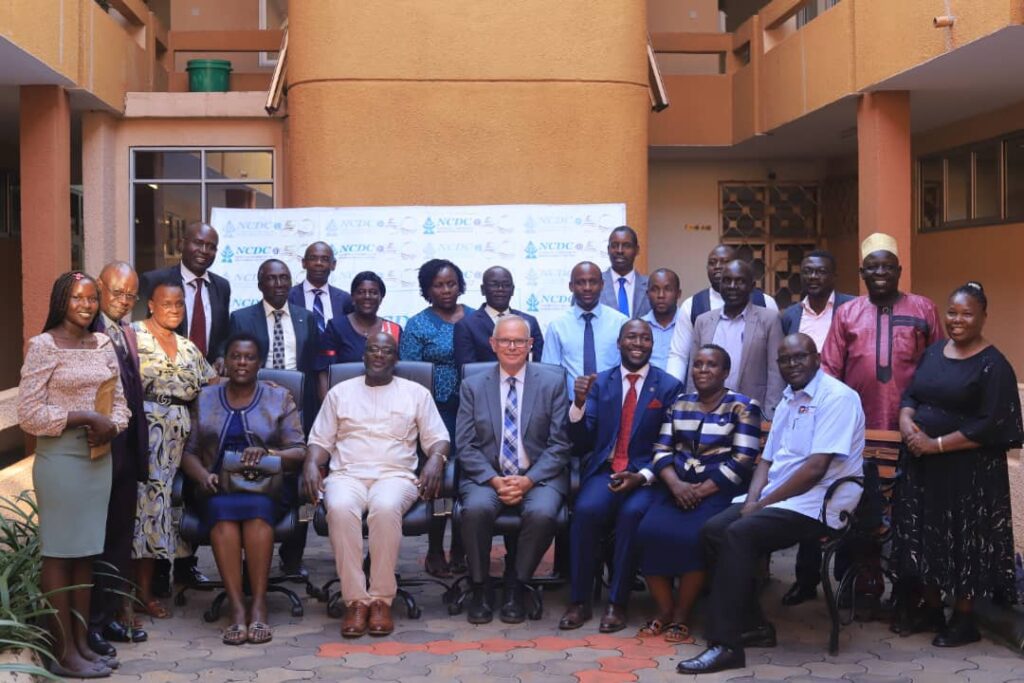
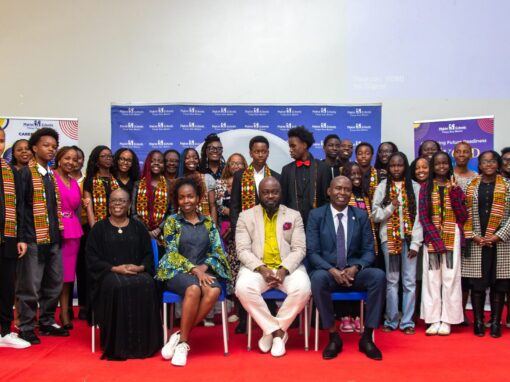
Workshop participants group photo
A workshop for school heads, teachers, and club presidents was held at Kyambogo College School on August 25. The attendees included school principals, district education officers, representatives from the Kampala Capital City Authority government, division coordinators, Character and Creativity Initiative school regional coordinators, Peace Club patrons, and student leaders from eighteen secondary schools.
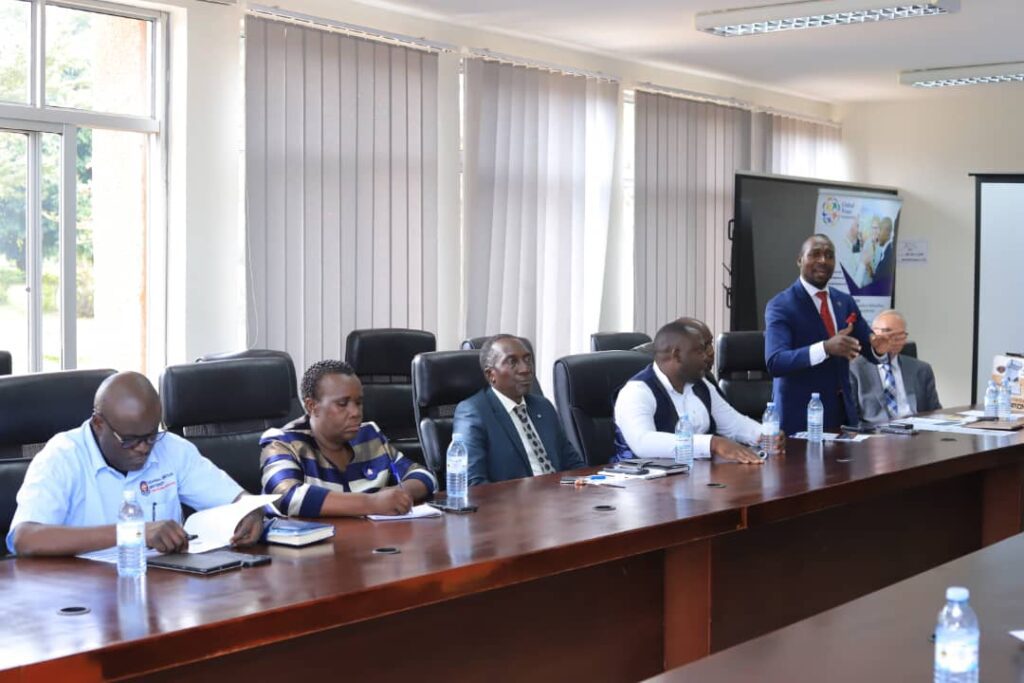
Policy makers and cultural leaders discussing the future of education.
Peace Service Ambassador Milton Kambula opened the workshop with prayers and an overview, followed by welcoming remarks from the host school’s Principal Stanley Mugume. Next, keynote speaker Dr. Tony Devine, GPF’s vice president of education and lead facilitator, reflected on the Blueprint for Transforming Education. Facilitators guided group discussions focused on two categories: Foundations for Meaningful Transformation and Catalysts for Innovation.
The first category emphasizes the importance of education systems having a foundation in universal principles of growth, family, and contribution. Important elements include educators as role models, great families, and citizens contributing to sustainable peace. The second category addresses the rapid advancement of technology—the criticality of education to keep pace and the need to prepare educators and students to respond in an ethical and responsible manner.
Key highlights of the workshop include students requesting a more active role as co-creators of learning, teachers transitioning focus to mentorship and facilitation, and the role of Peace Clubs in providing a platform to instill values, creativity, and civic responsibility. Outcomes include schools pledging to establish Blueprint task forces, strengthened alignment with Uganda’s Vision 2040, and the advancement of Sustainable Development Goal 4 related to Quality Education.
On August 26, policymakers, cultural leaders, and religious leaders attended a workshop at the National Curriculum Development Centre (NCDC). Twenty-one high-level executive leaders attended the workshop, which began with prayers and an overview by Peace Service Ambassador Kambula, with Mrs. Grace Baguma, the director of the NCDC, welcoming the attendees. Dr. Devine then presented the Blueprint for Transforming Education, followed by the integration and cascading of the Blueprint across all education departments and institutions, culminating in a joint call to action.
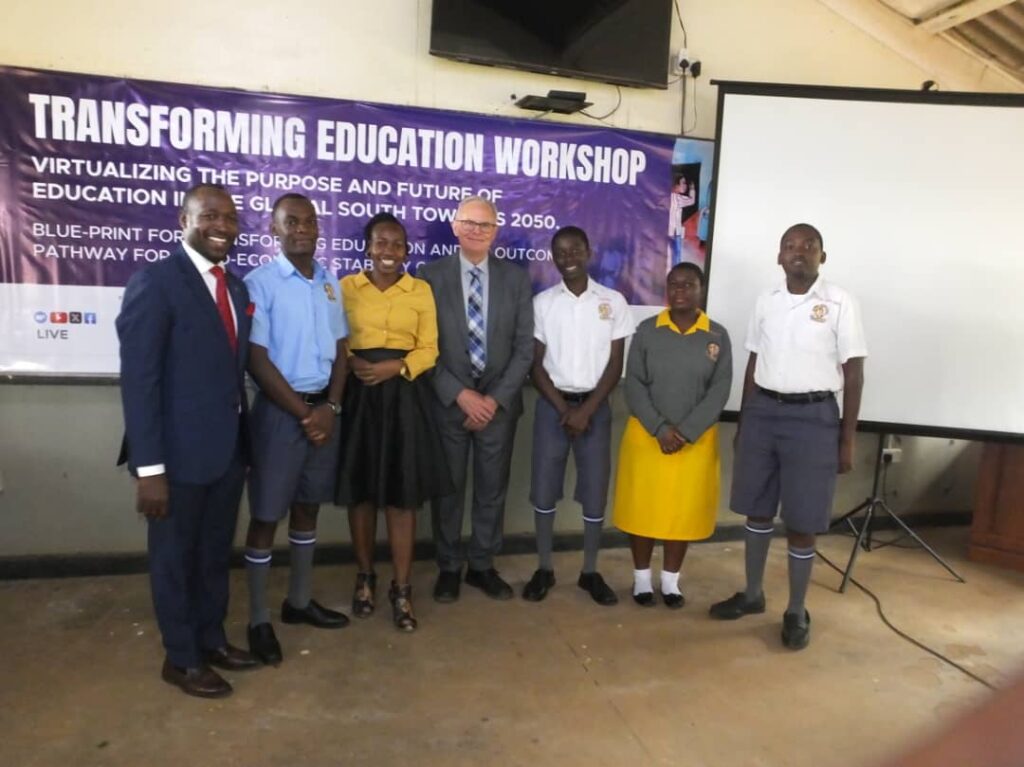
Peace club presidents and regional student leadership coordinators at the Kyambogo College Workshop
The diverse attendees participated in a variety of activities, including roundtable discussions on reform priorities, sharing perspectives on assessment and teacher welfare, and reflecting on the integration of moral values in education. They expressed their commitment to collectively advancing the Blueprint and creating value-based reform.
An Education Workshop on National Television was broadcast live on August 27 to all Ugandans worldwide from the UBC TV Studios, reaching millions of viewers across the country. Dr. Devine and Peace Service Ambassador Kambula facilitated the workshop, which addressed the Blueprint for Transforming Education for national development and issued a powerful call to action. With a central message calling for joint investment, prioritization, and unity around education reform to achieve national transformation, the broadcast appealed to a diverse audience.
The interactive program addressed critical gaps in Uganda’s education system, called for improvements, and emphasized the importance of education in equipping young people with both academic knowledge and critical life skills, as well as character and values. The presenters responded to host and audience-driven questions, underscoring the need for values, innovation, and a future-ready education system.
The televised workshop reinforced that the Blueprint for Transforming Education is a national undertaking requiring the support of all Ugandans to be successful. It engaged a broader spectrum of participation beyond policymakers, including parents, youth, and cultural and religious leaders, informing them on the need for and acceptance of values-based and competence-driven education outcomes.
The events represented a transition in how education is viewed—from a strict academic approach to one that creates a values-based foundation for sustainable peace and social cohesion in Uganda. Additionally, the involvement of cross-sectoral leaders underscores the importance of the initiative, fostering support and acceptance for the Blueprint’s implementation and ultimate success nationwide.
Young people are our future moral and innovative leaders. The Blueprint for Transforming Education provides the framework for laying a solid foundation for their success as positive change agents, peacebuilders, and moral and innovative leaders in a rapidly evolving environment.