Positive parenting is a peacebuilding priority, not a private family matter.
Nearly 400 million children under five worldwide, or six in ten children in this age group, regularly experience psychological aggression or physical punishment at home, according to UNICEF estimates published in June 2024. Around 330 million experience physical punishment. UNICEF also estimates that about four in ten children aged 2-4 do not receive sufficient responsive interaction or stimulation at home, highlighting the need to strengthen nurturing relationships and caregiving.
In Kenya, the 2019 Violence Against Children Survey found that nearly half of children experience violent discipline. These findings point to the importance of equipping parents and caregivers with practical approaches that nurture children’s character, strengthen family relationships and promote respectful communication.
For the Global Peace Foundation (GPF), strengthening families is an important part of building peaceful and prosperous communities. Values such as respect, compassion, responsibility and integrity are first nurtured through everyday relationships, including those within the home. When parents and caregivers are supported to guide children with care, communicate constructively and respond to challenges without harmful discipline, they help create the conditions for children to develop into responsible, caring and engaged members of society.
Parenting support is therefore an investment in peacebuilding and sustainable development. It helps address challenges within families while strengthening the relationships and values that contribute to social cohesion across communities.
Why parenting support matters for peace and development:
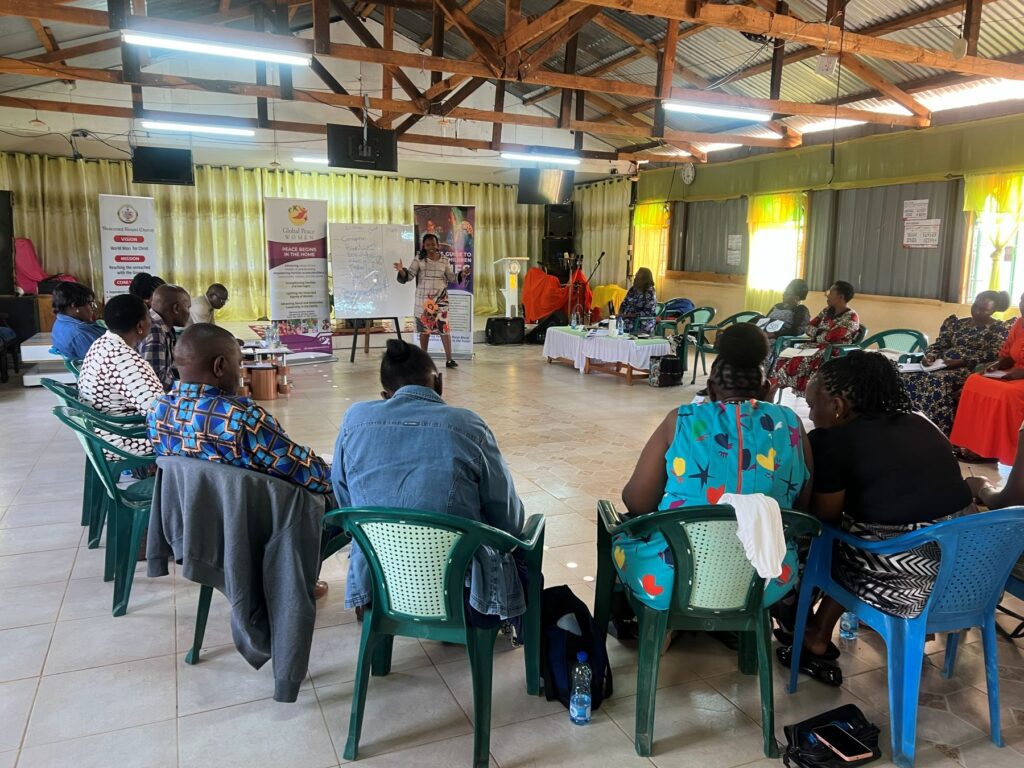
Participants of the Namanga Training of Trainers workshop
Parenting programs can help families build safer, more supportive relationships and address harmful disciplinary practices. A UNICEF Innocenti evidence review found that parenting programs informed by social and behaviour change strategies can reduce violence against children in low- and middle-income countries when delivered by trained facilitators. The review also found evidence that such programs can reduce intimate partner violence, while emphasizing the importance of implementation quality and monitoring.
In Kenya, UNICEF’s National Positive Parenting Program supports parents and caregivers to provide responsive care and create safe, nurturing environments for children. Through participatory group sessions led by trained community facilitators, the program promotes communication, supportive relationships, and children’s well-being.
These approaches are relevant to peacebuilding because the quality of relationships within families can influence how children learn to manage emotions, communicate needs, respect others, and respond to conflict. Parenting support can help caregivers recognize children’s developmental needs and respond without resorting to harmful discipline. Over time, these everyday practices can contribute to safer homes and communities where children are better supported to grow, learn, and participate.
The value of parenting education also lies in its reach. By working with trusted local leaders, programs can connect with parents through existing community relationships and networks. Faith leaders, teachers, counselors and other community figures can help make parenting guidance accessible, encourage reflection and identify families who may need additional support. Their role is particularly important when concerns such as teenage pregnancy, substance abuse, bereavement, or child-headed households call for coordinated community responses.
Equipping trusted leaders to support families:
This approach is reflected in GPF and its affiliate Global Peace Women’s (GPW) Parents Nurturing Values at Home initiative. Through the Parents Nurturing Values at Home Curriculum, GPF, GPW, and their partners equip faith and community leaders with practical guidance to help parents and caregivers nurture children aged 0–19, strengthen family relationships, and instill values through everyday interactions.
The curriculum recognizes the family as a child’s first learning environment and emphasizes the role of parents, extended families, and faith communities in supporting values education. It provides guidance on nurturing values such as respect, compassion, responsibility, and integrity, while encouraging positive engagement and age-appropriate support as children grow.
By preparing local leaders to facilitate parenting education, the initiative seeks to extend support beyond individual households and strengthen the community networks that help families thrive. This is especially important where parents face complex challenges and need trusted people they can approach for guidance, encouragement, or referral to other services.
Namanga training connects the approach to community needs:
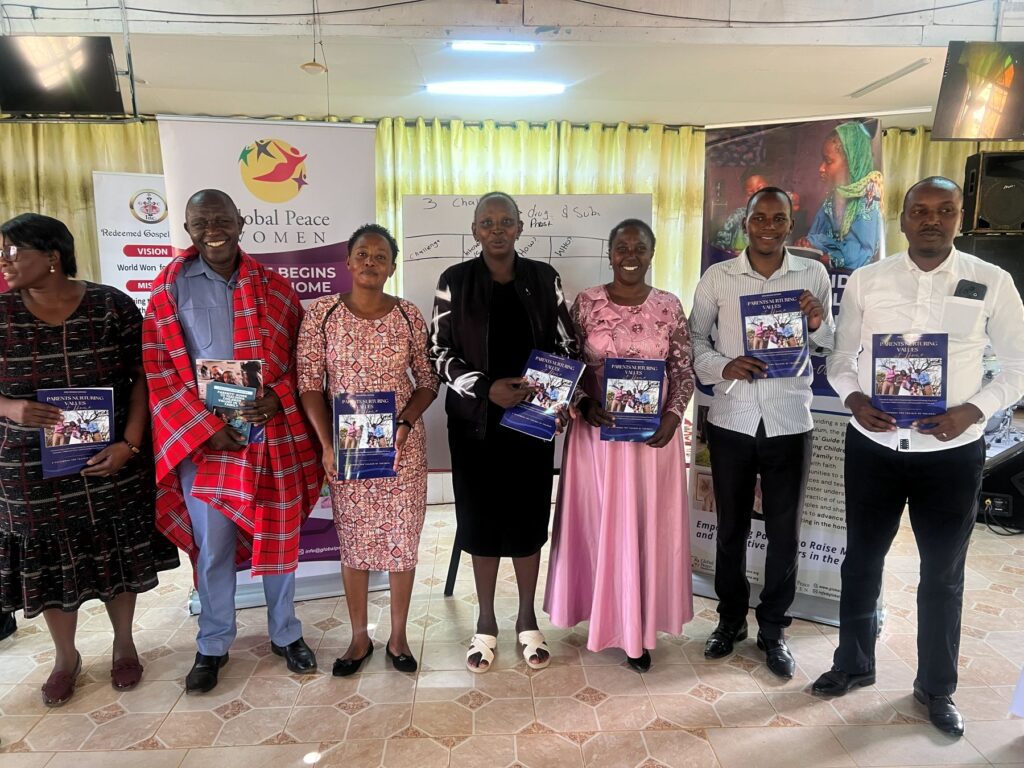
Participants of the Namanga Training of Trainers workshop
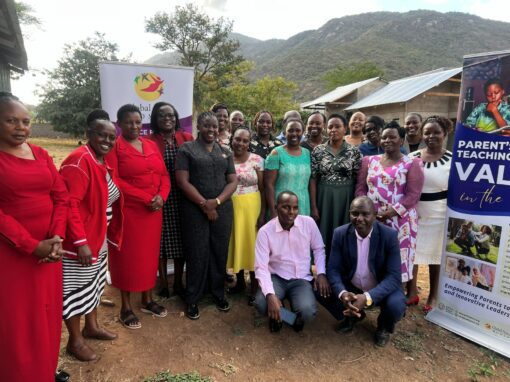
From September 1 to 3, 2026, 18 participants gathered at Redeemed Gospel Church in Namanga for a Training of Trainers workshop on parenting and nurturing values. Participants came from several Christian denominations, including Deliverance Church, Redeemed Gospel Church, and the Anglican Church. The group included men and women in different church roles, three couples, and pastors who also serve as teachers, counselors, nurses, and Sunday school teachers. Participants ranged from young parents to middle-aged parents and grandparents.
The facilitation team followed the training guide and enriched sessions with age-appropriate, experiential examples. Participants took part actively in exercises and reflections, including discussions about how their own childhood experiences and family relationships had shaped their parenting. These conversations created opportunities to consider past mistakes, the possibility of healing from trauma, and practical ways to nurture healthier relationships with children.
Participants expressed a willingness to change their parenting approaches. One stated, “I am going to adjust my parenting to positive parenting.” Another committed to improving communication and allowing children to give feedback without condemnation. A third said they would stop punitive discipline and embrace positive parenting.
The workshop also brought urgent community concerns into focus. Participants highlighted teenage pregnancy, drug abuse, and child-headed households as issues requiring attention. A participant already running a program for teenage mothers planned to use the guide to strengthen awareness. A recently widowed mother of three young daughters described the training as timely and committed to working with faith leaders for support.
To support the next phase, a seven-person implementation team was appointed to coordinate rollout and advocate for the workshop topics in the region. The host pastor, who also serves as Scripture Union coordinator and chairman, was named lead coordinator. Further implementation of the program is planned for September through November 2026, with a progress review meeting scheduled for November.
Sustaining investment in families and peacebuilding:
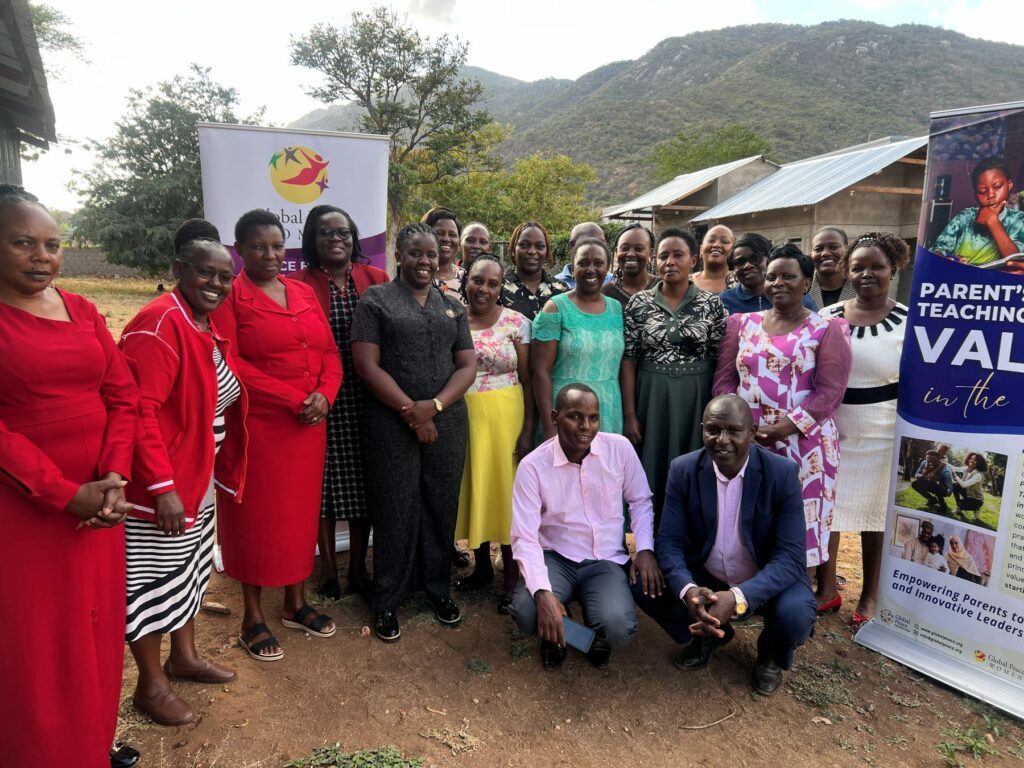
Participants of the Namanga Training of Trainers workshop
The Namanga Training of Trainers workshop is part of the continuing Parents Nurturing Values at Home initiative, following earlier program implementation and stakeholder engagement described in Strengthening Africa’s Future Begins at Home: Advancing the Parents’ Guide to Values Education in the Family Initiative.
As the trained leaders move into implementation, sustained support will be important to help them deliver the curriculum, reach parents and caregivers, strengthen local partnerships and review progress. Parenting education requires investment in trained facilitators, practical resources, community outreach and continued learning so that families can access guidance that responds to their needs. GPF’s Women and Families in Peacebuilding program advances a vision of peaceful and prosperous communities by strengthening families, empowering women and nurturing the values that shape future generations. Through initiatives such as Parents Nurturing Values at Home,
GPF is equipping trusted faith and community leaders to support parents, strengthen family relationships, and make peacebuilding practical within the home.
GPF calls on partners, donors, faith institutions, community leaders and other stakeholders to step forward and invest in this work. Expanding parenting education, equipping more local facilitators and strengthening community-based support for families requires committed partnerships and sustained resources. Together, we can extend this work to more households, help parents nurture children with care and purpose, and strengthen the family foundations on which peaceful, cohesive and prosperous societies depend. Investing in families is investing in Africa’s future. Join GPF in advancing peacebuilding where it matters from the very beginning: at home.