August 21, 2026 – Global Peace Foundation Paraguay continues to support initiatives that preserve Paraguay’s cultural and historical heritage.
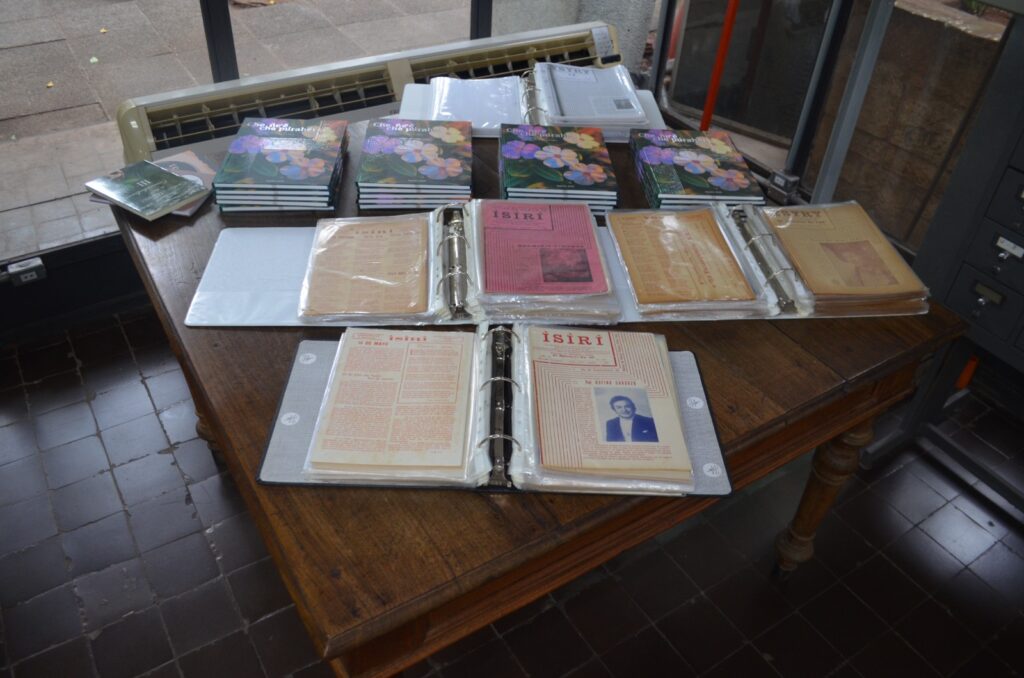
YSYRY guaraní magazines donated by Ambassador James Cason
On August 17, the digital historical archive of Paraguayan newspapers from 1845 to 1904, titled Memoria Escrita de un Gigante, was presented at the Ministry of Education and other official institutions as part of the broader preservation of Paraguayan History initiative led by former U.S. Ambassador to Paraguay James Cason. The project brings together approximately 100,000 pages from historical Paraguayan newspapers, along with documentary sources from private collections, public records, and archives in Paraguay and abroad.
Many of these publications survived only as fragmented collections dispersed among different institutions. Global Peace Foundation (GPF) Paraguay contributed to the initiative by assisting Ambassador Cason and the Paraguay History team in the local search for historical newspapers that had been difficult to locate from the United States, contacting libraries and archival institutions to verify surviving editions and their availability. The resulting digital collection is now available online at https://www.paraguayhistory.net, thus expanding access to primary historical sources for students, teachers, researchers, journalists, and the general public.
YSYRY Returns Home
The following day, August 18, another chapter in the preservation of Paraguay’s cultural memory reached a meaningful conclusion.
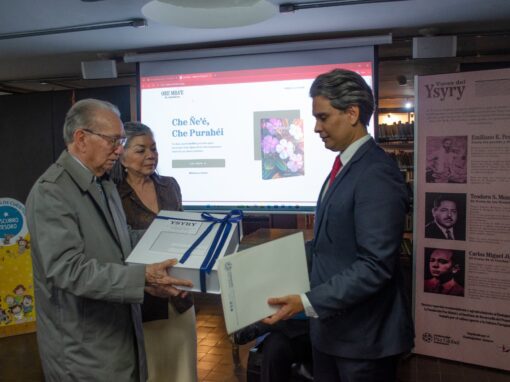
Ambassador James Cason officially donated his collection of original YSYRY guaraní magazines to the National Library of Paraguay, ensuring that these historical publications will remain preserved and accessible within one of the country’s most important cultural institutions.
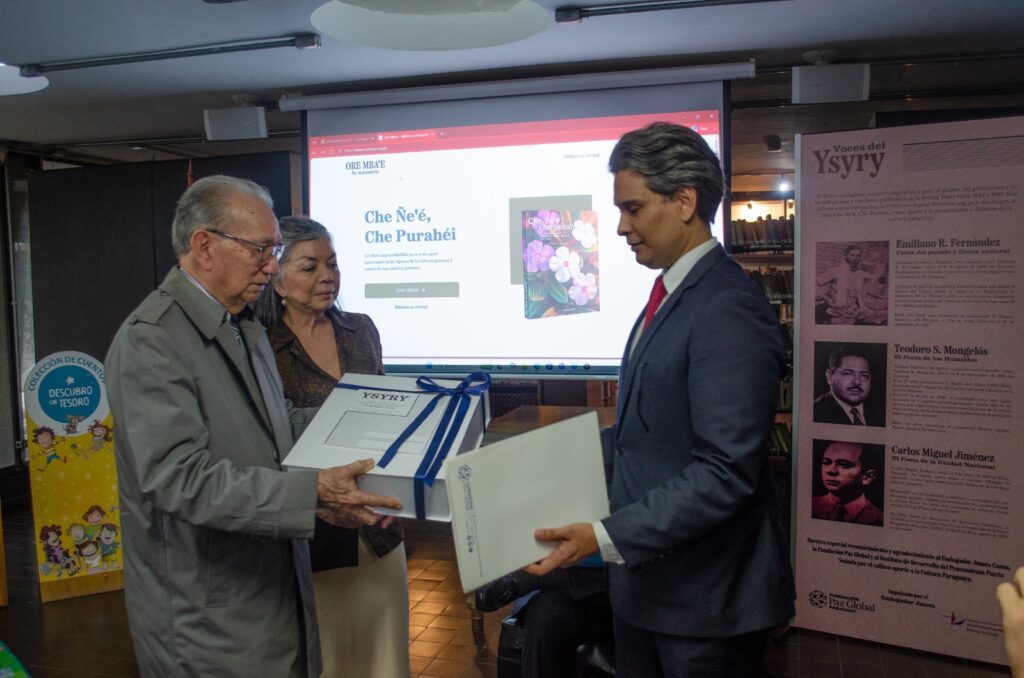
YSYRY guaraní magazines donation ceremony
For decades, YSYRY served as an important space for Paraguayan literary and musical expression, publishing poetry and songs in Guaraní and Spanish and preserving the voices of generations of writers, poets, and composers.
Through the Guaraní Project, GPF Paraguay worked to help bring this cultural legacy into the digital era. The project involved the digitization, transcription, and preservation of almost 15,000 poems and songs from the magazine collection, which can be found on our digital library at https://www.orembae.org.py, as well as the publication of a commemorative book titled Che Ñe’ẽ, Che Purahéi featuring a selection of 200 representative poems and illustrations. We celebrated this accomplishment with an exciting gala concert, Between Polcas & Guaranias, at Asunción’s Municipal Theater.
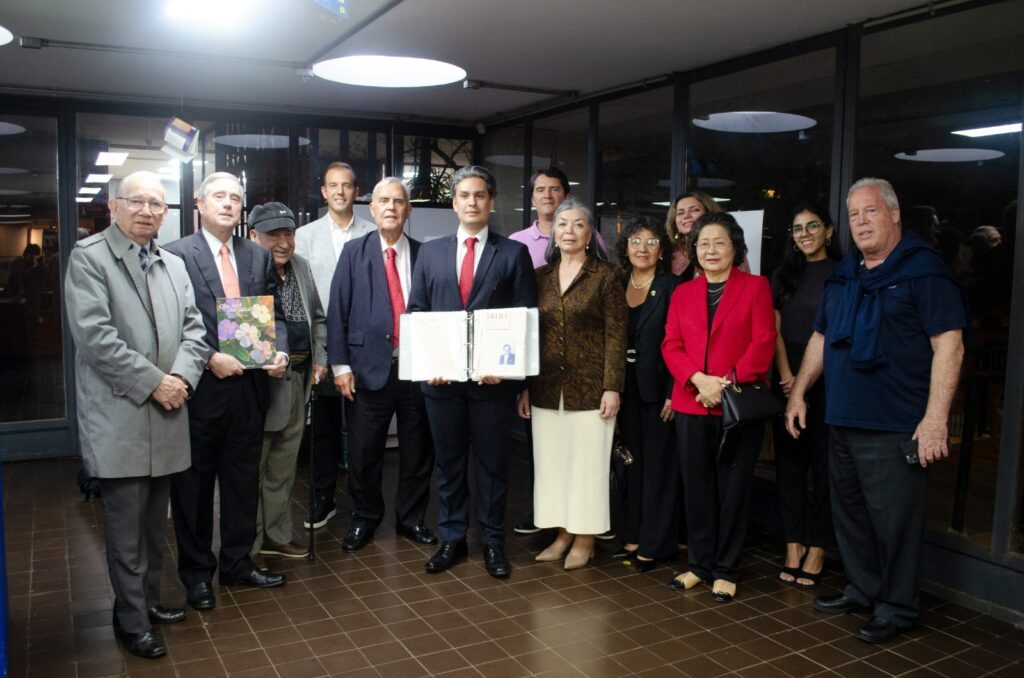
Group photo from the YSYRY guaraní magazines donation ceremony
The donation ceremony was intentionally small and intimate, reflecting the deeply personal history behind the collection. Among those present were former U.S. Ambassador James Cason and his son, James Cason Jr.; Dr. Thomas Field, regional representative of Global Peace Foundation; Dr. Alda Cardozo, representing GPF Paraguay; Dr. José Altamirano, director of the GPF-affiliated Institute Patria Soñada (IDPPS); Marco Augusto Ferreira, director of the National Library; and Santiago Llano Cavina, president of the NGO United for Education.
After years of preservation, research, digitization, and cultural dissemination, the original magazines returned to a Paraguayan public institution, where they will remain part of the country’s documentary heritage.
Preserving the Past to Serve Future Generations
Although the Paraguayan Newspaper History Project and the YSYRY Guaraní Project are distinct initiatives, they share a common purpose: ensuring that Paraguay’s historical and cultural memory is not lost, but preserved, made accessible, and passed on to future generations.
One recovers the voices of Paraguay through its historical press; the other preserves the poetry, music, and language that shaped its cultural identity.
For Global Peace Foundation, supporting these efforts reflects a broader understanding of peacebuilding: strong and cohesive societies are also built through a shared appreciation of history, identity, and cultural heritage.
By bringing historical sources into the digital age while ensuring that original materials are preserved within national institutions, these initiatives build bridges between past and present. New generations can learn about Paraguay’s history and encounter it through the voices of those who lived, wrote, sang, and dreamed before them.