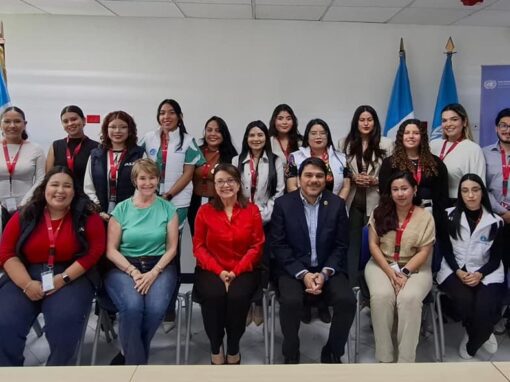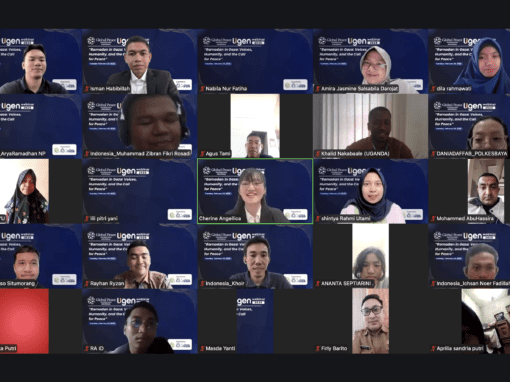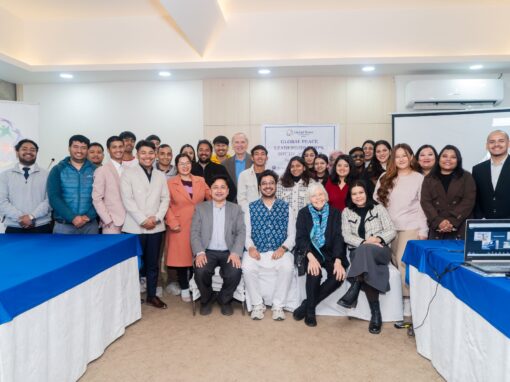

Reverend Mark Farr speaking during the inaugural GPCorps Global Network meeting
The Global Peace Foundation (GPF) hosts monthly Global Network Calls through its Global Peace Leadership Corps (GPCorps), a global initiative that encourages young people to take part in peacebuilding and service programs. In October 2025, the discussion focused on the essential role of families in peacebuilding.
While this session took place as part of GPCorps’ ongoing Global Network Calls, the insights shared continue to resonate across cultures and contexts. The role of families as the foundation of values, relationships, and social cohesion remains central to building lasting peace in communities around the world.
Reverend Mark Farr, GPCorps program manager, opened the online program by outlining the three levels where young people can engage in peacebuilding around the world—local, national, and international. He then introduced Muhammad Mahmudi, GPF Indonesia’s strategic partnership and impact manager, who provided an overview of the Lead360 Asia program scheduled to take place in Jakarta, Indonesia, from December 5 through December 11. Encouraging young people to attend, he described it as a “transformative leadership program designed to cultivate holistic leadership for young people from across Asia, and also, around the globe.”
Shanti Tamang from GPF Nepal followed with a short video about Global Peace Women, a non-profit organization dedicated to empowering service-minded women as peacebuilders. She then welcomed Hanako Ikeno, the organization’s president and keynote speaker, who opened her presentation by emphasizing her family roles as mother, auntie, and eldest of six siblings rather than her professional qualifications.
“Peace begins in the home.”
Ms. Ikeno emphasized that family is “a shared point of experience that ties us together as humanity.” Introducing the Family Imperative of Peacebuilding, she asked participants to identify essential elements of peace. Their responses included freedom, dialogue, empathy, responsibility, and harmony. She noted that many of these qualities are first learned within the family.
Referring to psychologist Urie Bronfenbrenner’s Ecological System Theory, Ms. Ikeno identified two often overlooked layers, the microsystem and mesosystem, which represent
the family and its immediate relationships, and the need to empower these layers in the peacebuilding process. She stated, “The family is the natural place for growing children, for a growing child to realize that each person is important, and that we are all connected.”
Ms. Ikeno reiterated that investment in the family generates “broad and far-reaching” benefits in peace and development at the national level. She asserted that both the immediate and extended family can change a child’s negative path in life by establishing a positive relationship. “We can change the course of people, despite where they are coming from, just by allowing positive, affirmative, One Family Under God-like experiences that happen in the family.”
Concluding her presentation with a discussion on the role of women in peacebuilding, Ms. Ikeno noted that the narrative shifts when women are connected with their families, especially in their role as mothers who can positively influence peace in their homes. She stated that Global Peace Women will continue partnering with GPCorps, expressing a desire to bring more women and families to the peacebuilding table.
Responding to a question about plans for young women, especially in countries like Uganda, and the innovative strategies needed to engage and empower youth and women as leading agents of peace in their communities, Ms. Ikeno emphasized the innovative approach of engaging women and youth from a family perspective. This means recognizing that boys and girls have inherent differences while still honoring each child’s individual dignity and uniqueness. She also underscored the importance of family meetings for youth engagement.
Participants then moved into breakout sessions to reflect on Ms. Ikeno’s presentation and exchange ideas on how families can contribute to peacebuilding. Their reflections highlighted several themes: the need for effective communication, the value of connecting and doing things together, the importance of families in building strong and respectful relationships, and the role of families in developing peace skills, such as respect, empathy, and effective conflict resolution.
Responding to the feedback from the breakout sessions, Ms. Ikeno indicated that the GPF Women and Families approach is the same as that applied in other peacebuilding areas. She highlighted shared elements such as creating a common family vision and understanding the principles and values that guide how we want to live.
The power of family in peacebuilding cannot be overstated. According to Ms. Ikeno, “In the Global Peace Foundation, there’s this concept of fundamental human rights, and the value of every life. Where can you so vividly learn that than in the family?”