What does it mean for young people to lead when they are invited into decision-making spaces but have little influence over the decisions being made? And how can a generation seeking change ensure that it does not reproduce the same leadership practices it criticizes?
These questions shaped the discussion during Reimagining Youth Leadership Through Ubuntu, the third session of the Ubuntu Africa Youth Assembly Series, held on November 5th, 2026. Organized by the Global Peace Foundation (GPF) through the Africa Renaissance Initiative Youth Working Group, the webinar brought together young leaders and peacebuilding practitioners from across Africa to examine the barriers facing youth leadership and consider how Ubuntu can inspire a more inclusive, ethical, and collaborative approach.
The discussion explored a challenge facing many young people across the continent: how to turn their ideas, energy, and commitment into meaningful influence in public life. While young people are increasingly visible in civic movements, organizations, and leadership forums, their presence does not always translate into opportunities to shape policies, influence institutions, or contribute to decisions affecting their communities.
Moving Beyond Representation to Meaningful Participation
Wangui Mwende, a lawyer from Kenya, opened the panel discussion by describing the gap between being included in leadership spaces and having the authority to contribute to decisions. Young people, she explained, are often welcomed into meetings and presented as representatives, but their involvement may end there.
“We are invited at the table, very welcomed, and we only take up an idealistic position of representation,” she said. “Often the youth [are at the] table, but we really don’t get a chance to actually participate in the voting, in the policy making. It’s just tokenism, not actual representation.”
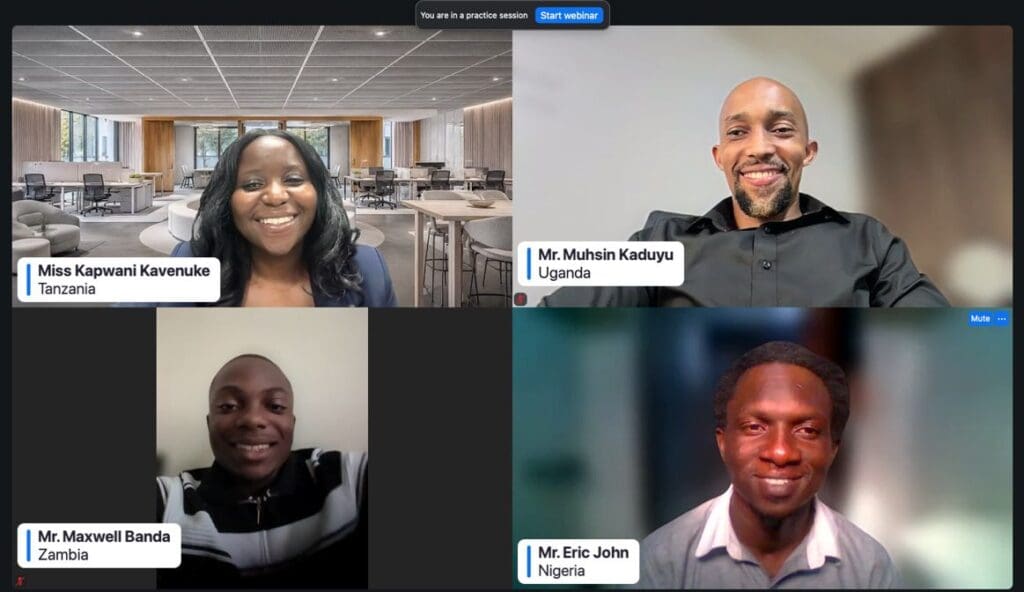
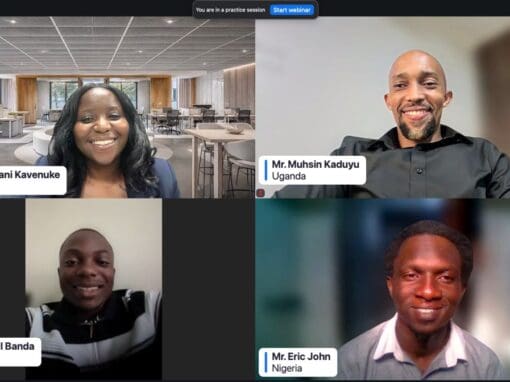
Group photo from ‘Reimagining Youth Leadership Through Ubuntu’
Wangui also highlighted financial constraints, corruption, entrenched interests, and limited access to institutional knowledge as barriers to youth participation. Drawing on Kenya’s Gen Z movement, she described how young people can mobilize around shared concerns but face pressure to enter existing political structures to achieve change. Once inside those structures, however, their ability to challenge established practices may become restricted.
Her contribution raised an important question about the kind of opportunities available to young people. Access to leadership should include the freedom to question existing arrangements, contribute ideas, and take responsibility for shaping new approaches. Wangui argued that institutions need to create genuine opportunities for younger leaders to learn, contribute, and take up responsibility.
Maxwell Banda, a Zambian entrepreneur and youth leader, built on this point by asking whether youth organizations are measuring their influence by their visibility or by the decisions they help change. He observed that Africa has no shortage of youth conferences, organizations, and declarations. The challenge is ensuring that these activities produce measurable results.
“There is a fundamental difference between representation and participation,” he explained. “Representation is having a young person seated at the table, while meaningful participation is having their contribution influencing the outcome of that particular meeting.”
Maxwell encouraged youth organizations to move beyond event-driven activities and invest in the expertise needed to engage institutions effectively. Young people seeking to influence agricultural policy, for example, need to understand agricultural economics, markets, and trade. Those interested in governance need knowledge of legislation, public finance, and accountability.
“Passion without competence becomes noise,” he advised. Young leaders need to combine their commitment with preparation, evidence, clear objectives, and strategic partnerships. The impact of youth engagement, he argued, should be measured by the policies influenced, partnerships established, and improvements made in people’s lives.
Building Partnerships Across Generations
The discussion also examined the relationships between younger and older generations in leadership. Muhsin Kaduyu, a Ugandan peace practitioner and chair of the Africa Renaissance Initiative Youth Working Group, spoke about age hierarchies that can prevent young people from contributing meaningfully. In some institutions, older leaders dominate discussions while younger representatives are expected to attend, listen, and provide the appearance of inclusion.
He described how young people’s contributions can be dismissed through assumptions that they lack experience or have little to offer. Such experiences can lead to frustration and discourage them from remaining engaged.
Muhsin drew on his own experience to explain why young people should take initiative in addressing challenges within their communities. Following the 2010 al-Shabaab bombings in Kampala, he became involved in organizing young people to address issues of extremism. He recalled feeling isolated within his community and decided to take action instead of waiting for an invitation to participate.
He also emphasized that intergenerational engagement requires a change in how younger people are viewed. Older leaders should recognize them as partners who can contribute knowledge, skills, and fresh perspectives, not merely as beneficiaries of programs designed on their behalf. At the same time, young people need to approach these relationships with openness and a willingness to learn.
Reflecting on his relationship with Ambassador Mussie Hailu, Muhsin described the importance of mentorship and mutual respect. He encouraged young people entering leadership spaces to be prepared, humble, and willing to share their own competencies. As he explained, older leaders can become valuable partners when both generations are willing to learn from one another.
This approach was also reflected in Ambassador Hailu’s opening remarks. As Africa Regional Director of the United Religions Initiative (URI), he encouraged participants to embrace Ubuntu and the Golden Rule as guiding principles for leadership. He reminded them that young people are “not only the future, but also the present architects of change,” and called for leadership shaped by empathy, compassion, mutual respect, human dignity, and service.
Choosing Collective Progress Over Individual Competition
For Eric John, a Nigerian peacebuilding practitioner, one of the biggest obstacles to youth collaboration is the pressure to compete for recognition, funding, and opportunities. He observed that young people can become focused on being the first to publish, receive an award, secure a grant, or gain visibility. This individualistic approach can leave organizations working separately, even when they share similar objectives.
Eric contrasted this with the spirit of Ubuntu, which places collective wellbeing above individual achievement. He recalled how communities traditionally worked together, sharing what they had and contributing to common needs. He encouraged young people to recover this spirit through everyday actions, including sharing information, resources, contacts, and lessons from their work.
Importantly, he challenged the assumption that collaboration requires substantial financial resources. Young people can begin by sharing a useful link, offering information, connecting organizations, or making their skills available to others. These small contributions can help initiatives grow and allow successful approaches in one country to inform work elsewhere.
Reflecting on youth movements in Kenya and Nigeria, Eric questioned the value of celebrating progress in one country while communities elsewhere continue to face similar challenges. “If Africa is succeeding, let’s ensure Africa is succeeding,” he urged.
His message captured an important dimension of Ubuntu: the progress of one community can create opportunities for others. Youth organizations can strengthen their collective influence by exchanging experiences, coordinating their efforts, and recognizing that shared goals require shared responsibility.
Leadership Must Begin with Character
The closing reflections by Reverend Father Canice Chinyeaka Enyiaka, Ph.D., the director of African peace initiatives and engagements at GPF, brought the conversation to the ethical foundations of leadership. He commended the young speakers for their contributions, particularly Wangui’s willingness to challenge systems respectfully, and highlighted the importance of creating spaces where young Africans can share ideas and build together.
He then posed a fundamental question: “How can Africa produce a new generation of leaders who will not repeat the moral failures of those they seek to replace?”
For Fr. Canice, Africa’s leadership challenges cannot be addressed by changing the people occupying positions of authority alone. Corruption, greed, dishonesty, abuse of power, tribalism, and the betrayal of public trust point to a deeper concern: the character and values guiding those who lead.
He urged young people to ensure that their own conduct reflects the standards they expect from public leaders. Those who condemn corruption must resist it when opportunities arise. Those who demand accountability must practice it in their organizations and communities. And those who advocate inclusion must respect people across ethnic, religious, and political differences.
“Leadership does not begin when you occupy a political office,” he said. “Leadership begins when you choose honesty over dishonesty, service over selfish needs, and the common good over personal advantage.”
Fr. Canice connected this responsibility to Ubuntu and the Golden Rule, which calls on individuals to treat others as they would wish to be treated. He challenged young Africans to build a generation whose integrity cannot be bought, whose courage cannot be intimidated, and whose compassion cannot be extinguished.
Ambassador Hailu’s earlier reflections reinforced this message. He encouraged young people to listen deeply, work together, and uplift one another, recognizing that human dignity and shared humanity should guide relationships across faiths, cultures, and nationalities.
Building an Africa We Can Share
The webinar brought together different experiences, but the speakers shared a common conviction that young Africans need opportunities to influence decisions, the skills to contribute meaningfully, relationships that support learning across generations, and the character to lead with integrity.
The discussion also offered a practical understanding of Ubuntu. It can be expressed when an experienced leader mentors a younger colleague, when a youth organization shares resources with another, when young people work across national boundaries, or when a community gives everyone an opportunity to contribute to its future.
In his closing remarks as chair of the Youth Working Group, Muhsin welcomed participants to remain connected and contribute ideas for future activities. He expressed a vision of “an Africa where we all treat this as a home, that we share and build it for future generations.”
Fr. Canice also thanked Ambassador Hailu, Bishop Warare from Kenya, and the other elders who had joined the session, describing their presence as an example of what intergenerational collaboration looks like.
Reimagining youth leadership through Ubuntu calls for a shift in both institutional practice and individual responsibility. Young people must be given meaningful opportunities to shape decisions, while also preparing themselves to contribute with knowledge, humility, and integrity. Organizations must move beyond competition and work towards shared outcomes. Older generations must create room for younger leaders to contribute as partners, while offering the experience and mentorship that can help them grow.
An Africa built on Ubuntu requires leaders who understand that their success is connected to the wellbeing of others. It calls for a generation willing to share its knowledge, stand up for what is right, and take responsibility for the communities and continent it hopes to build. As the webinar reminded participants, the future of Africa is a shared responsibility – Ubuntu: I am because we are.