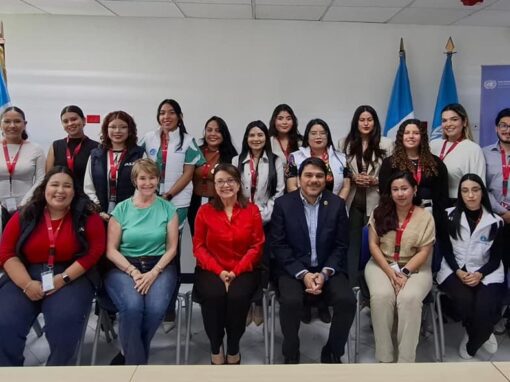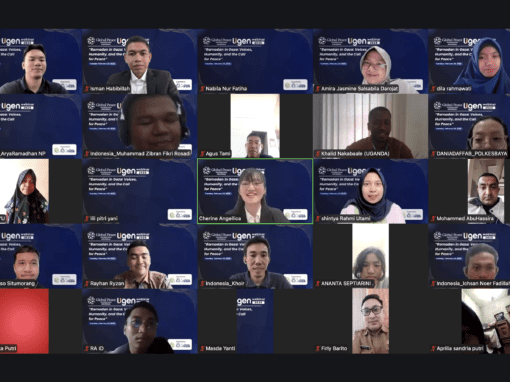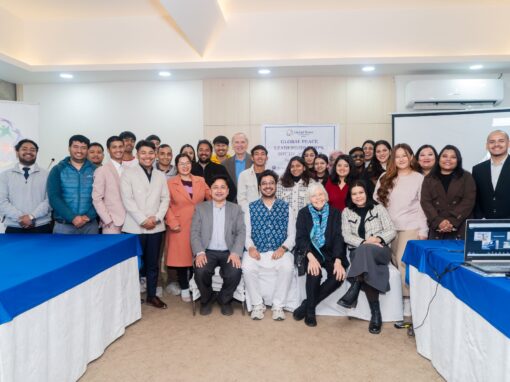
The Global Peace Foundation (GPF) Asia Pacific held its first monthly online session of the Indo-Pacific Youth Forum on January 31, 2026. With a theme of “Scaling Youth-Led Peace Models: Values-Based Leadership and Community Resilience in the Indo-Pacific,” the forum connected young leaders across Indonesia and other countries. Prominent peacebuilders highlighted the actions and drive of young people across the region to foster sustainable peace and social cohesion.
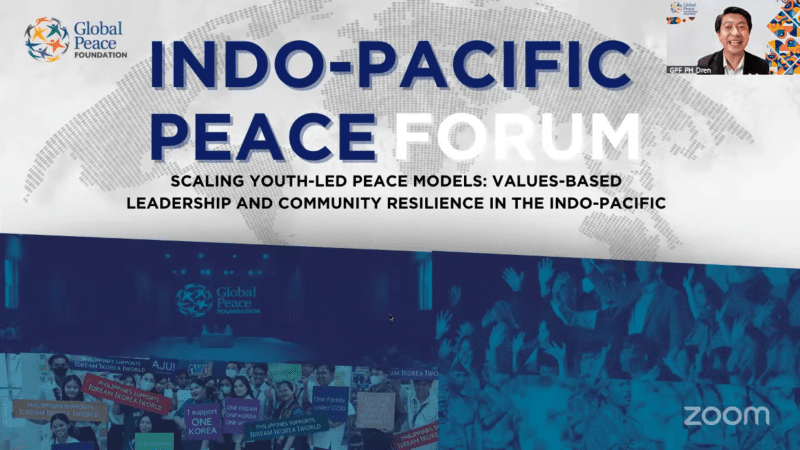
Indo-Pacific Peace Forum 2026
In his opening remarks, Indo-Pacific Forum (IPF) Chairman Dr. Markandey Rai welcomed more than 200 youth participants and underscored the historical start of the forum’s youth edition. He stated, “Today’s forum is for the young people rising with the courage, creativity, and leadership to build peace where it is most needed.” Citing his slogan of “Build the Youth, Build the World,” Dr. Rai underscored that peace is built on a foundation of our shared humanity. He concluded by challenging the participants to proactively apply what they learned in the forum to their own communities and beyond.
Dr. Heriyono Tardjono, co-founder of the CITRA Institute and co-chair of the IPF Youth Leadership and Peacebuilding Committee, also welcomed the young participants. He highlighted their active role as peacebuilders, stating, “Especially in times of uncertainty like today, youth are no longer positioned as beneficiaries of peace initiatives but as active actors and co-creators in shaping and sustaining peace in our community.”
Nasserudin D. Dunding, chairperson of the Bangsamoro Youth Commission, discussed the significant involvement of youth in the post-conflict peacebuilding process to create the only autonomous region in the Philippines—Bangsamoro Autonomous Region in Muslim Mindanao (BARMM). He stressed the use of conflict resolution tools to address challenges in post-conflict transformation, including dialogue, community involvement, and restorative principles, to move beyond ending hostilities to rebuilding social trust and institutions, and to address trauma, displacement, and exclusion. The success of BARMM reinforces Mr. Dunding’s belief in how peace can be restored through the collective efforts of institutions, youth, and leadership.
Shifting from peace restoration to conflict prevention, Ararat Kostanian—researcher, Kampung Sawah, Indonesia and Armenian Academician doctoral candidate at Indonesian International Islamic University—presented his research on Kampung Sawah, Indonesia, as a model of “permanent peace.” He noted that while both Christians and Muslims relocated to Kampung Sawah due to urbanization, they have overcome religious and other differences to live in harmony through “complementarity” in ethnic, religious, and political spheres. Mr. Kostanian’s compelling research offers powerful insights into how to achieve lasting peace and social cohesion when diverse communities build unity around their shared humanity, a concept of “godliness,” and accord at the national level—benefiting young people as they become active members of their communities.
A distinguished four-person panel comprising young leaders from Palestine, the Korean Peninsula, the Philippines, and East Africa then explored how Southeast Asian youth-led models can be adapted to diverse conflict and cultural contexts. The discussion was moderated by Hon. Datu Yussef Abubakar Musali Paglas, a member of the Provincial Legislative Board of Maguindanao del Sur, and featured Mohammed Abu Hassira, founder of the Gaza Peace Initiative; Juhyeon Kim, manager of Unification and Connection-Korea; Lobna Abu-Hamiadan, vice president of the Handala Project in the Philippines; and Khalid Nakabaale, director of Global Peace Leadership Corps Uganda.
Following introductions and a brief overview of their organizations, each panelist had the chance to provide details on specific program initiatives, challenges, and solutions. Several panelists highlighted a concrete activity or intervention their organization implements that has had the greatest impact on youth leadership in their community. Mr. Nakabaale, for example, specified the GPF Uganda’s Sport for Peace Program, noting earlier that “Sports is a powerful tool in fostering dialogue and empowering young people to lead in peace, unity, and cross-cultural understanding, and across the whole continent of Africa.”
Additionally, Mr. Abu Hassira described the Gaza Peace Initiative’s community-healing microgrants, which support small, trusted, community-led initiatives in Gaza, as low-cost and high-impact, led by those “closest to the bin and the solution.” Ms. Abu-Hamiadan highlighted the Handala Project’s focus on educational information campaigns using social media, as well as online and onsite forums in the Philippines, to inform people about the Palestine issue. Commenting on the importance of information, she stated, “I think that sharing information is one of the most important things that we should do as a leader, to give to youth as well, so that the more information they have, the more knowledge they will use to convert the knowledge into action.”
Ms. Kim explained that it has been challenging to discuss unification of the Korean Peninsula due to the 70-year lapse and political fatigue, emphasizing that the empathy and solidarity of the Korean people are essential to the conversation. According to Ms. Abu-Hamiadan, the Handala Project’s biggest challenge was a lack of information regarding the Palestine issue in the Philippines, emphasizing that information awareness comes first, followed by action. Mr. Nakabaale noted that limited funding by the government and the private sector has posed a major obstacle, which GPF Uganda addressed by having its own social business enterprises for local projects.
The panelists were then asked to reflect on an approach or strategy that proved effective in theory but did not succeed in practice locally. Ms. Abu-Hamiadan shared that securing initial support for the Handala Project was a challenge; however, they overcame it by using social media to build trust with organizations. She stressed to youth not to get discouraged when they run into obstacles, but to keep pushing forward. Mr. Nakabaale noted that their plan to engage religious leaders was unsuccessful, as some leaders would only support the project if other religious leaders were excluded. In response, GPF Uganda shifted to working with culture leaders—a strategy resulting in positive results. Ms. Kim added that their primary challenge is building consensus on unification, and they are testing various approaches to address it. She concluded, “The most challenging part is tailoring these messages so that it can resonate with different age groups, but we are working hard to bridge that gap.”
As a closing reflection, Hon. Paglas invited each panelist to complete the following sentence: “Youth-led peace becomes sustainable when you ____________________.” Their responses offered a range of insights. Mr. Nakabaale responded, “When youth are actively engaged and included in all the programs that are being run in their societies and communities.” Ms. Abu-Hamiadan offered three points of advice: “Three things I would like to tell youth for you to sustain: Number one – you first listen more than you talk. You can’t advocate for a community if you haven’t heard their heartbeats. Number two – consistency is everything. Don’t tone down your message just because the room changes. Never do that. And third – pass the mic.” Ms. Kim succinctly added, “when we have empathy.”
Hon. Paglas concluded, “Today’s discussion reminds us that while models can be shared, peace must be locally rooted. Scaling youth-led initiatives is not about replication alone, but about cultivating leadership, trust, and ownership in every community. Thank you to our panelists for translating values into action across regions.” He also offered a final reminder, “And as we go about our days, as we go about our future, we remind ourselves that this world when we found it, we need to leave it better than we found it.”
Regional President of GPF Asia-Pacific, Dr. Ingill Ra closed the forum by thanking everyone who participated and presenting the 2026 IPF roadmap—to strengthen our global leadership call as a youth leadership pathway, scale peace models through prevention and restoration, and expand global youth collaborations. He offered a final reflection, “Before we close, I would like to leave you with one final thought. Peace is not built by perfect conditions. Never. Peace is built by people who refuse to give up humanity. To every young leader who is here today, you are not the leaders of tomorrow. Like Dr. Rai in the beginning emphasized, we are leaders of today!”