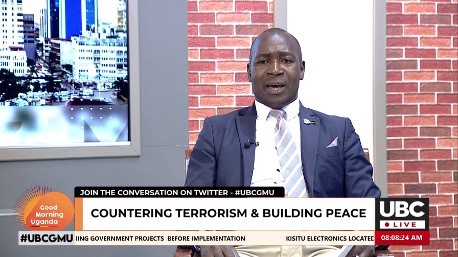
Milton Kambula discusses efforts for peacebuilding in Uganda.
In a significant milestone, Global Peace Foundation (GPF) Uganda, alongside the European Union, was accredited as one of only two international organizations mandated to serve as National Election Observers in the recently concluded 2026 general elections in Uganda. This accreditation highlighted GPF Uganda’s long-standing credibility, impartiality, and trusted role in advancing peaceful, transparent, and credible democratic processes.
Through its Family Strengthening and Peace Education (FSPE) Programme, GPF Uganda played a pivotal role throughout the electoral cycle, engaging political actors, electoral institutions, security agencies, faith leaders, civil society, media, and communities across the country. GPF Uganda’s work focused on preventing electoral violence, strengthening social cohesion, and reinforcing democratic values rooted in moral leadership and shared responsibility.
Supporting Electoral Integrity and Peaceful Participation
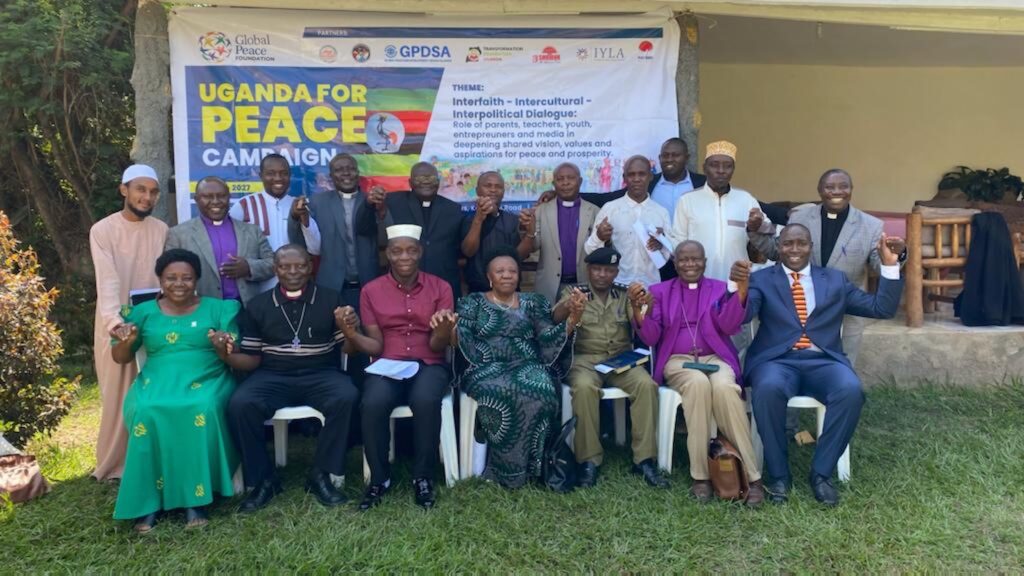
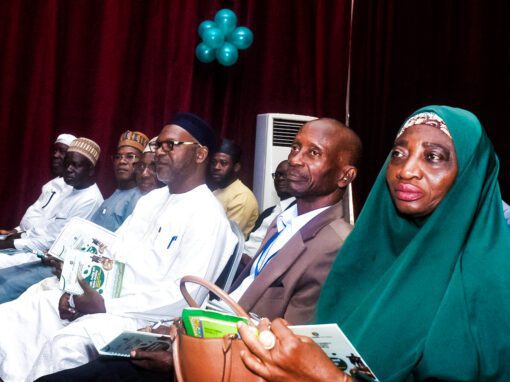
Religious and community leaders come together to launch the Uganda for Peace campaign.
During the campaign and election period, GPF Uganda deployed trained personnel and volunteers nationwide to observe political activities and promote adherence to electoral guidelines. GPF Uganda provided technical guidance to the Electoral Commission, contributing to the development and enforcement of clear standards used to assess the conduct of candidates, supporters, security agencies, and media.
GPF Uganda also facilitated harmonization processes among presidential, parliamentary, and local council candidates to reduce tensions linked to overlapping campaign schedules and contested political spaces. In parallel, volunteers and field reporters were inducted on international election observation standards, human rights reporting, and ethical data collection, ensuring professionalism and credibility in field reporting.
Convening National Stakeholders for Peace
A cornerstone of GPF Uganda’s intervention was the National Peace Conference held on December 11, 2025, in Kampala. The conference brought together sixty key election stakeholders from across government, political parties, religious and cultural institutions, civil society, media, business, and security agencies.
The forum provided a platform for national dialogue on peaceful elections and accountability. Senior representatives from the Uganda Police Force, Uganda Peoples’ Defence Forces, Electoral Commission, Uganda Human Rights Commission, and the Government publicly reaffirmed their commitment to professionalism, non-partisanship, and respect for human rights. A distinguished former prime minister of Uganda urged the nation to break the historical cycle of electoral violence and commit to peaceful democratic transitions.
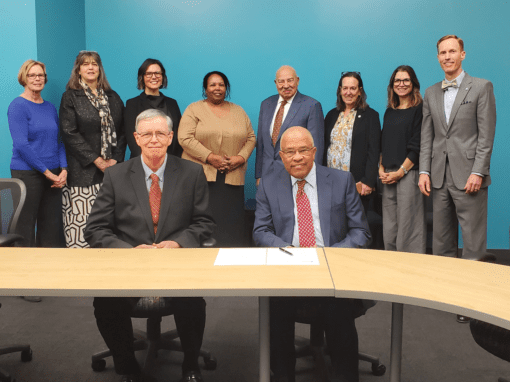
At the conference, GPF Uganda President and Peace Service Ambassador, Amb. Kambula Milton was among the signatories to the National Peace Declaration 2025, committing all stakeholders to peaceful campaigns and respect for electoral outcomes.
Nationwide Peace Messaging and Public Engagement
To deepen public awareness and civic responsibility, GPF Uganda led sustained peace campaigns through national radio and television platforms. With donated airtime, weekly broadcasts reached communities across the country, promoting peaceful participation, unity across political and religious divides, and the vision of One Family Under God. Over the course of three months, these media engagements reached an estimated 255,000 people.
Complementing media outreach, GPF Uganda strengthened stakeholder relationships through cross-sector engagements and symbolic gestures, including the distribution of over 2,500 end-of-year cards to partners nationwide. These efforts reinforced trust, collective ownership, and continued engagement in peacebuilding initiatives.
Anchoring Elections in Moral Leadership and Strong Families
GPF Uganda’s election engagement was grounded in three core pillars: moral and innovative leadership, strengthening families as the school of love and peace, and interfaith and cross-sector collaboration. Leaders at all levels were challenged to understand leadership as service, guided by integrity, accountability, and universal moral principles.
Families were emphasized as the foundation of peaceful societies, with parents encouraged to model civic responsibility, ethical leadership, and peaceful political participation. Youth were mobilized as key stakeholders in Uganda’s democratic future, encouraged to reject violence, participate responsibly, and contribute to peace through service, innovation, and entrepreneurship.
Impact and Looking Ahead
By the conclusion of the 2026 elections, GPF Uganda’s interventions had directly and indirectly impacted more than 255,000 people nationwide. Over 200 political candidates, 100 security officers, and 237 Electoral Commission officials were influenced by GPF’s peacebuilding and governance messaging. Partnerships across political, religious, cultural, and institutional lines were strengthened, contributing to improved coordination and mutual accountability.
The programme’s impact extended beyond the electoral period, rekindling national unity, reawakening families to their moral responsibility, repositioning youth as builders of peace, and reviving African values such as Ubuntu. With plans to produce a comprehensive post-election report, GPF Uganda aims to contribute lessons and best practices to guide future elections in Uganda and serve as a model for peaceful democratic processes across the region.