The Global Peace Foundation (GPF) Nigeria, in partnership with Global Peace Women (GPW) and the Hope for the Village Child Foundation, marked International Women’s Day 2026 with a community-focused program in Kaduna State that brought together 74 participants, including 60 women leaders, to strengthen families and promote sustainable peace through practical and values-based approaches. Held on March 17, the program moved beyond commemoration to address underlying drivers of instability at the household level. Anchored in the vision of One Family under God, the initiative emphasized that peacebuilding begins within families and extends outward into communities. Through a combination of interactive learning, economic empowerment, and values formation, participants were equipped to take on leadership roles in fostering both social cohesion and resilience.
A key feature of the program was the integration of drama and dialogue to explore real-life family dynamics. Participants engaged with scenarios addressing gender-based violence, financial decision-making, the impact of harmful practices, and creating space for reflection and shared learning. These sessions reinforced the concept of the family as the “school of love and virtue,” where values are first learned and practiced.
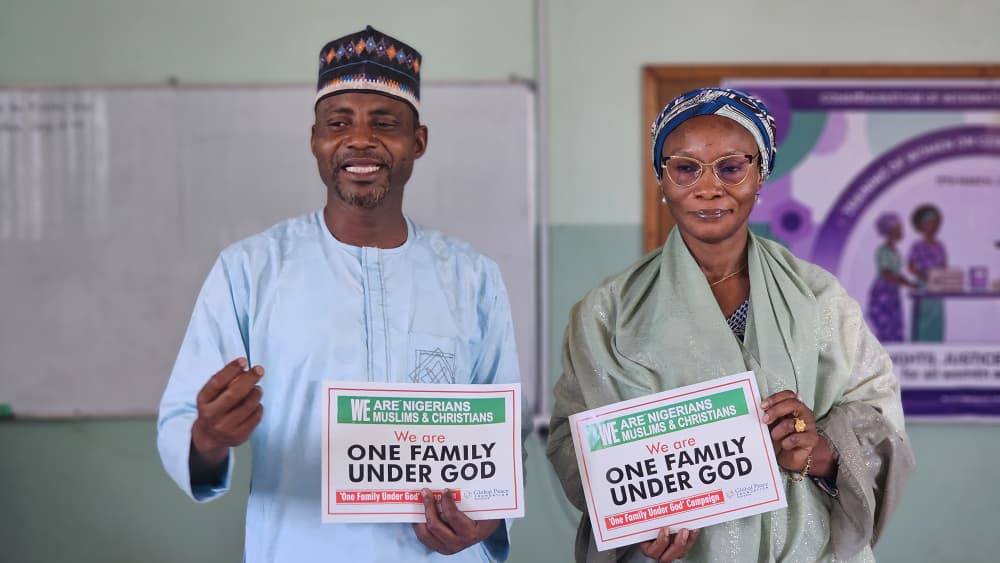
GPF Nigeria Senior Program Manager, Mr. Abdul Ahmed, and GPW Coordinator, Mrs. Lois Hayab, during the event, shared the vision of One Family Under God
Complementing this values-based approach were technical sessions on Cereal Banking and Village Savings and Loan Associations (VSLA). These models provided participants with practical tools to improve household food security and financial stability. By learning how to collectively store grain and access low-interest loans, the women gained new strategies to reduce economic vulnerability and support long-term investments such as children’s education.
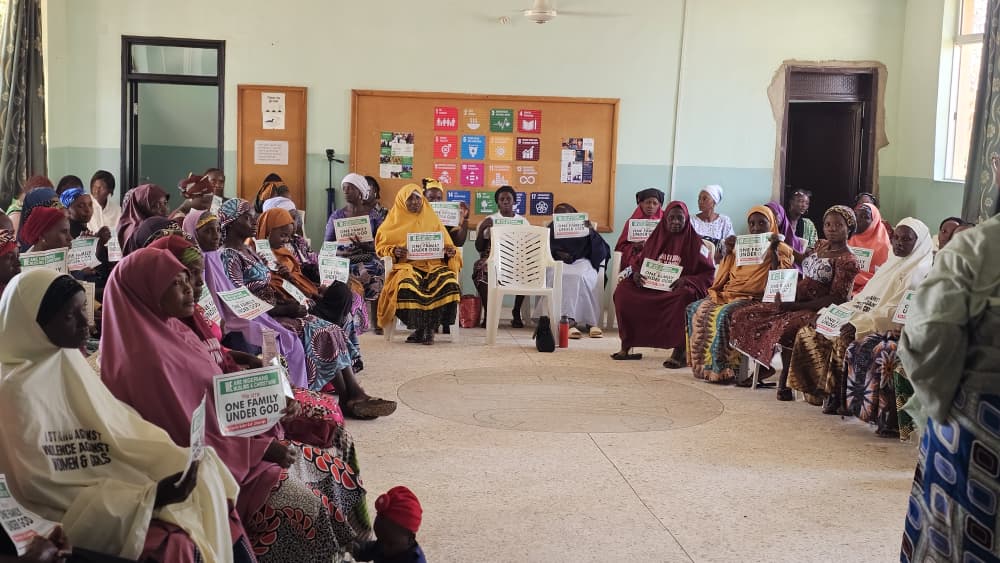
Participants at the training venue
Participants described the training as both practical and transformative. “Before this training, I viewed peace as something managed only by leaders, but I now understand that peace begins in the home,” said Murna Dauda. “The practical sessions on VSLA and cereal banking have given me the tools to secure my family’s financial future. I am now empowered to move from a state of survival to a lifestyle of ownership and service within my community.”
Amina Ahmad, a community women leader, highlighted the impact of the program on family relationships. “This program has addressed the most critical challenges we face, particularly regarding gender-based violence. The drama-based approach opened our eyes to the ‘school of love’ that every family should be. We are seeing a real shift in how husbands and wives relate, and we are committed to sustaining these values-based models for a more cohesive society.”
Mrs. Lois Hayab, GPW Nigeria coordinator, reminded participants, “If there is no peace in the home, it will inevitably result in a lack of peaceful coexistence in the community and the nation.”
The outcomes reported following the training reflect significant behavioral change. Thirty participants indicated that gender-based violence had ceased within their immediate family circles, alongside a reduction in harmful practices such as female genital mutilation. Participants also reported a shift in priorities, with increased focus on education, savings, and long-term family well-being.
In addition to these social impacts, the program strengthened economic resilience among participants. Through the adoption of Cereal Banking and VSLA models, women are transitioning from individual financial vulnerability to collective security. Grace John, a participating leader, noted, “By teaching us to ‘dream big’ through cereal banking, you have helped us protect our harvests and our children’s education. This is a roadmap for sustainable development.”
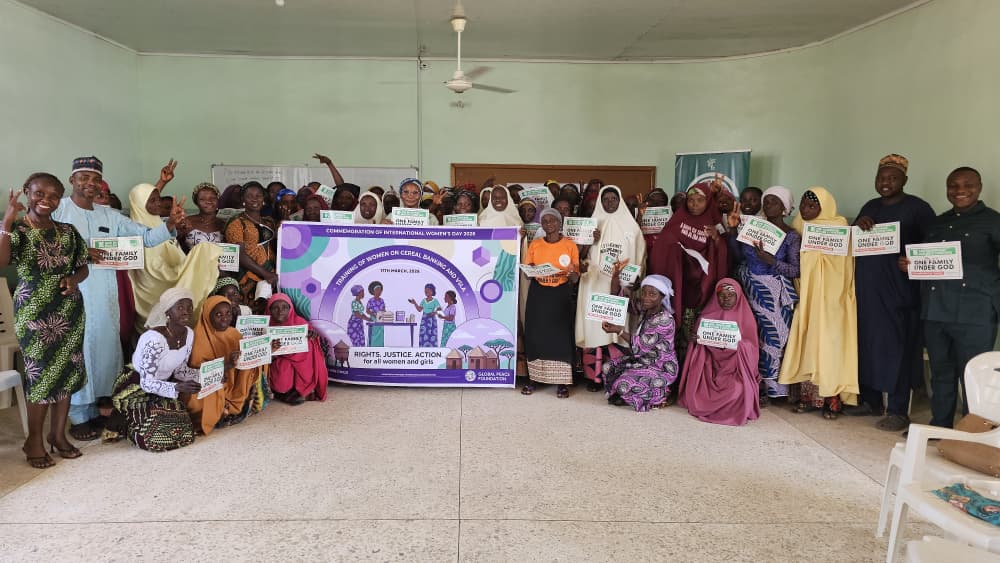
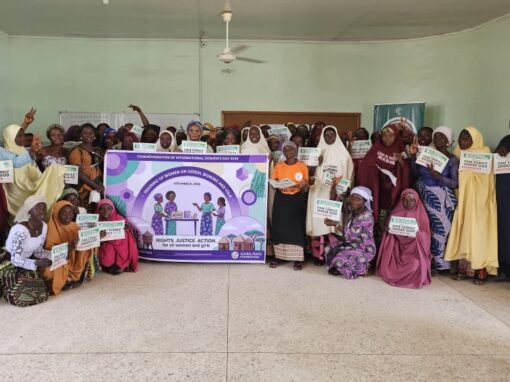
Group photograph of participants shortly after the 1st session of the commemoration and training
The program also demonstrated strong potential for sustainability and scale. Of the 60 women trained, 43 are already applying the knowledge gained to lead similar initiatives within their communities. Through step-down trainings and peer-led engagement, the model is being replicated across different wards, fostering a growing culture of service and shared responsibility.
This initiative reflects the Global Peace Foundation’s integrated approach to peacebuilding, which combines character and leadership development, interfaith collaboration, and community-driven solutions. By empowering women as agents of change within their families and communities, the program contributes to building more cohesive, prosperous, and peaceful societies.
Explore how the Global Peace Foundation and Global Peace Women are advancing the central role of women and families in peacebuilding, and join the movement to strengthen communities.