In August 2025, Global Peace Foundation (GPF) Tanzania deepened its commitment to building resilient communities and promoting all-encompassing participation in peacebuilding. Through a combination of national dialogues and grassroots workshops, the GPF strengthened Tanzania’s democratic culture, encouraged peaceful elections, and enhanced the role of women and youth in decision-making processes.
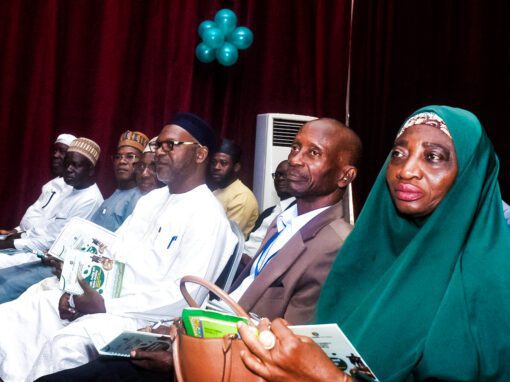
At the national level, a multi-stakeholder dialogue held at the Julius Nyerere International Conference Centre brought together 260 participants from political parties, religious institutions, security agencies, media, and civil society. The dialogue produced eight resolutions that emphasized tolerance, non-violence, and responsible media engagement during elections. Tanzania’s unique democratic culture was celebrated, with participants recognizing the country’s peaceful leadership transitions and traditions of unity. The dialogue reaffirmed that peace is one of the nation’s most important assets. As one participant remarked, peace must remain rooted in values of love, forgiveness, tolerance, and mutual respect.
Religious leaders pledged to maintain neutrality and continue their moral leadership in promoting reconciliation and unity. Security agencies reassured citizens of their commitment to safeguard constitutional rights during the upcoming elections while also addressing threats such as misinformation and hate speech. The media was recognized as both a potential driver of peace and a source of conflict, with stakeholders urging responsible reporting to protect cohesion.
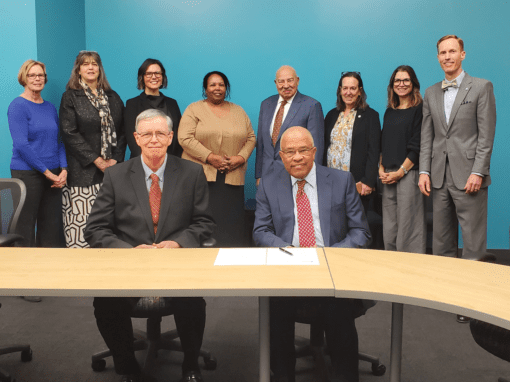
A highlight of the dialogue was an award ceremony that recognized national leaders for their efforts in advancing environmental conservation, peace, and justice. The award message read, “This award is presented by Jumuiya ya Maridhiano na Amani Tanzania (JMAT) together with Global Peace Foundation Tanzania in recognition of efforts to value and preserve peace, justice, and national unity.” Among the leaders honored were: the president of the United Republic of Tanzania, the second vice president of Zanzibar, the chairperson of JMAT, and the country director of GPF Tanzania.
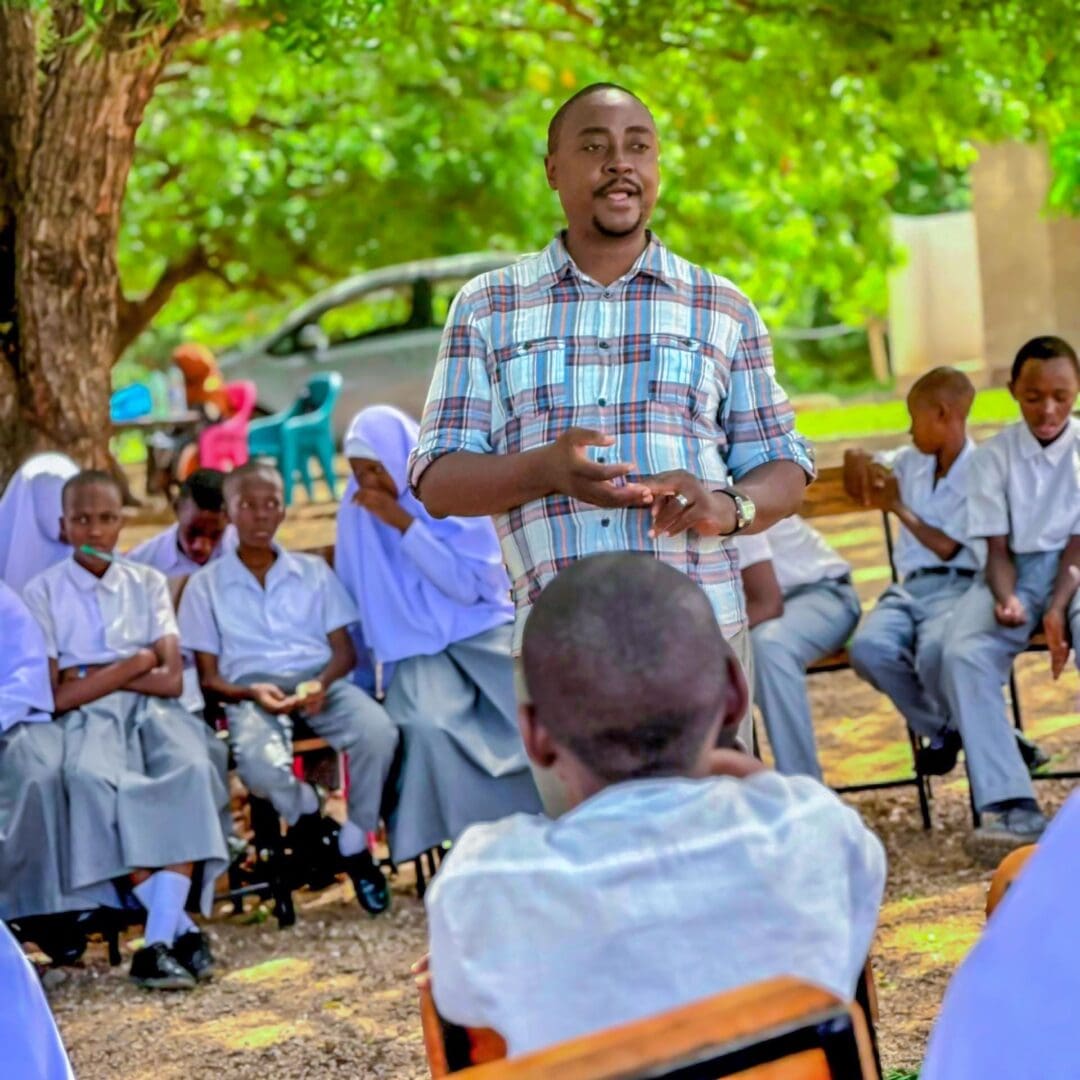
GPF Tanzania representative speaks to a youth club about gender-based violence.
At the community level, GPF Tanzania implemented capacity-building workshops across Mihambwe, Michenjele, Mayanga, and Nanguruwe wards. Eighty women and youth, including persons living with disabilities, participated in two-day sessions that addressed gender-based violence, gender equality, and social presence. The results were transformative. Knowledge of gender-based violence increased from 65% in pre-tests to 93% in post-tests. Furthermore, 94% of participants expressed readiness to take part in decision-making spaces such as ward councils, school boards, and community groups.
The impact of these workshops extended beyond statistics. One participant from Nanguruwe shared a powerful testimony about a young girl abandoned after becoming pregnant. Using knowledge from the training, the participant counseled the girl and helped reconcile the couple, who are now jointly raising their child. Stories like these illustrate how training is equipping ordinary citizens to take extraordinary steps in addressing gender-based violence and building stronger families.
Participants also developed four ward-level action plans targeting schools, boda boda (motorcycle riders) groups, and health centers to sustain gender-based violence prevention and response efforts. Women reported greater confidence in challenging harmful practices, while youth committed to using sports and peer groups as platforms for awareness. Since January, women trained by GPF Tanzania have been actively leading village meetings, school campaigns, and door-to-door outreach, creating ripple effects of change across communities.
Communities are becoming more receptive to messages of gender equality, with noticeable improvements in joint decision-making and recognition of girls’ education. One of the key lessons observed is that empowering women with skills and knowledge produces long-term ripple effects that transform families and entire communities. Despite challenges such as cultural resistance and occasional misinterpretations of peace messages on social media, the overall impact has been overwhelmingly positive. Partners have encouraged GPF Tanzania and its collaborators to scale up their work in additional regions, recognizing the role of these initiatives in reinforcing Tanzania’s reputation as a beacon of peace in Africa.
Learn more Tanzania | Global Peace Foundation