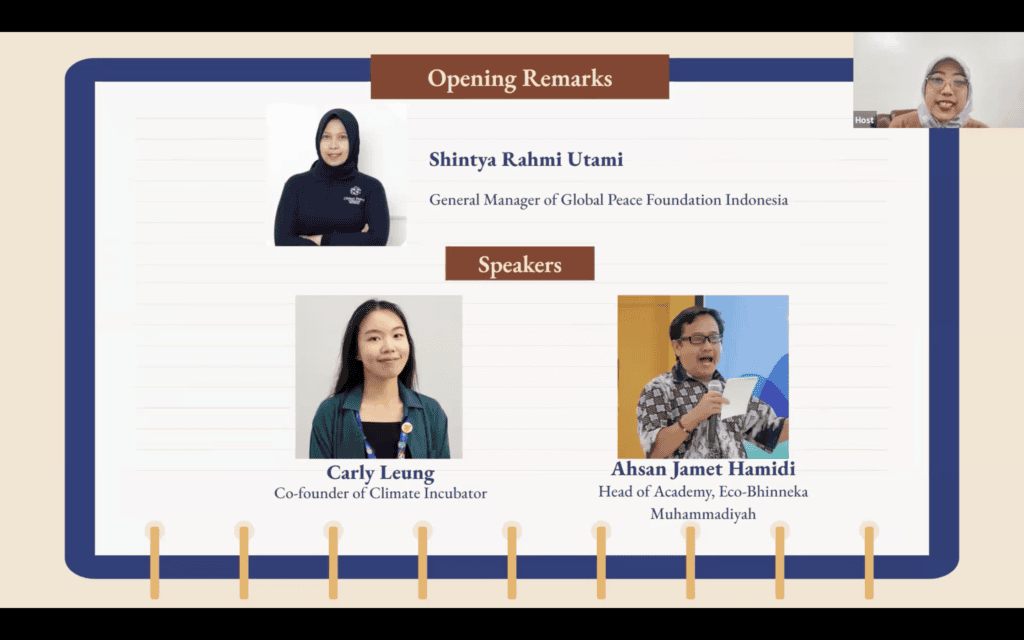
Screenshot from the UGen Webinar, “Youth, Environment, and Peacebuilding: Taking Action for a Sustainable Future”
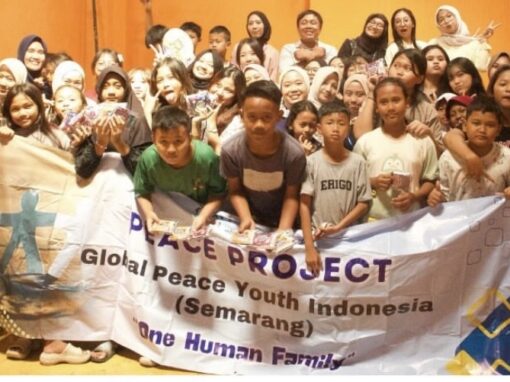
Young people have an important role to play in addressing environmental challenges and building more peaceful, resilient communities. Through the UGen Webinar, “Youth, Environment, and Peacebuilding: Taking Action for a Sustainable Future,” Global Peace Foundation (GPF) Indonesia brought together students, young leaders, educators, and members of youth organizations to explore the connection between environmental sustainability, community engagement, and peacebuilding.
Shintya Rahmi Utami, general manager of GPF Indonesia, opened the webinar by encouraging young people to recognize their vital role in responding to environmental challenges through collaboration, innovation, and active community participation. She emphasized that environmental responsibility should not be viewed only as an ecological issue, but also as a shared commitment to creating peaceful, resilient, and sustainable societies.
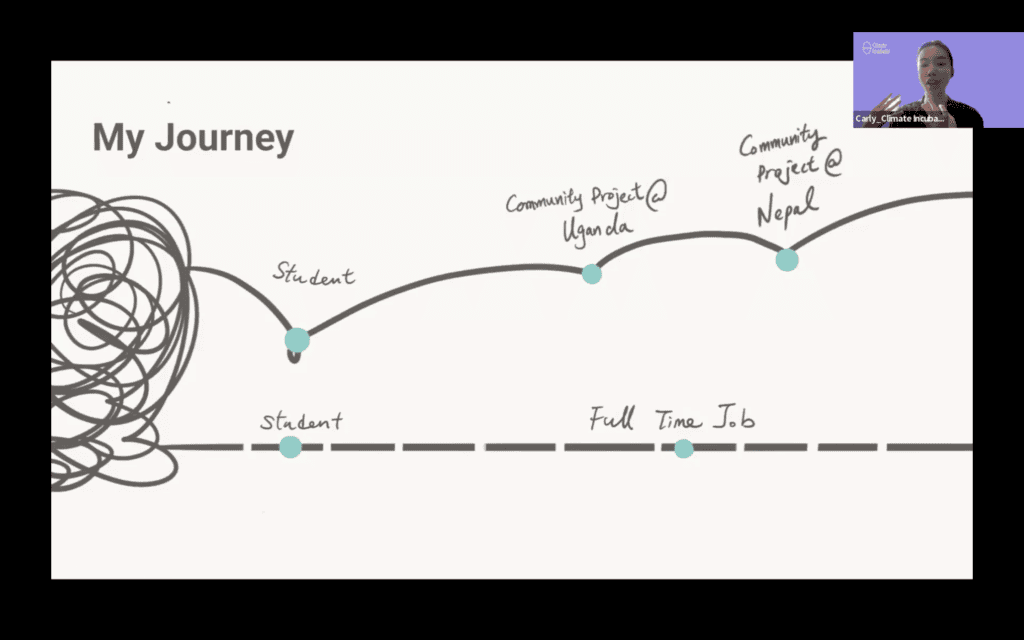
The first session featured Ms. Charly, environmentalist and author, who spoke on “Creative Environmental Action for Peacebuilding and Sustainable Communities.” She highlighted creativity as one of the most effective ways to inspire environmental awareness, especially among younger generations. Through storytelling, art, digital media, and community-based initiatives, environmental campaigns can become more engaging and encourage wider public participation.
Screenshot from the UGen Webinar, “Youth, Environment, and Peacebuilding: Taking Action for a Sustainable Future”
Ms. Charly also explained that environmental action contributes directly to peacebuilding by fostering cooperation, strengthening community relationships, and empowering people to address shared challenges together. She encouraged participants to begin with simple, consistent actions in their own communities, showing that meaningful change often starts with small initiatives carried out collectively.
The second session was delivered by Ahsan Jamet Hamidi, head of Academy Eco-Bhinneka Muhammadiyah, who spoke on “Faith, Diversity, and Environmental Responsibility: Building Eco-Peace through Community Action.” He emphasized that caring for the environment is a shared moral responsibility across faith traditions and that religious communities have an important role in promoting ecological stewardship.
Through the Eco-Bhinneka Muhammadiyah initiative, he demonstrated how environmental programs can strengthen interfaith collaboration while fostering tolerance, mutual respect, and social cohesion. He explained that protecting the environment should also be understood as an effort to build stronger relationships among diverse communities and encouraged young people to become active leaders in local environmental movements that combine ecological responsibility with peacebuilding values.
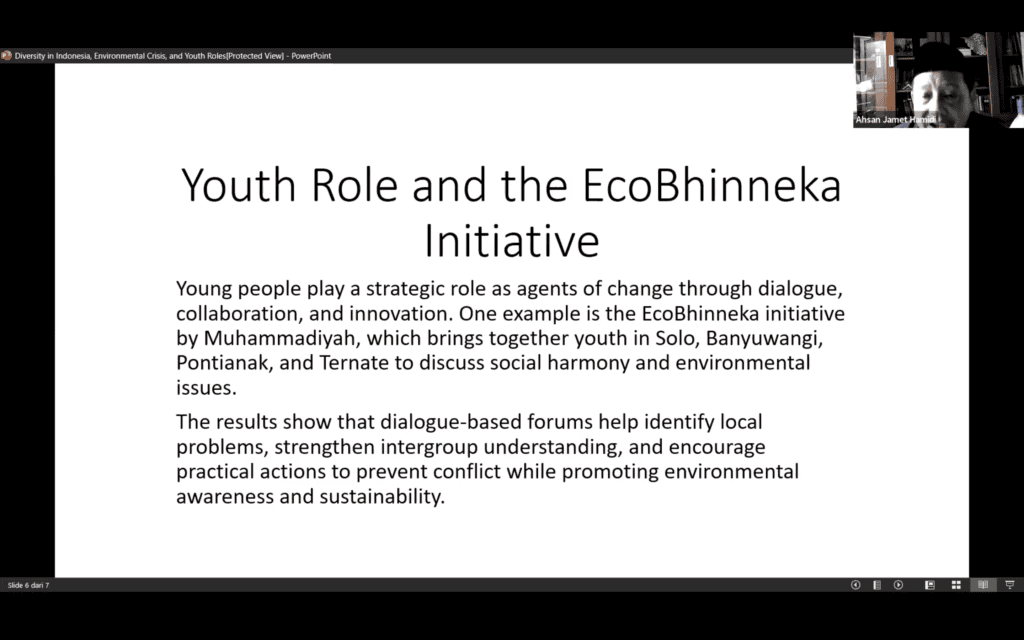
Screenshot from the UGen Webinar, “Youth, Environment, and Peacebuilding: Taking Action for a Sustainable Future”
Throughout the webinar, participants engaged in interactive polls and discussions, sharing the environmental issues that concern them most in their communities and exchanging ideas on creative actions young people can take to address those challenges. The question-and-answer session reflected participants’ interest in practical approaches to environmental action and cooperation across different sectors and communities.
One participant, Bayu, reflected on the program, saying, “The speakers shared practical insights that helped me understand the important role young people play in creating a more sustainable and peaceful future. The discussion motivated me to become more involved in community activities.”
Through initiatives like UGen, GPF Indonesia continues to empower young people as agents of positive change. By bringing together environmental practitioners, faith-based leaders, and youth from diverse backgrounds, the program demonstrates that environmental sustainability and peacebuilding are deeply interconnected. It also shows that when young people take action for the environment, they help strengthen cooperation, social harmony, and shared responsibility for a more sustainable future.