Transformative education plays a vital role in fostering sustainable peace and social cohesion within families, communities, and society at large. Moving from a traditional academic model to a more holistic approach to learning, the Global Peace Foundation (GPF) Uganda’s Transforming Education initiative aligns with GPF’s Transforming Education in the Global South strategy. Through this initiative, GPF Uganda collaborates with partners to provide administrators and educators with the foundation needed to drive this important educational transformation for Ugandan students.
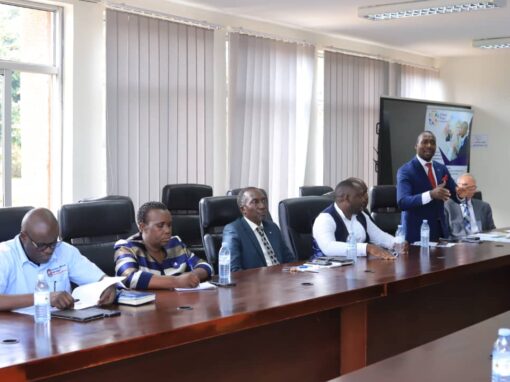
On August 20-21, GPF Uganda partnered with the National Curriculum Development Centre to organize the 2nd International Conference on Curriculum Development held in Kampala. The two-day hybrid event focused on the purpose and future of education, including the milestones and implementation of the new curriculum. It equipped more than 700 participants from different countries with valuable insights into the importance of preparing young people with the knowledge, skills, and values needed to build strong character and become moral and innovative leaders in an ever-changing world.
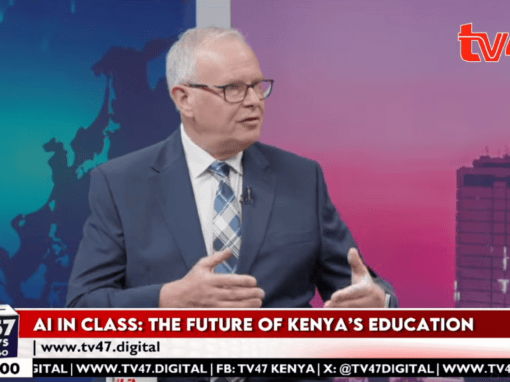
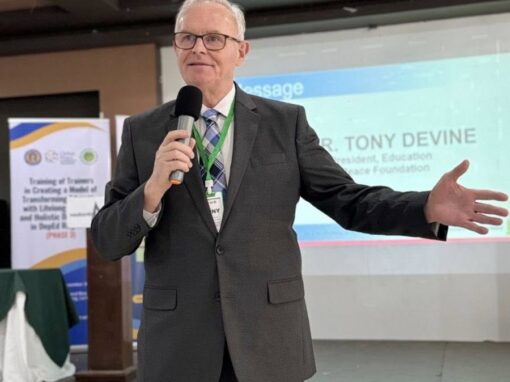
Dr. Tony Devine, vice president of education for GPF, delivered the keynote address. He emphasized the critical need to fully implement the competency-based reform currently underway in Uganda and across other African countries. Highlighting the important role that administrators, principals, teachers, and parents play in helping young people develop character-building competencies such as collaboration and critical thinking, Dr. Devine called for the reprioritization of funding to ensure these adults are equipped with the knowledge, skills, and resources to be effective role models.
Additionally, he explained that every person possesses four interdependent dimensions—spiritual-moral, mental-cognitive, emotional-relational, and physical vitality. Dr. Devine noted that the spiritual-moral dimension is primary as it is the “seat of conscience.” He further emphasized that for education to be truly effective, it must be aligned with these four human dimensions.
Professor Benson Banda, PhD, director of Zambia’s National Science Centre and president of SMASE‑Africa, asked: “How do we design what we don’t know?” He emphasized the need to have a curriculum that provides young people, both now and in the future, with “the employable skills” and creativity to thrive in a constantly changing environment. Reinforcing the importance of employability, Dr. Loy Muhwezi, commissioner for technical and vocational education and training in Uganda, stated, “Curriculum review, curriculum implementation, curriculum assessment or evaluation, must include employers.”
To keep curriculum up to date and relevant, GPF Uganda Director and Peace Service Ambassador Kambula Milton challenged curriculum developers to reform curriculum every five years. Emphasizing the need for character and moral values to guide the development and use of rapidly changing technologies, he called on parents and religious and cultural leaders to support schools in promoting the spirit of Ubuntu, centered on our shared humanity.
Several participants, including Dr. Kedrace Turyagyenda, the permanent secretary of the Ministry of Education and Sports; Dr. Bernadatte Nambi Karuhanga, the director of the National Curriculum Development Centre; and Dr. Harris Mugebawala, a senior manager of Population, Research and Social Development Planning at the National Planning Authority, expressed gratitude for the important work that GPF is undertaking to transform education in Uganda and across Africa.
The large attendance of educators and stakeholders at the conference underscores the significance of Uganda’s commitment to education reform. Recognizing education as a key driver of social and economic development and a foundation for sustainable peace, Uganda has prioritized expanding equitable access to learning initiatives. As the Uganda Ministry of Education and Sports states (2019), “The main thrust of the reform in the education sector focuses on enhancing equitable access, and ensuring quality education for social transformation, integration and national development/modernization.”
While this transformation is neither easy nor quick, it is essential if young people are to thrive in their families, communities, and society. To do so, they must be equipped with core competencies rooted in a holistic approach to education that incorporates universal principles and shared values, providing the foundation to become our future moral and innovative leaders. GPF Uganda will continue to collaborate with its partners to make its Transforming Education initiative a reality.