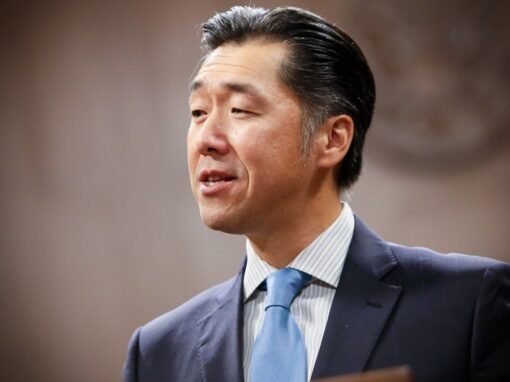
South Korea’s demographic crisis is raising questions that go beyond birthrates and economic policy. While the country has seen a modest rise in fertility in recent years, its birthrate remains exceptionally low. Dr. Hyun Jin Preston Moon, founder and chairman of the Global Peace Foundation (GPF), argues that financial incentives alone cannot address the deeper changes taking place in how people view marriage, parenthood, family, and responsibility. The OECD’s 2025 Korea’s Unborn Future report similarly finds that family policies alone have not been sufficient to make work and motherhood compatible, pointing to the wider pressures shaping decisions about family and parenthood.
In recent interviews with The Korea Times and UPI, Dr. Moon points to the weakening of intergenerational relationships and the decline of Korea’s traditional extended-family culture as important dimensions of the demographic challenge. He highlights the potential of stronger family networks, including greater responsibility for caring for older relatives, while encouraging Korea to examine its own cultural traditions as it considers responses to changing social conditions.
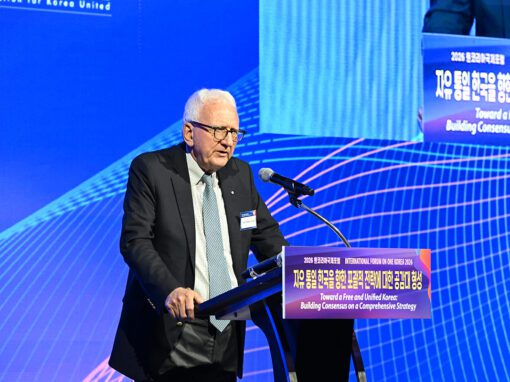
These perspectives featured prominently at the 2026 Global Family Forum in Seoul, where discussions examined whether family culture and stronger intergenerational relationships can complement economic and social policies in responding to demographic decline. For Dr. Moon, the conversation ultimately reaches beyond population numbers to questions of values, responsibility, and the kind of family and society that can support future generations.
Read More:
The Korea Times – “Korea’s demographic crisis rooted in changing family values”: Global Peace Foundation head
UPI – “Moon says South Korea’s birth crisis goes beyond economics”