As a simple handyman living in the Seattle area, attending an event titled “Voices from North Korea” seemed like it might go over my head or be hard to relate to, since the speakers and topics being
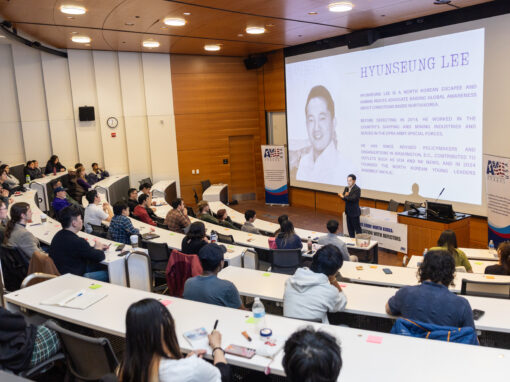
Audience at the AKU “Voices from North Korea” event at the University of Washington.
discussed were from such a foreign land compared to the one I am living in. However, based on my prior engagement with one of the partnering organizations, Global Peace Foundation, I knew that while the harsh circumstances faced by North Koreans would be very different from the abundance we have in the United States, the aspirations of North Koreans to create a better world based on the ideals of freedom, human rights, family values, and service would likely be highly relevant to my own pursuits. By the end, I was pleasantly surprised by how much my assumption was confirmed and how much I gained personally from attending.
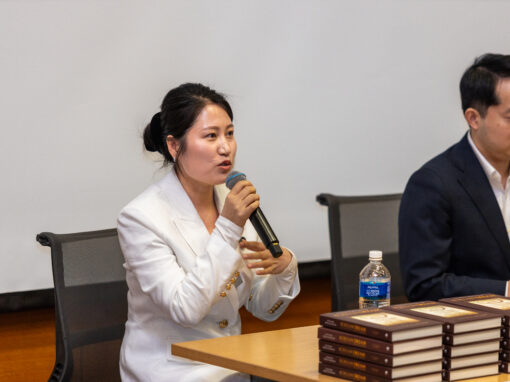
Walking through the entrance to the venue at Paccar Hall at the University of Washington on April 1, it was stunning to see the magnificent lobby with high ceilings and modern architecture that seemed to exemplify the epitome of Western civilization, built on the high ideals of God-given freedoms and unalienable human rights. It seemed like the ultimate contrast to the life portrayed by the North Korean escapees, most poignantly by Ms. Jihyang Kim, who described her experience being detained in a tiny cell with more than 20 other prisoners as punishment after one of her attempts to escape amid a famine. In the crowded cell, she was constantly monitored by a surveillance camera, even while using the openly visible toilet at the back of the cell. She ended up fasting for over a week and becoming sick to avoid the humiliation of having to use the primitive communal toilet.
Audience at the AKU “Voices from North Korea” event at the University of Washington.
I could sense that most of the audience experienced a similar culture shock as Ms. Kim went on to describe the reality of the indoctrination and mental oppression faced by North Koreans. She asked the audience, “What would it be like if every decision was decided for you?” After a brief silence, she answered, “I don’t have to imagine,” because that was her entire life before escaping as a teenager in 2012 into China.
Ms. Kim recalled that after relocating to South Korea in 2016, some of her new friends asked her questions like, “What do you want to be?” She couldn’t answer because she had been trained from childhood to never think for herself, only to repeat answers that the regime had taught her.
This experience and journey of gradually “finding her voice” inspired her to pursue a career in education, because she saw that if the wrong education can control people, the right education can free them. She especially wants to help North Korean escapees see themselves as agents of change rather than as victims.
Hyunseung Lee was the other “voice from North Korea,” representing a different background and experience. While Jihyang grew up in poverty, coming from a farming family, Hyunseung was born into the elite class, with his father serving as a high-level government official.
However, even with certain privileges like having enough food to eat, the core issues related to restricted freedoms were the same. The entire ruling class also lives in a state of slavery, with every move monitored and controlled. Hyunseung described it as living in a “silver cage,” as opposed to the “iron cage” that the average North Korean lives in.
During his time in the North Korean army, he stated that approximately 50 percent of the time was spent looking for food and fuel, 30 percent was spent on ideological education, and only 20 percent was spent on actual training. It sounded more like an indoctrination camp than a viable military.
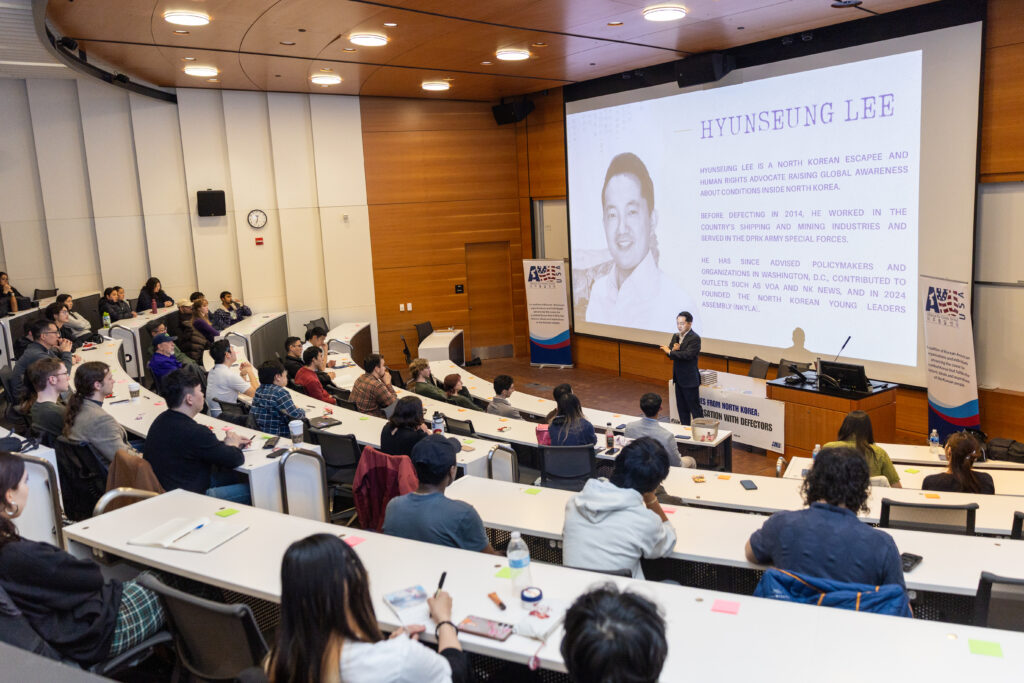
Hyunseung Lee speaking at the AKU “Voices from North Korea” event at the University of Washington.
In 2013, when Kim Jong Un ordered the execution of his uncle and started a purge of all his relatives, Hyunseung realized that this was not the type of leader he could support. He eventually escaped to South Korea along with his sister in late 2014.
Most significantly, after moving to the United States in 2016, he realized that he had escaped not just for himself, but also so he could become an advocate for the North Korean people who are suffering.
It stood out to me that both speakers had concluded that they would use their newfound voices, not to present themselves as victims, but to speak the truth of the brutality of the Kim regime and to pioneer a way forward toward a free and unified Korean Peninsula, so that all Koreans and the world can prosper and benefit.
This sentiment was echoed by the emcee of the program, Mr. Namsik Yoo, director of Youth Programs at Alliance for Korea United, who presented a vision for a unified Korea called the Korean Dream. The vision is based on Korea’s historical founding philosophy, Hongik Ingan, or the virtue of living for the broad benefit of humanity. It was truly uplifting to see Koreans of various backgrounds holding onto the common ancestral ideal of Hongik Ingan by working together on this significant peacebuilding movement.
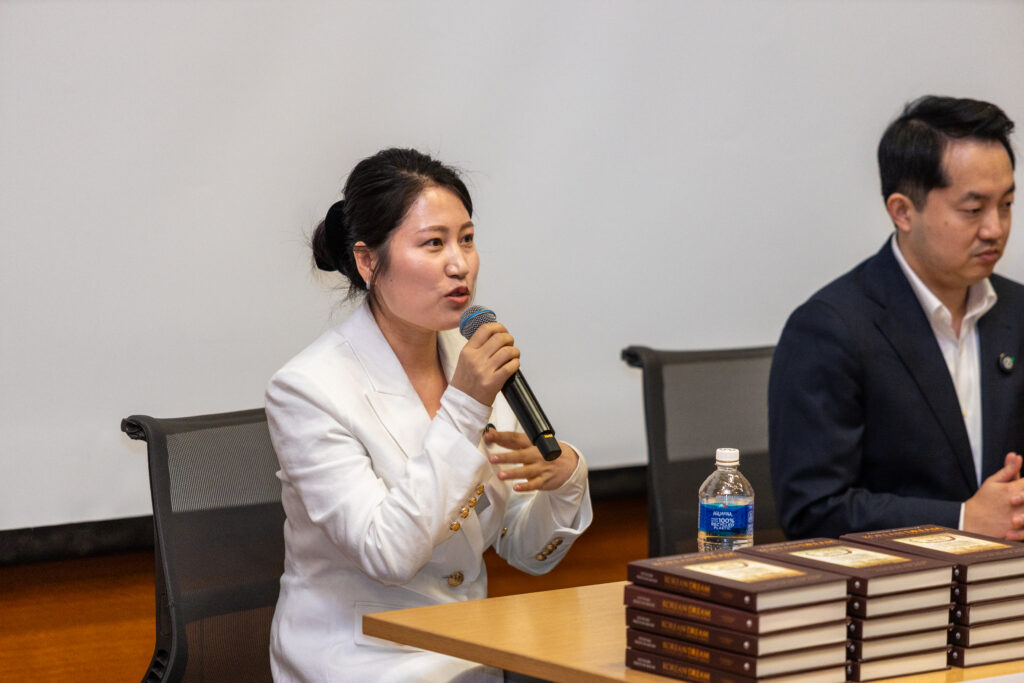
Jihyang Kim speaking at the AKU “Voices from North Korea” event at the University of Washington.
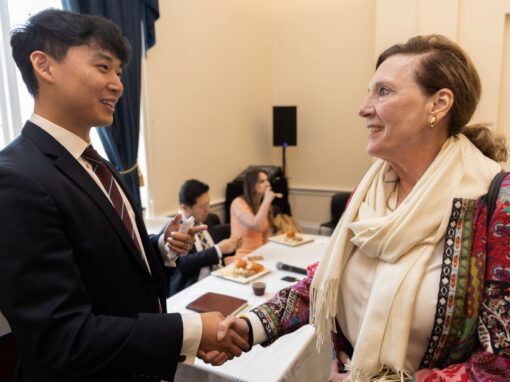
The finale, and the most inspiring part of the program for me, was an introduction by Mr. Shinhyun Kim to the ongoing activities of the campus chapter of Action for Korea United at the University of Washington. Shinhyun, a second-generation Korean American, is president of the club, which was newly established this year. He described the club as advancing the Korean Dream vision for a free, unified, and prosperous Korea. Recently, they held a movie screening of the film Danny from North Korea and supported Radio Free Asia’s efforts to share information with North Koreans.
The other club officers were introduced, and it moved me that there were young people who still have hope and are taking action for a unified and peaceful Korea, all the way here in Seattle, despite 80-plus years of division and many other major challenges obstructing the path.
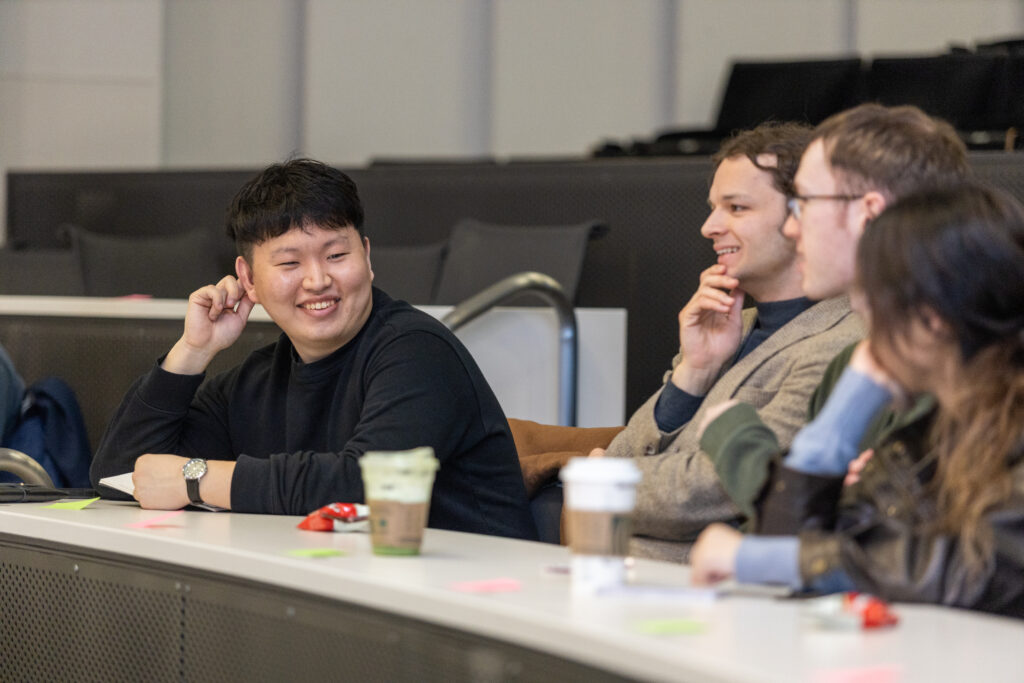
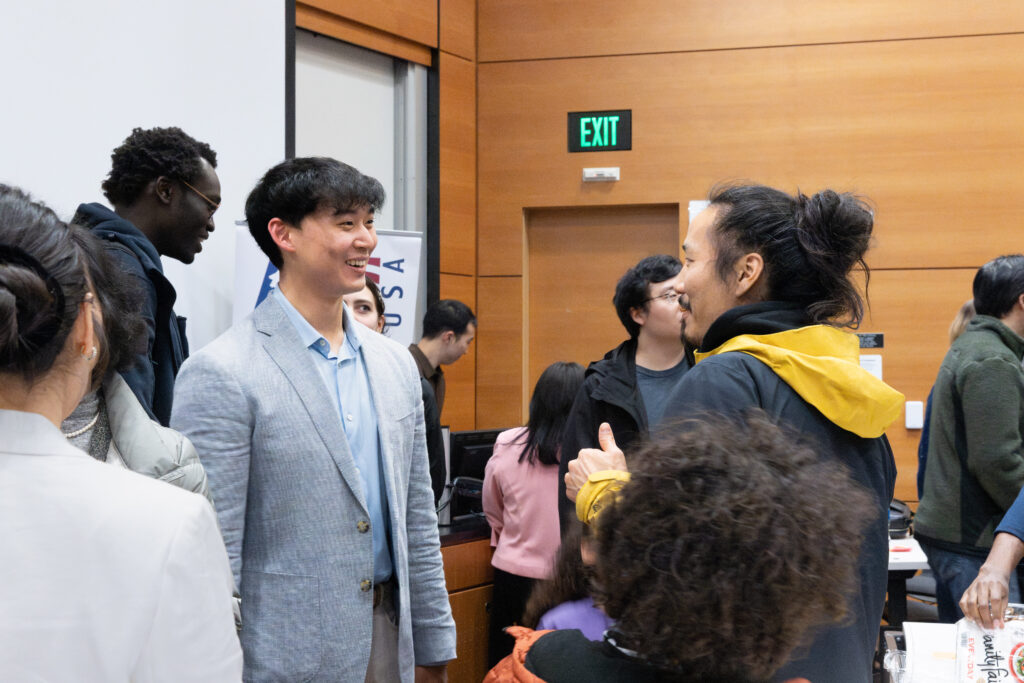
The question-and-answer session that followed reinforced this feeling, as the packed audience of more than 80 attendees showed earnest interest in the Korean people’s plight. Questions covered the geopolitical concerns of reunification, the long-term effects of brainwashing on North Koreans, and a simple yet heartfelt, “Do you miss North Korea?” Mr. Lee answered with a sentimental and slightly remorseful, “In truth, yes, I do.”
In leaving the program, I felt confident that since the youth, especially the young leaders who organized this gathering, have not forgotten about the Korean Dream of a peaceful and free Korea, certainly I and the world will not soon forget these righteous Koreans who are seeking to bring their divided home and people together again. I will stand with them, and I encourage you to as well.