“The combination of love and conscience can unleash everywhere a powerful collective force of transformation for social change, world peace, and human evolution.”
— UN Resolution 73/329, International Day of Conscience
Graduates receiving their certificates from GPF and CCR representatives.
Peace does not arrive by decree; it does not begin in summit halls or foreign policy papers. It begins in the places where people actually live: neighborhoods, markets, schools, and family homes, in the ordinary moments where trust is either built or quietly broken.
The United Nations established April 5 as the International Day of Conscience to remind us that peace is never the work of institutions alone. At its core, this observance underscores the need for societies to uphold the fundamental freedoms that allow individuals to live with dignity, including freedom of conscience, religion, and belief.
Freedom of conscience, religion, and belief is among the most essential of all human rights and is one of the deepest expressions of human dignity and freedom. When this foundational freedom is not respected, other human rights are unlikely to be protected.
This is why Global Peace Foundation’s work is so relentlessly local. GPF recognizes that sustainable peace depends on safeguarding this fundamental freedom in everyday life and ensuring that individuals and communities can live according to their beliefs without fear, exclusion, or coercion. Across 22 nations, GPF does not simply advocate for peace; it builds the conditions that make peace possible, one community at a time.
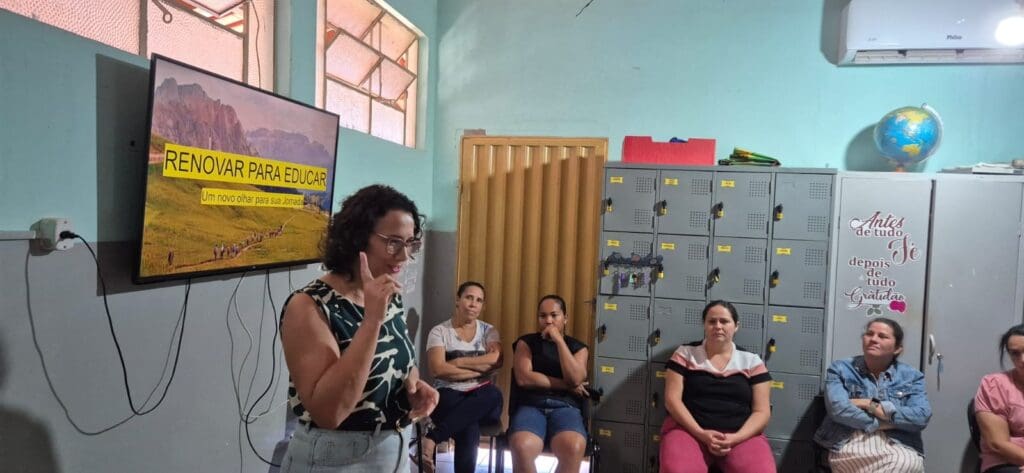
Leaders participate in “Conversations that Connect” to foster peacebuilding in Brazil.
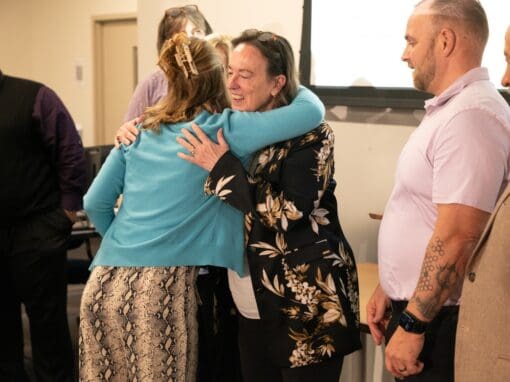
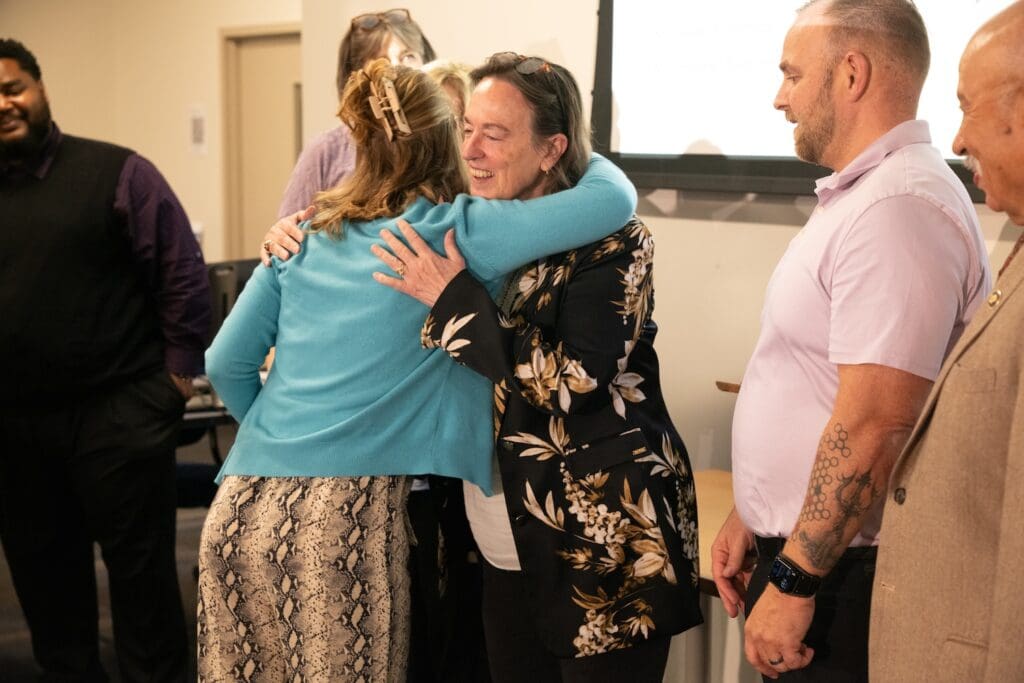
In Baltimore, GPF’s Cross-Community Engagement Project is quietly connecting communities separated by race, distrust, and decades of unaddressed grievance. By creating spaces where individuals can openly share perspectives shaped by their beliefs and experiences, the initiative helps foster trust while respecting differences. In Montana, a pilot of the same model is building unexpected relationships in a region where political and cultural divisions have deepened. Read about the Cross-Community Engagement Project
In Brazil, “Conversations that Connect” gatherings are creating spaces where people who would never otherwise sit in the same room are discovering their common hopes for their families and country. These dialogues demonstrate that protecting the freedom to express one’s beliefs does not divide communities; it strengthens them when grounded in mutual respect and shared humanity. Read about “Conversations that Connect”
These efforts reflect a central principle: peace is not built by enforcing agreement, but by protecting the freedom that allows diverse beliefs and identities to coexist with dignity.
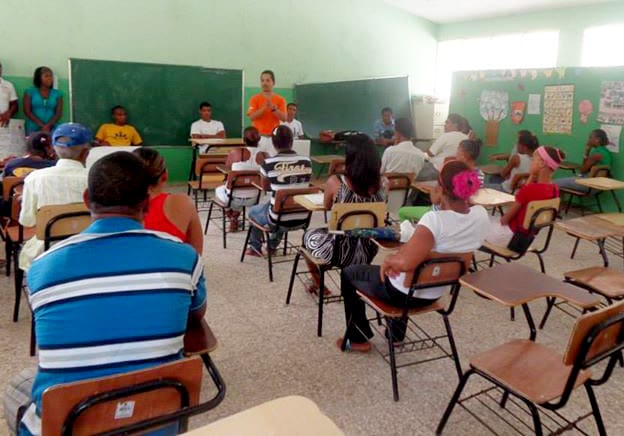
GPD Workshops with the community of El Cidral
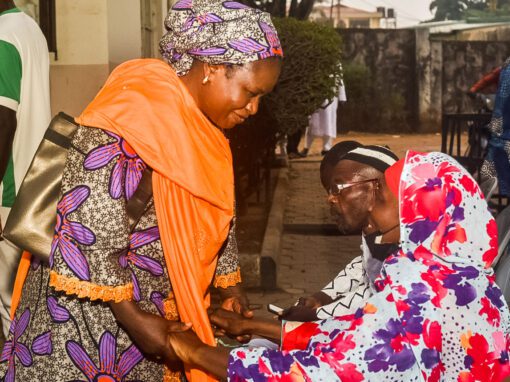
Likewise, over a decade ago, GPF’s Global Peace Development (GPD) program offered a compelling illustration of how material improvement and social cohesion are not separate goals; they are the same goal approached from different angles. What began as a solar lamp distribution effort in underserved African communities grew into a comprehensive model for family self-reliance. When a family has light after dark, children can study, adults can grow small businesses, and security improves.
These programs are not dramatic, nor do they rely on large-scale policy alone. They do not make headlines, yet they make societies more peaceful by strengthening trust, participation, and inclusion at the community level. When individuals are free to live out their beliefs and engage across differences, the forces that divide communities begin to lose their hold. When people know each other, when they have shared meals, worked on projects together, and heard each other’s stories, the rhetoric that dehumanizes them loses its grip. Peace is not built by enforcing uniformity, but by fostering tolerance and respect so that differences can coexist with dignity.
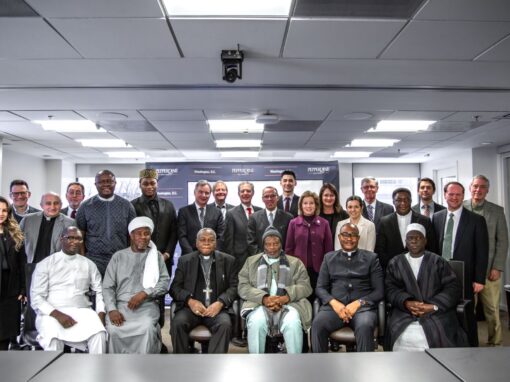
Beyond community work, GPF advances freedom of conscience, religion, and belief through global advocacy and multilateral engagement. Through its initiatives, GPF promotes education, awareness, and action to address both international violations of religious freedom and domestic infringements on religious liberty.
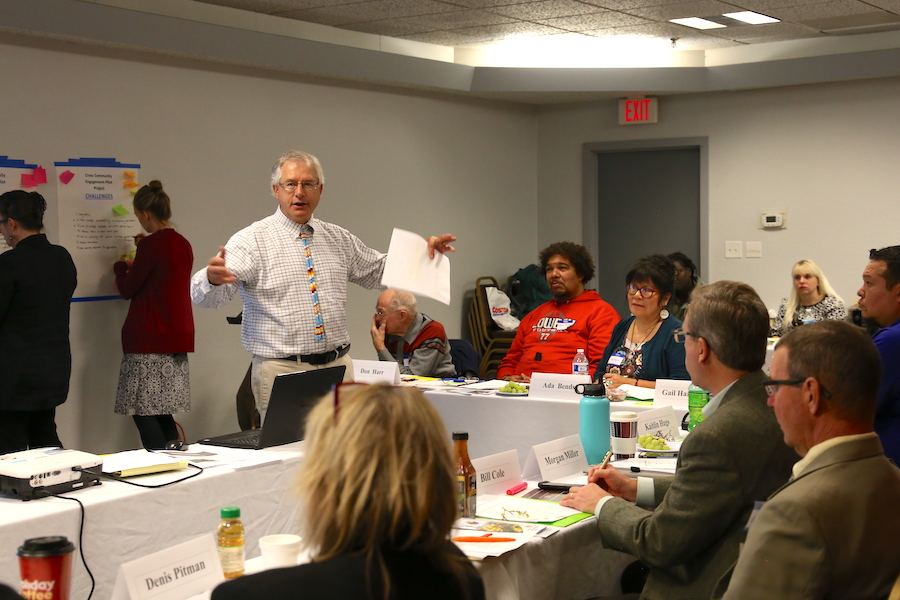
Stakeholders Meeting Introduces Cross-Community Engagement
As a long-standing advocate in this space, GPF serves as co-chair of the International Religious Freedom Roundtable, co-chairs the U.S. Capital Area Coalition on Religious Liberty, and has engaged with the White House Office of Faith-Based and Neighborhood Partnerships to support protections for religious freedom in the public square.
April 5 is an invitation to look at the people around us and ask honestly whether we are contributing to communities where others can live freely, safely, and with dignity. It is a call to uphold in everyday life the freedom of conscience, religion, and belief, not only for ourselves, but for everyone. The path to peace is not found in uniformity, but in the protection of freedom and in the daily work of building communities where that freedom is respected, shared, and sustained.
Support GPF’s work to advance these values through practical, community-based initiatives around the world. Donate to Global Peace Foundation.