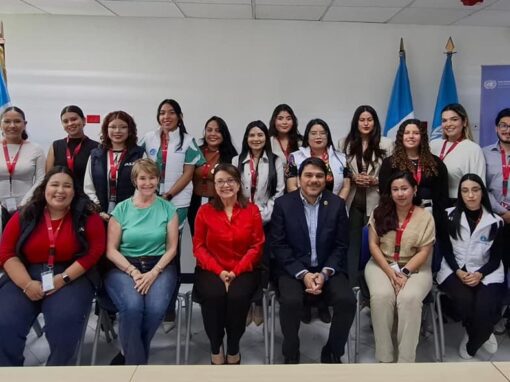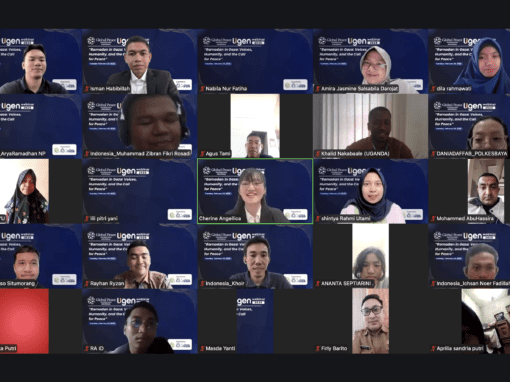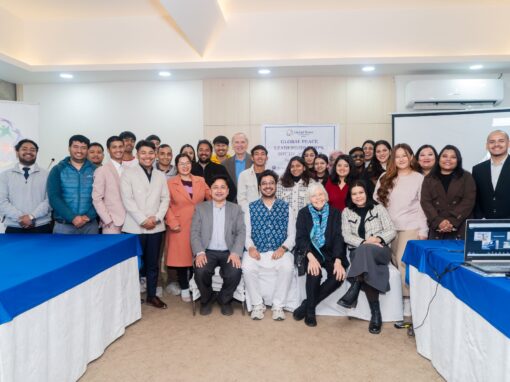
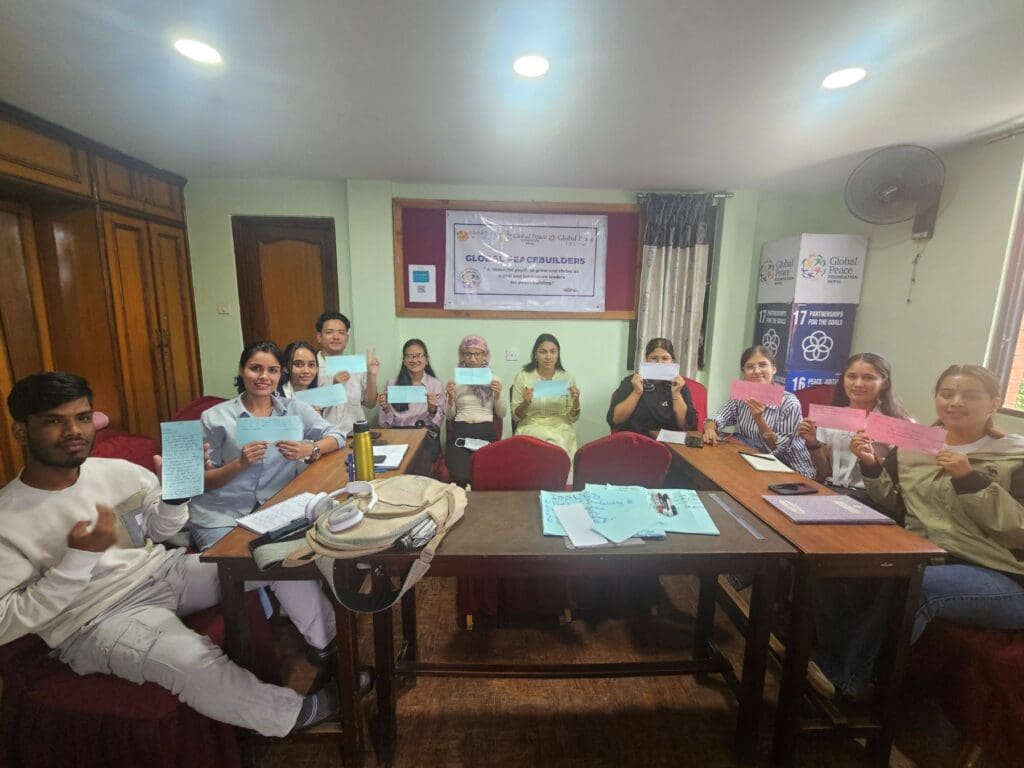
Participants commit to Action for Peace, displaying their actions to establish peace in the country.
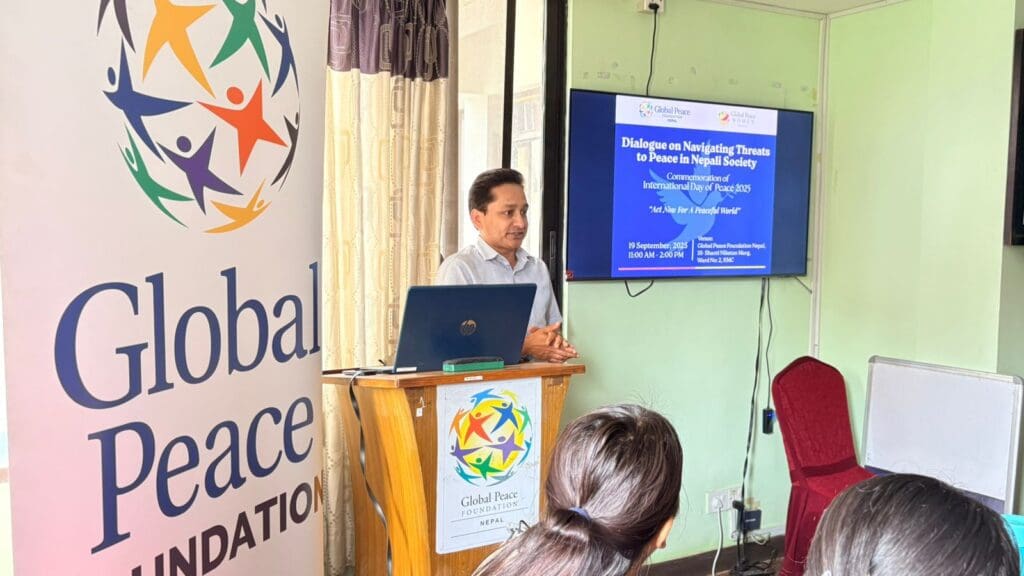
South Asian representative at the GPF, Ram Rohan Panta, delivering his opening remarks in commemoration of the International Day of Peace.
On September 19, 2025, in commemoration of International Day of Peace, GPF Nepal organized a dialogue session on “Navigating Threats to Peace in Nepali Society.” The event included 13 Global Peace Leadership Practicum (GPLP) fellows from Cohort V. South Asian Representative at the Global Peace Foundation (GPF), Ram Panta, while delivering his opening remarks, shared about the recent Gen Z-led movement in Nepal and emphasized the role of stakeholders coming together, working hand-in-hand, to establish peace and harmony in society. He further remarked, “The nation is in the hands of the young generation, and a sense of service, ownership, and stewardship with a nonviolent approach is a prerequisite for nation building.”
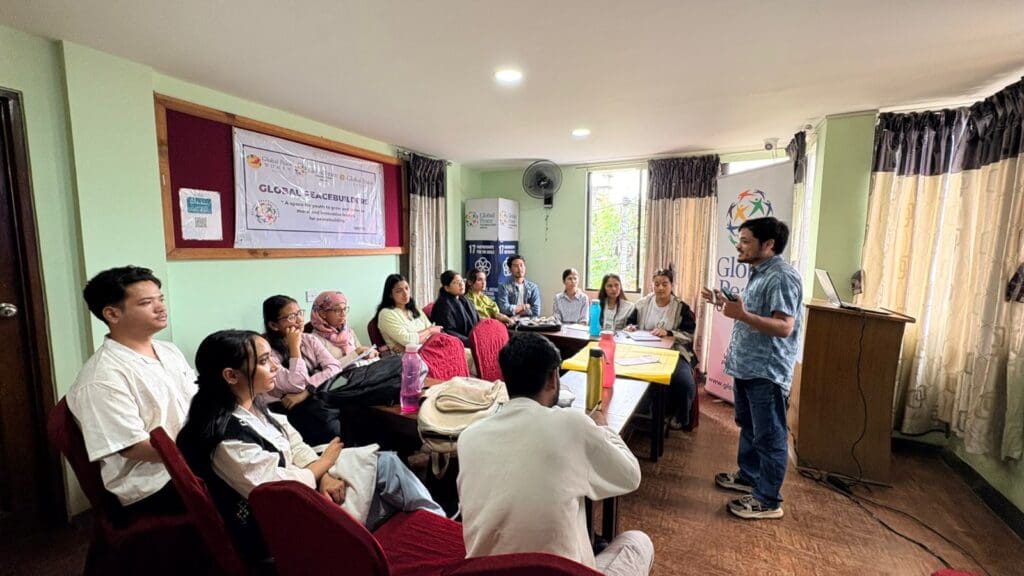
Sagar Khadka, session facilitator, explaining factors that triggered the recent violence in Nepal
Sagar Khadka, a youth leadership development program officer at GPF Nepal, facilitated the session. He explained how the recent conflict between Gen Z protesters and their government turned into chaos and violence. What were the triggering factors? How can we realize that violence is not an option? How can we assess the causes of violence and look for the possible strategies to establish a durable peace in society?
During the session, it was discussed that the root cause of the conflict was the unfulfillment of basic needs. Speakers explained Galtung’s Basic Needs Approach and Maslow’s Hierarchy of Needs, background causes, and proximate causes, which have the potential to provoke violence. Young protestors lost their lives in Nepal when expressing their dissatisfaction with their government after an unprecedented social media ban. The facilitator asserted that background causes of conflict could have been prevented if leaders possessed a strong moral character. However, the lack of proper conflict analysis and the absence of leaders with a principled character foundation made it “impossible to prevent the outbreak of violence.”
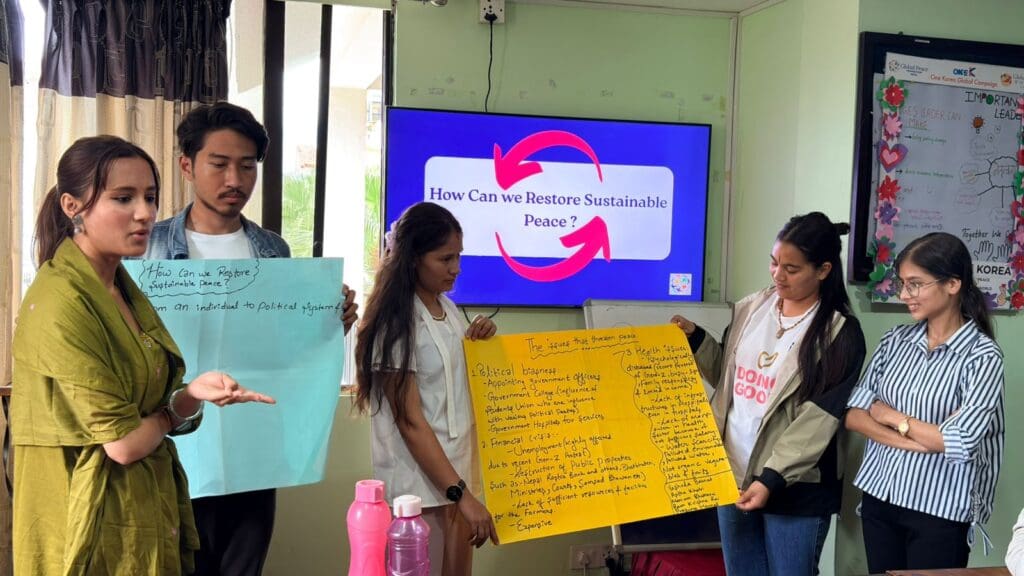
Participants presenting about the causes of conflict and measures to navigate such challenges.
The participants were divided into different groups, each of which discussed the causes that could challenge the peace and harmony in Nepali society. The groups identified political polarization, ethnic tensions, political instability, and unemployment as some of the key factors that can spark violence in Nepal. To navigate such challenges, it is necessary to educate young leaders, whether in the political field or otherwise, on moral leadership. GPF Nepal highlighted that these peaceful dialogues strengthen social cohesion, which lays the foundation to prevent conflict from happening. It was discussed during the session that society should be able to trace spoilers and vigilantes, cynical actors who have their own interests in triggering violence.
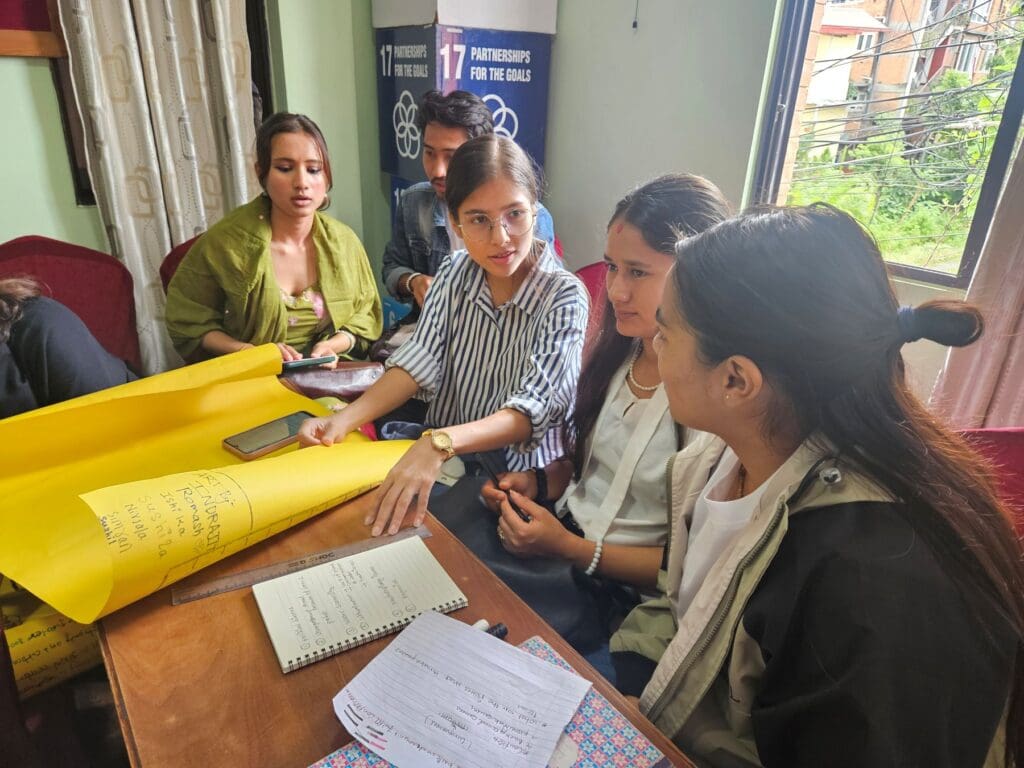
Participants discuss and identify the root causes of conflict and measures to restore peace in Nepali society.
Each participant shared their action for peace. One of the participants mentioned, “I am a peacebuilder, I choose to build peace by promoting ‘say no to violence,’ adopting conflict-prevention measures, fostering personal inner peace, and letting go of hatred.” Another participant remarked, “To establish peace in society, I would stand against violence, injustice, and discrimination and advocate for peaceful dialogue. I would practice empathy, kindness, humility, and respect for everyone to build a harmonious society.”
The conflict parties must realize that there is no alternative to peace. Violence hurts both parties, as it destroys resources and breaks the empathetic heart. Sagar asserted, “While negotiating between the conflict parties, there should be a focus on needs rather than the position.”
Learn more Global Peace Foundation | Nepal