Every year on May 16, the world observes the International Day of Living Together in Peace, a day that reminds us that peace requires continued effort. This year’s theme, “Building Trust through Dialogue, Inclusion, and Solidarity,” could not be more timely.
At a time when wars, intolerance, uncertainty, and mistrust continue to affect many parts of the world, this year’s theme invites us to ask important questions:
How do we continue living together and advocating for peace when division feels easier than dialogue? Where does peace start? Where do we begin building peace, and how?
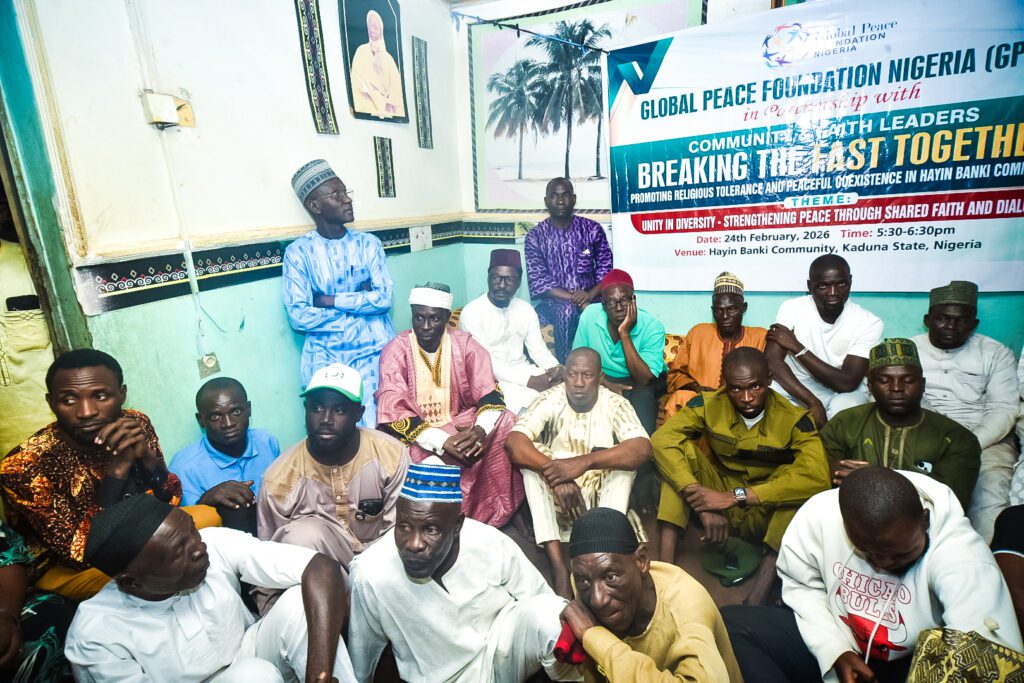
Participants of the interfaith fast-breaking
While there may be no simple answer, peace often begins in the most ordinary places: families, neighborhoods, schools, faith communities, and streets. It begins where people consciously choose to live beside one another with tolerance, trust, and respect. In places where relationships have been broken, peace begins when communities take steps to mend ties, rebuild trust, and pursue reconciliation.
Take the Hayin Banki community in Kaduna, Nigeria, for instance. For years, the community lived with the quiet tension that often follows division: suspicion between neighbors, distance between faith communities, and conversations left unfinished. People shared the same streets, but not always the same sense of belonging.
Recognizing the need for healing, Global Peace Foundation (GPF) Nigeria partnered with Bethel Candle of Hope for the Vulnerable (BCHV) to sponsor the formation of the Hayin Banki Peace and Reconciliation Committee in 2024. Since then, the committee’s work has focused on something deceptively simple: bringing people back into the same room through dialogues, workshops, sports, and other community activities. At the heart of these initiatives is the same goal: helping people come together for honest conversation and to see beyond their differences.
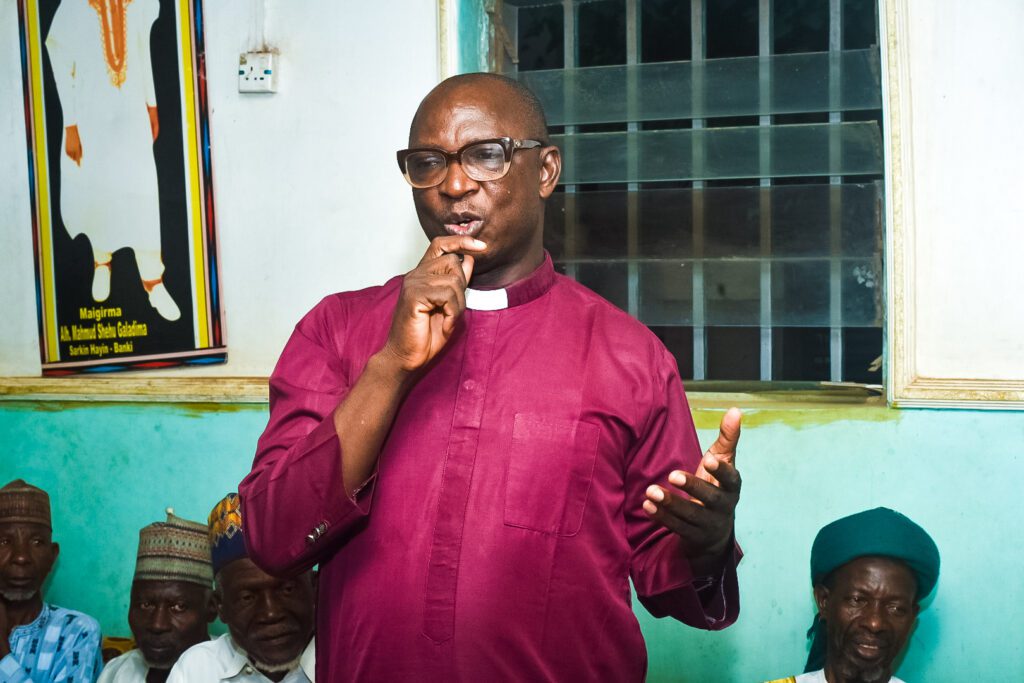
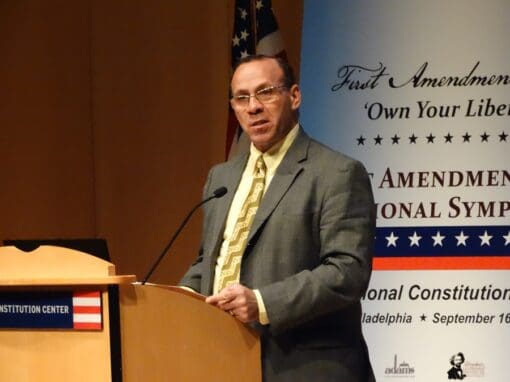
Rev. John Joseph Hayab speaking at the interfaith fast-breaking event
Recently, the Hayin Banki Peace and Reconciliation Committee, together with GPF Nigeria, brought together Christian and Muslim leaders and residents in Hayin Banki for an iftar gathering, creating space for dialogue, direct interaction, and relationship-building. The program reinforced social cohesion shaped by religious diversity. Held under the theme “Unity in Diversity: Strengthening Peace Through Shared Faith,” the program was successful, with Rev. Bulus thanking GPF Nigeria and noting that the gathering “fostered togetherness among people of different faiths.” He added, “Witnessing Christians and Muslims sharing a meal has profoundly strengthened our commitment to peaceful coexistence in Hayin Banki.”
Rev. John Joseph Hayab, Country Director of GPF Nigeria, reflected on these efforts to bring communities together for peace, saying, “Dialogue is not just a tool; it is the foundation of peaceful coexistence.”
Read more here: https://globalpeace.org/gpf-nigeria-hosts-interfaith-fast-breaking-in-hayin-banki-to-strengthen-community-led-peace/
The same lesson on reconciliation can be seen far beyond Nigeria, including in Baltimore, USA.
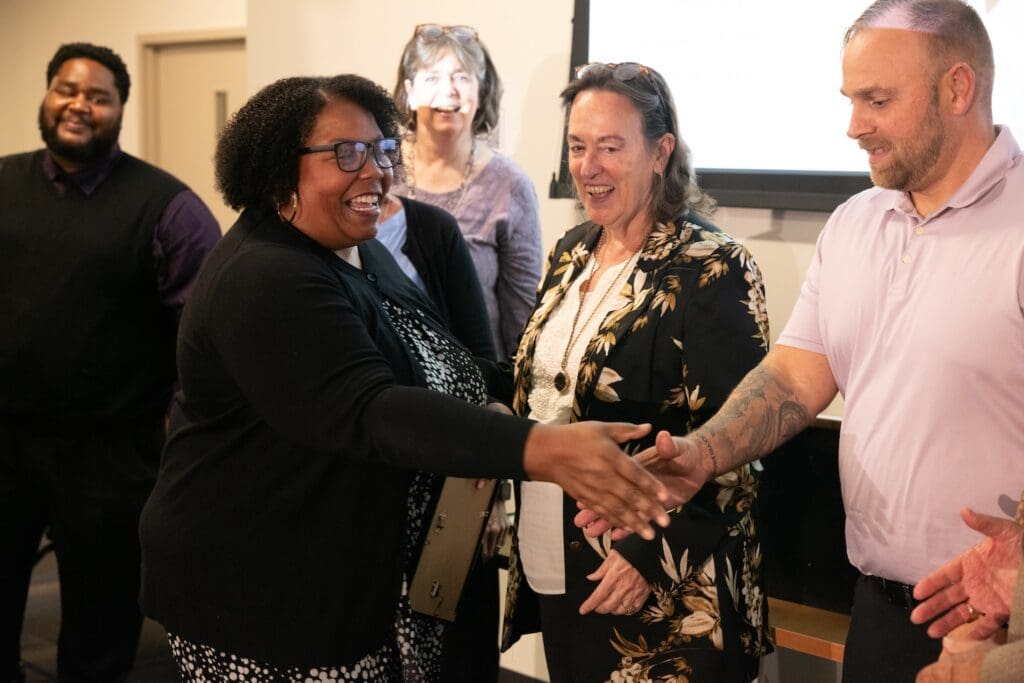
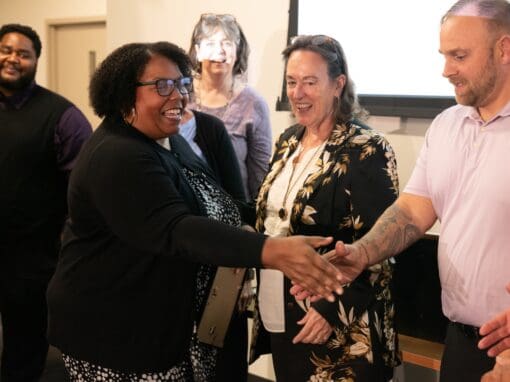
Baltimore participants in the Cross Community Reconciliation project.
GPF’s Baltimore Cross-Community Reconciliation Project (BCCRP) has been working to bridge divisions shaped by race, history, economic inequality, and generations of mistrust. Here, conflict is not always loud. Sometimes it takes the form of silence, with neighborhoods existing side by side but rarely together, and communities shaped by inherited assumptions and unfamiliarity.
The project approaches peacebuilding through local reconciliation, creating spaces where people from different backgrounds can meet honestly, confront difficult histories, and imagine a shared future. Its premise is simple but powerful: reconciliation must be relational. Trust does not grow where stories are ignored. It grows where people are willing to hear uncomfortable truths and still remain at the table.
In cities like Baltimore, peacebuilding cannot be separated from justice. Reconciliation is not about forgetting what happened; it is about refusing to let old wounds permanently define what comes next.
Read the full story here: https://globalpeace.org/global-peace-foundation-charts-a-new-path-to-peace-and-reconciliation-in-baltimore/
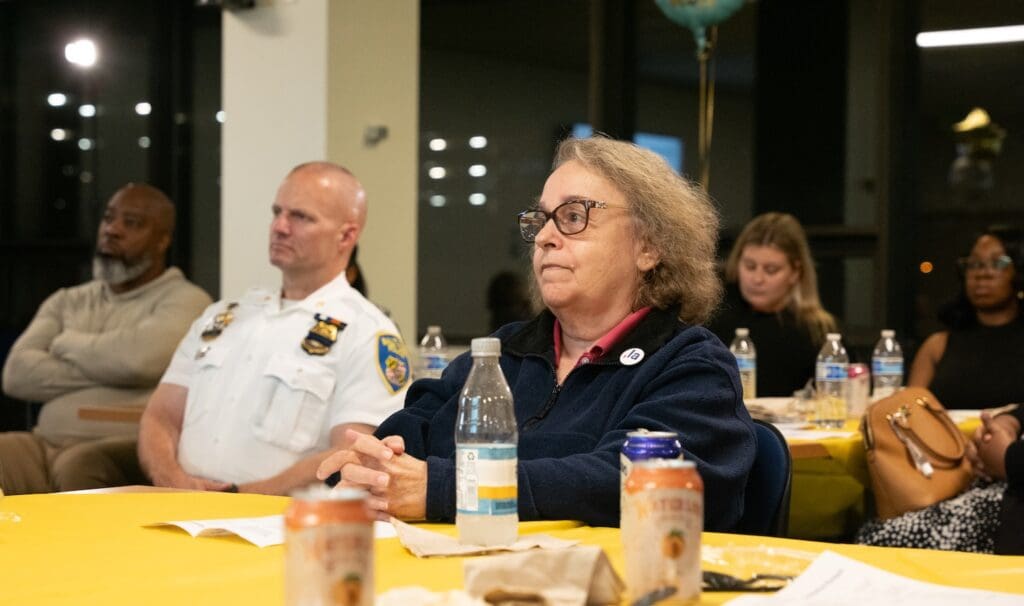
Community members, stakeholders, and local law enforcement come together during a dialogue on cross-community reconciliation in Baltimore.
Living together in peace requires patience and practice in daily life. It is the teacher who chooses fairness in a divided classroom, the faith leader who chooses bridge-building over fear, the young person who chooses empathy over hate, and the neighbor who chooses conversation before conflict.
Sustainable peace is built not only through institutions and agreements, but through the daily choices of individuals and communities to recognize shared dignity, rebuild trust, and work together for the common good.
As we commemorate this year’s International Day of Living Together in Peace, we are reminded of the impact of GPF’s projects in rebuilding trust and fostering peace. The 2026 theme speaks with clarity and purpose, reminding us that peace does not begin when the world changes all at once. It begins when people decide, in small, ordinary, human ways, to make room for one another through tolerance, dialogue, and reconciliation.
GPF is committed to fostering peace that starts in families, communities, and neighborhoods. We reaffirm our commitment to expanding peacebuilding initiatives, strengthening interfaith dialogue, empowering young leaders, and creating spaces where reconciliation can take root and thrive.
If you would like to support our continued efforts for the Baltimore Cross-Community Reconciliation Project (BCCRP), please visit: https://globalpeace.info/donate-to-bccrp