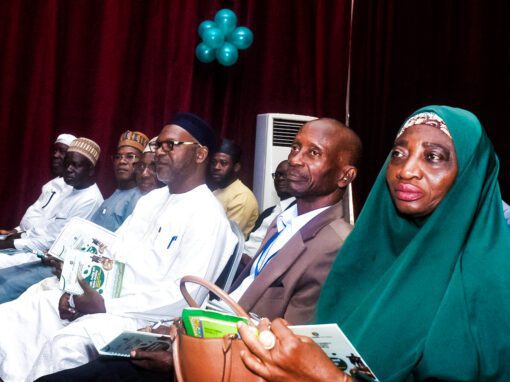
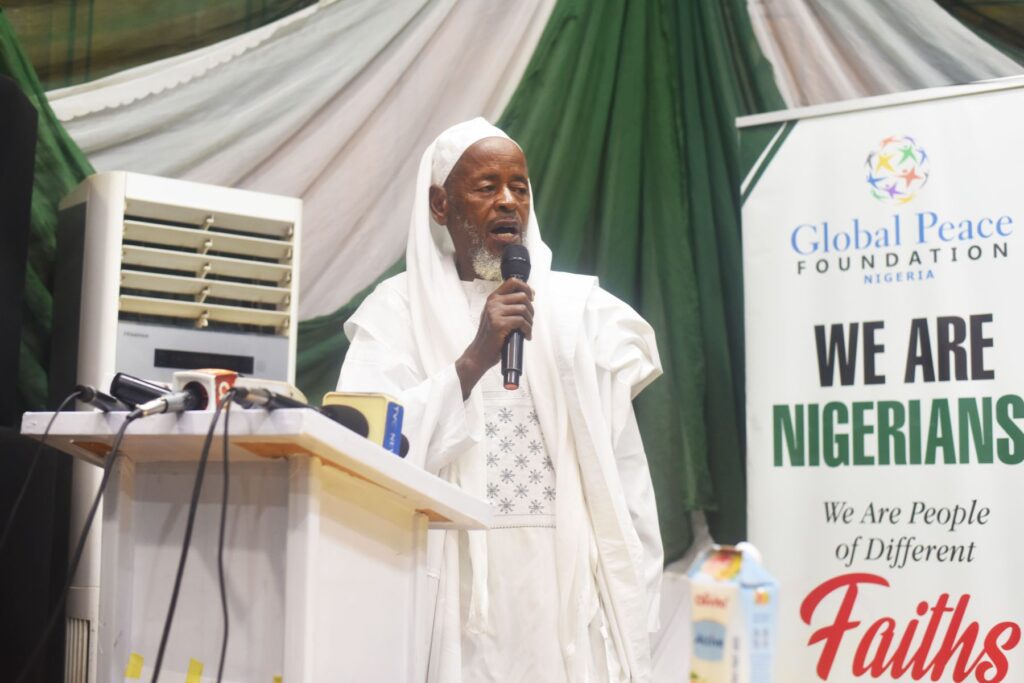
Sheikh Tukur Abdulsalam, representative of Jama’atu Nasril Islam (JNI), delivers his remarks at the event.
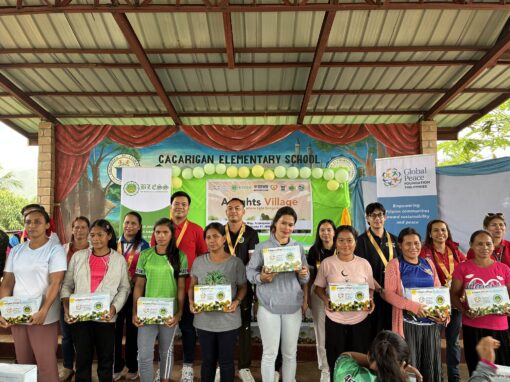
The Global Peace Foundation (GPF) celebrates the work of its field affiliates around the world who are advancing peace through community-driven action. Across regions affected by division and conflict, GPF’s fieldwork brings together diverse stakeholders to foster cross-community reconciliation, prevent violent extremism, and promote locally led peacebuilding. This hands-on approach emphasizes shared principles and values that strengthen connections among different groups, encouraging dialogue and engagement as pathways to trust and understanding. Through training and collaboration, community members gain skills in problem solving, conflict management, and civic leadership, empowering them to resolve disputes peacefully and build resilience from the ground up. It is within this global spirit of practical peacebuilding that Nigeria’s 2025 International Day of Peace celebration found its meaning and momentum.
Every year on September 21, the world pauses to celebrate the International Day of Peace, a United Nations initiative established in 1981 to promote global ceasefire, harmony, and unity. Peace is a conscious choice that requires effort, understanding, and cooperation. It is a call for nations and individuals alike to reflect on shared humanity and take deliberate steps toward building a world where justice and compassion guide relationships. This year’s theme, “Act Now for a Peaceful World,” challenged communities to go beyond reflection and translate ideals into action, emphasizing that peace must be practiced, protected, and lived every day.
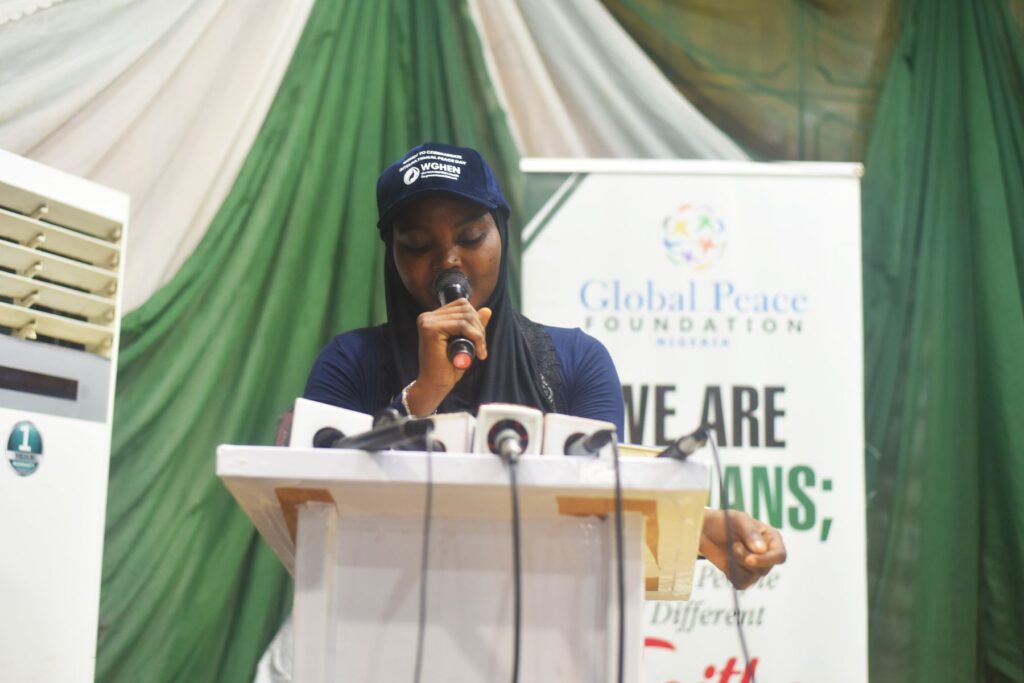
Barrister Farida Oyiza, program manager of Women & Girls Health Empowerment Network, giving her goodwill message
In Kaduna, Nigeria, the message of peace resonated strongly as the Global Peace Foundation (GPF) Nigeria, in collaboration with Church and Society and the Women and Girls Health Empowerment Network (WGHEN), hosted a vibrant celebration at the historic Arewa House. The event drew over 250 participants, comprising government officials, traditional and religious leaders, youth and women’s groups, civil society actors, and the media. Kaduna State, once considered one of Nigeria’s most volatile regions, has undergone a visible transformation under the leadership of Governor Uba Sani, who assumed office in May 2023. His approach to governance, known as the Kaduna Peace Model, seeks to engage diverse stakeholders: faith leaders, traditional rulers, community representatives, and security agencies, to promote dialogue and inclusion as tools for rebuilding trust. His leadership has reduced conflict incidents, fostered reconciliation, and inspired hope in communities once torn by ethnic and religious strife.
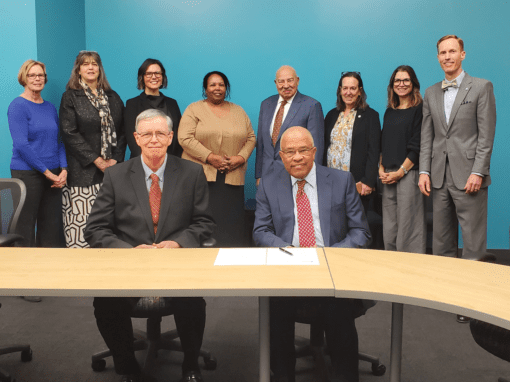
In recognition of these efforts, Governor Sani was honored with the Champion of Unity in Diversity Award by the Global Peace Foundation. Represented by Barrister Suleiman Shuaibu, the Commissioner for Internal Security and Home Affairs, the governor reaffirmed his belief that peace cannot be imposed from above but must be cultivated through fairness, dialogue, and empathy. He called on citizens to uphold these values within their homes, places of worship, and communities, emphasizing that sustainable peace requires everyone’s participation.
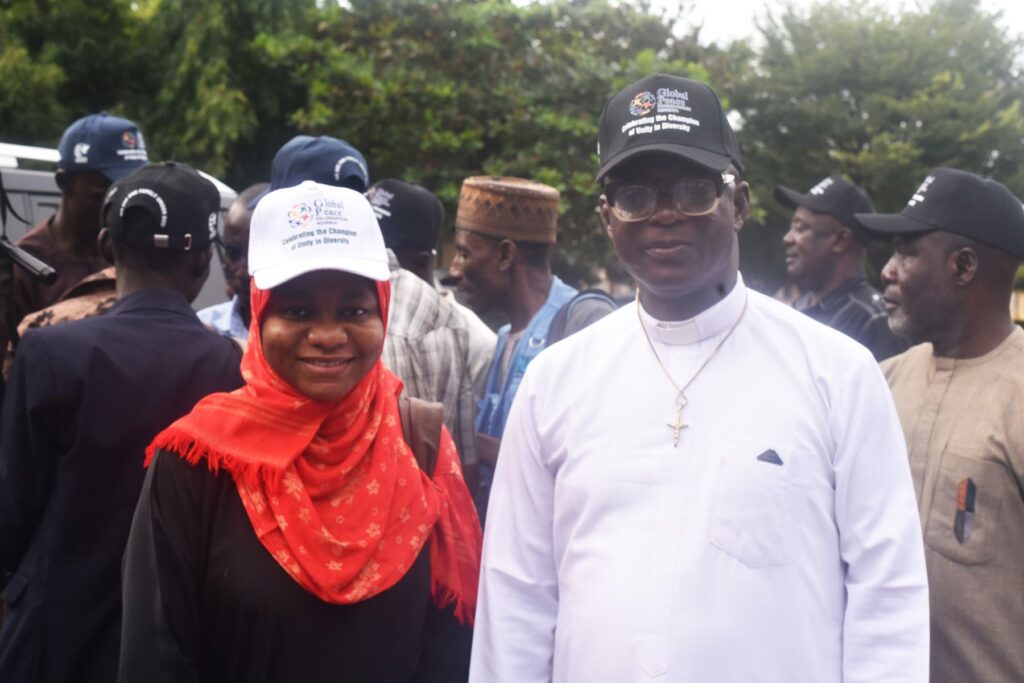
Rev. John Joseph Hayab, country director of GPF Nigeria, with Aisha Yakubu, program officer for Global Peace Women Nigeria, after the event.
The event also recognized Reverend John Joseph Hayab, Country Director of GPF Nigeria, who was celebrated for over two decades of tireless work in advancing interfaith harmony and community reconciliation. Community leaders from Hayin Banki, one of Kaduna’s most diverse neighborhoods, presented him with an Interfaith Harmony and Peace Advocate Award, acknowledging his leadership in transforming tension into trust through consistent dialogue and moral courage. In his response, Rev. Hayab attributed the success of peace in Kaduna to the collective will of citizens who chose dialogue over division and friendship over fear. “Let this award be a challenge to us all to never tire in working for peace,” he said.
Muslim, Christian, and Hindu leaders stood side by side in prayers and reflections, offering a profound image of coexistence. Cultural performances and documentaries highlighted stories of reconciliation, including testimonies from communities like Mando, Ungwan Gwari, Maraban Rido, and Hayin Banki, areas that have witnessed firsthand the impact of peace initiatives. Women’s and youth groups shared how inclusion in peace programs has opened new paths for empowerment and dialogue.
Dr. Ma’aji Peterx, in his keynote address, reminded participants that peace is not achieved through silence or denial of conflict but through courage, justice, and fairness. Others, like Barrister Farida Mohammad Oyiza of WGHEN, stressed the essential role of women in nurturing peace at the family and community levels, while Sheikh Tukur Abdulsalam of Jama’atu Nasril Islam called on all faith communities to make their voices louder than those who profit from division.
GPF Nigeria announced plans to deepen partnerships with the state government and civil society through quarterly interfaith dialogues and peace education programs to sustain the momentum generated by the Kaduna Peace Model.
Discover more about GPF’s Community-driven Peacebuilding Initiatives.