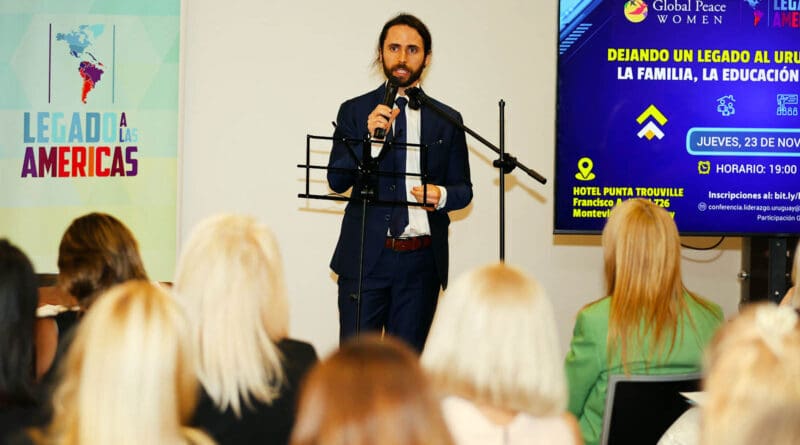
Legacy of the Americas Speaker
Legacy of the Americas was launched in 2020 under the sponsorship of the Global Peace Foundation. More than just a testimonial initiative, it defines itself as a civic consciousness movement—an active force committed to influencing the public agenda across the continent through principled ideas and proactive engagement.
The movement is grounded in a clear set of foundational principles: the existence of a Creator, the sacred value of human life, individual rights and responsibilities, free will, universal ethical values, the centrality of the family, character education, republican and democratic governance, economic freedom, ethical and innovative leadership, good governance, and a firm opposition to dictatorship in Latin America.
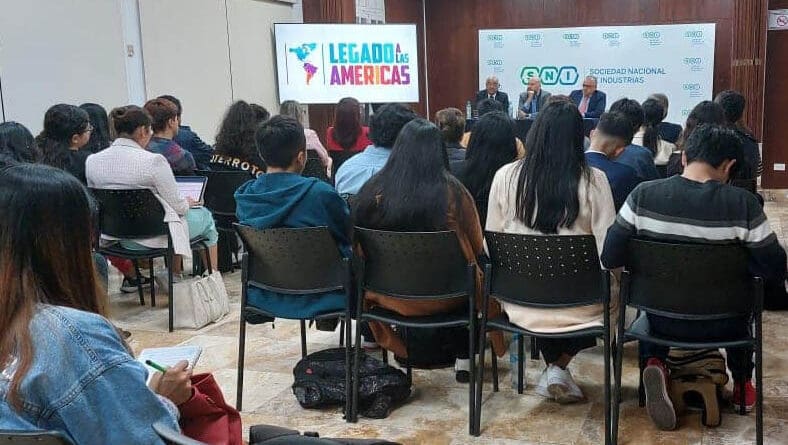
Legacy of the Americas Panel
Legacy began during the pandemic, starting with a series of online conferences that led to the development of a diploma program. Eight former presidents from across the region participated in these early efforts: Luis Alberto Lacalle de Herrera (Uruguay), Carlos Mesa and Jaime Paz Zamora (Bolivia), Jamil Mahuad (Ecuador), Laura Chinchilla, Miguel Ángel Rodríguez, and Luis Guillermo Solís (Costa Rica), and Nicolás Ardito Barletta (Panama). More than 2,000 people from throughout Latin America joined these events via Zoom and YouTube.
Following the pandemic, Legacy formally organized its structure and expanded its activities. A governing board was established with members from Guatemala, Paraguay, Uruguay, Chile, Ecuador, Brazil, and Spain. Under its guidance, the Communications Group manages the official website (legadoalasamericas.org), a biannual bulletin, and a dynamic presence on social media platforms including Facebook, YouTube, Instagram, X (formerly Twitter), and TikTok.
To engage the next generation, a Legacy Youth Committee with 40 active members was created. It organizes the Youth Conference of the Americas, an open forum that addresses key issues affecting young people and features prominent voices from various sectors. The conference has already held five successful editions.
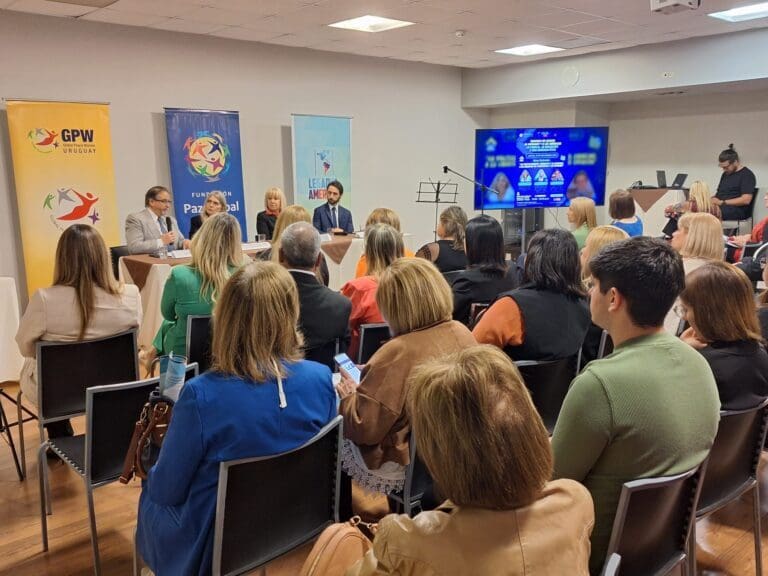
Legacy of the Americas Panel
Legacy set three major goals for this year. The first initiative was the establishment of an Academic Advisory Council, chaired by former Uruguayan President Luis Alberto Lacalle de Herrera and comprising 20 respected leaders and thinkers from across the region. The second goal was the continued growth of one of Legacy’s flagship initiatives, America: Quo Vadis? — a high-level dialogue series featuring influential continental leaders, expert analysts, and an accompanying podcast.
The latest session, held on July 1, featured Argentina’s Minister of National Security, Patricia Bullrich, alongside Uruguay’s former Interior Minister, Nicolás Martinelli, Paraguay’s Permanent Secretary to the National Security Council, Admiral Cibar Benitez, and former Argentine Congresswoman Cornelia Schmidt.
A third and long-awaited milestone was also achieved this year: the launch of the Legacy of the Americas Academy of Advanced Studies. Led by former Chilean Senator Dr. Carlos Cantero and Uruguayan psychologist Nibia Pizzo, the Academy began its first session on July 14 and will run for six months, offering weekly classes. The distinguished faculty includes former presidents, ministers, university professors, and international experts. The inaugural class includes 70 students—mainly in their twenties—representing a wide cross-section of Latin America. Participants come from diverse backgrounds, including university students, professionals, business leaders, and media communicators.
Today, Legacy of the Americas has active national chapters in Argentina, Brazil, Bolivia, Chile, Colombia, Cuba, Ecuador, El Salvador, the United States, Guatemala, Panama, the Dominican Republic, Paraguay, and Uruguay—demonstrating its growing reach and continued commitment to shaping the ideological future of Latin America.