
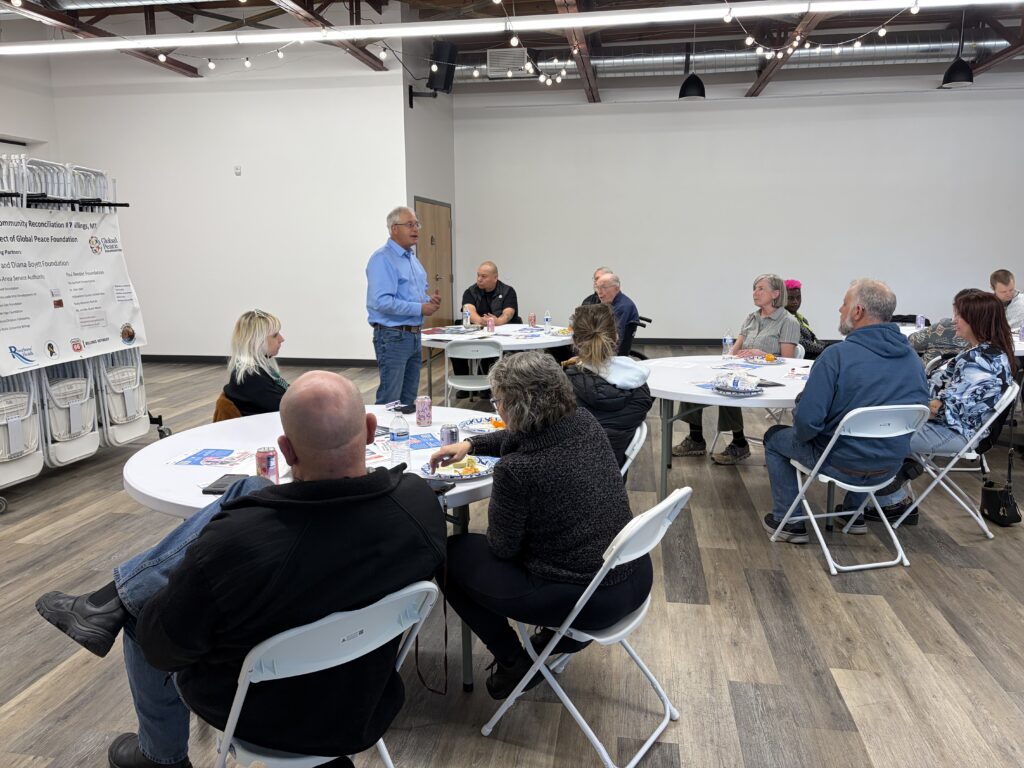
Montana State Senator Mike Yakawich, founder and project manager of Montana CCR, opens the gathering.
Participants in the Cross Community Reconciliation (CCR) project assembled in Billings, Montana, for their regular monthly gathering for an evening centered on cultural understanding, respectful dialogue, and shared human connection. The April meeting featured guest speaker Josiah Hugs, an elder of the Crow Nation (also known as Apsáalooke), who offered both personal insights and cultural teachings that deepened the group’s appreciation for Indigenous traditions and contemporary expression.
Josiah began by sharing the origins and evolution of powwows, describing them as vibrant celebrations that have adapted over time while continuing to serve as spaces for community, identity, and honor. He emphasized that culture is not static—it grows alongside the people who carry it.
A key theme of the evening was respectful curiosity, particularly for non-Native individuals seeking to engage with Indigenous cultures in a thoughtful way. Josiah offered general guidance on how to approach these interactions with humility and openness. When admiring what someone is wearing—referred to as regalia or outfit, not “costume”—he encouraged people to ask questions in a respectful, transparent manner. Small gestures, such as offering water and using inclusive, considerate language, can go a long way in building trust. Rather than asking abruptly, “What are you wearing?”, he suggested framing questions in a way that reflects genuine interest and respect for the person and their cultural expression.
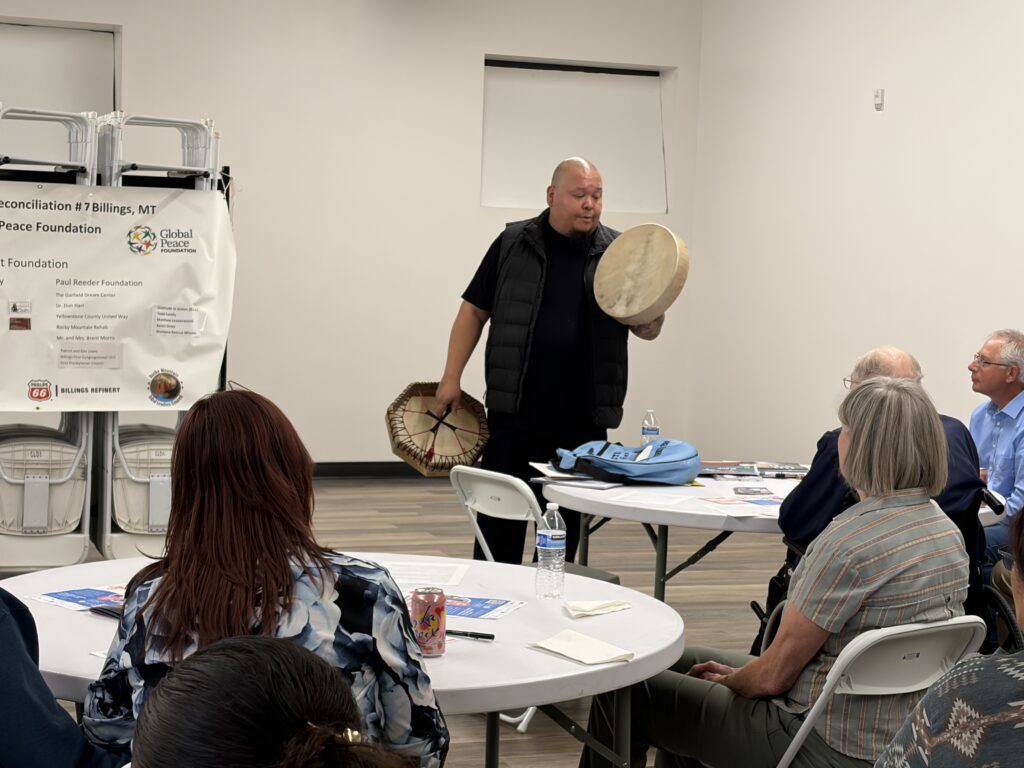
Josiah Hugs, an elder of the Crow Nation (also known as Apsáalooke), speaks to the group.
Participants asked about the symbolism and traditions behind various forms of regalia, including dresses and beadwork. Josiah addressed ongoing debates about what is considered “traditional,” sharing a humorous but insightful story about a woman criticized for using Velcro in her regalia. Her response: “If our ancestors had access to this material, don’t you think they would have used it?” The room responded with laughter, but the message was clear: adaptation does not diminish tradition; it reflects resilience and innovation. He noted that even commonly used beads today are not originally “traditional,” as they were introduced through trade, yet they have become integral to cultural expression.
Josiah also spoke about the historical use of elk teeth in traditional dresses, explaining their significance as symbols of honor and status. Because only two teeth can be taken from a single elk, dresses adorned with elk teeth reflect both the skill of the family’s hunters and the esteem of the woman who wears them.
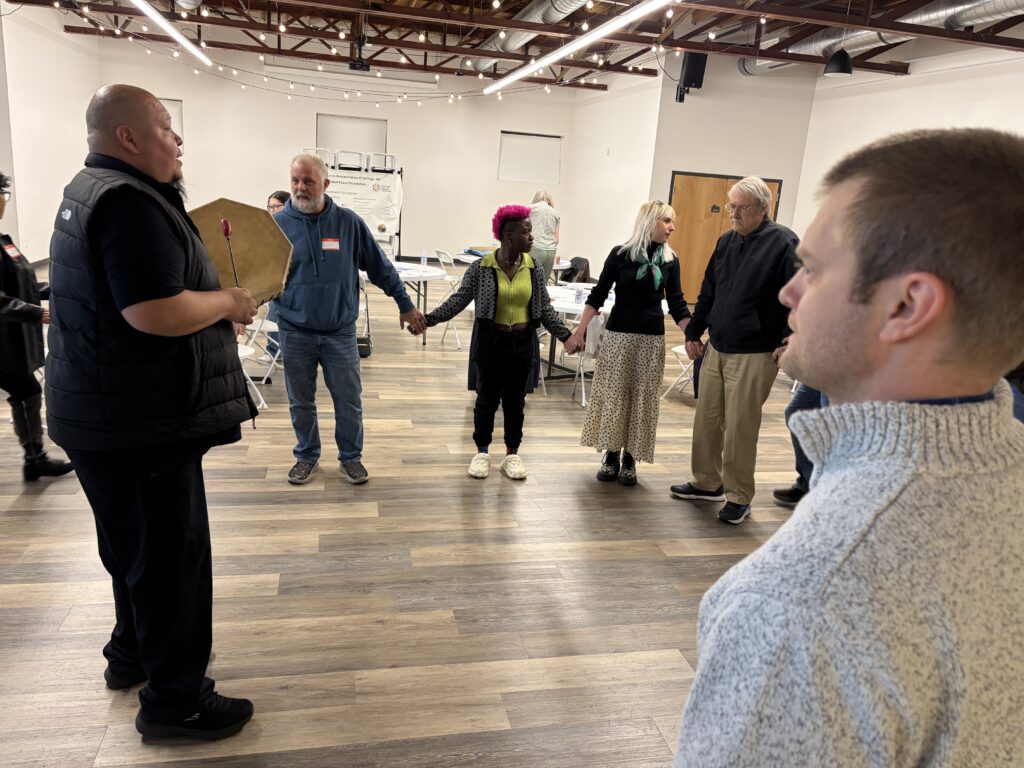
Josiah Hugs, an elder of the Crow Nation (also known as Apsáalooke), leads the group in a friendship dance.
Color symbolism also sparked discussion. In response to a question about bright colors, Josiah shared that within his tribe, hot pink is considered a powerful color—reminiscent of the vivid streaks across the sky at sunrise or sunset. He pointed to a participant with bright pink hair, drawing a connection that brought smiles and a sense of affirmation to the room.
One of the most powerful moments of the evening came when Josiah introduced a traditional handmade drum. He explained that each beat represents the heartbeat of Mother Earth, and with that comes responsibility: those who carry the drum are called to live honorably—avoiding addiction, and treating themselves and others with dignity and respect.
The gathering concluded with a moving friendship dance. As Josiah sang and drummed, CCR participants joined hands in a circle, embodying the spirit of unity and reconciliation that defines the program.
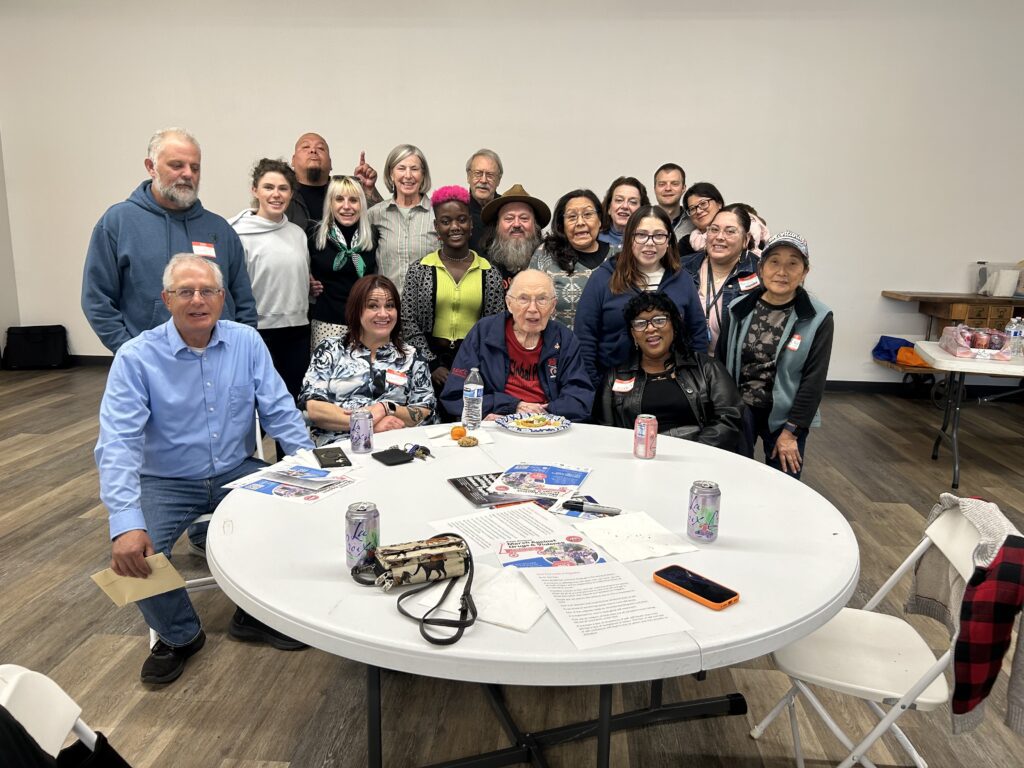
Group photo from the April 2026 CCR gathering.
The Cross Community Reconciliation initiative, supported by the Global Peace Foundation, plays a vital role in communities like Billings and across the United States. By creating space for honest dialogue, cultural exchange, and relationship-building, CCR helps bridge divides that often stem from misunderstanding or historical trauma. In a nation marked by diversity, programs like CCR remind us that reconciliation begins not with grand gestures, but with listening, learning, and shared experiences.
April’s gathering was a testament to that mission—bringing people together not only to learn about one another, but to walk, quite literally, in a circle of mutual respect and peace.