“I object to violence because when it appears to do good, the good is only temporary; the evil it does is permanent.” — Mahatma Gandhi
As we observe the United Nations International Day for the Prevention of Violent Extremism and Countering Terrorism on February 12, the words of Gandhi couldn’t hold more significance. Gandhi’s remarks serve as a sobering reminder of a harsh reality: while violence may provide immediate gains, it does long-term harm to communities, trust, and our common humanity. Before divisions widen, it encourages us to take on the more subdued tasks of listening, teaching, and building bridges.
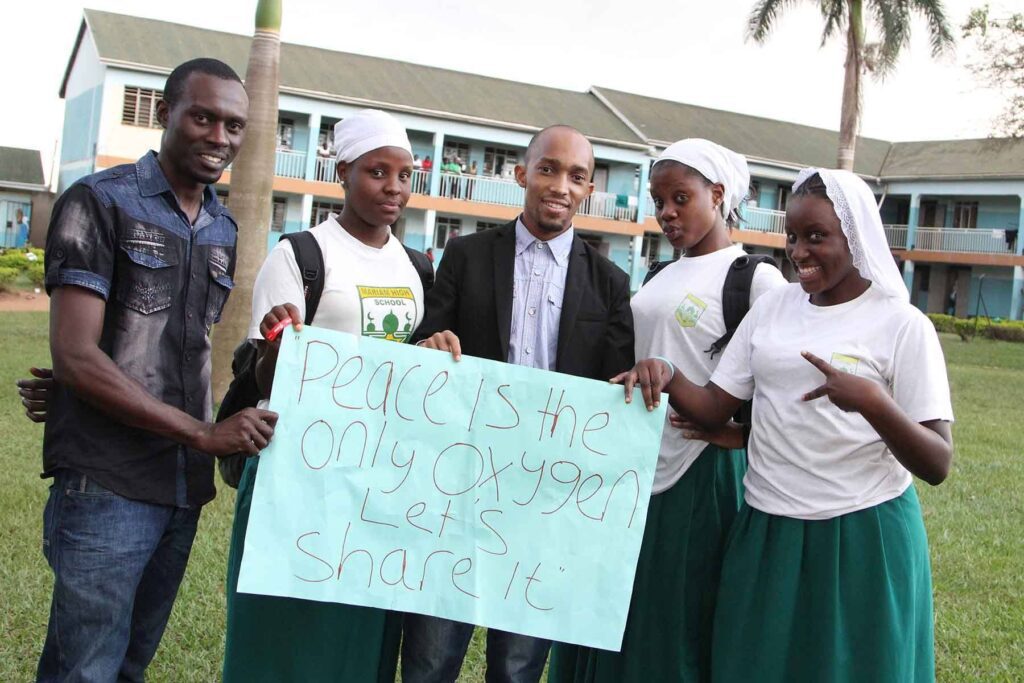
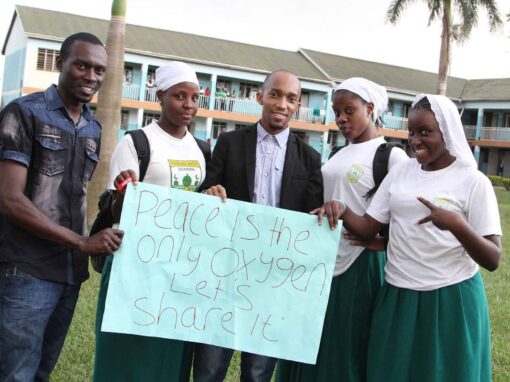
GPF Uganda International Day of Peace participants
The purpose of this day was to change the focus of international discourse from retaliation and retribution to long-term peace, understanding, and prevention, underscoring a crucial insight: extremism and violence do not arise in a vacuum; they develop in settings that are influenced by discrimination, unfair treatment, unanswered complaints, and a lack of communication. As seen in societies everywhere, we are dealing with increased polarisation, strife, and mistrust. Anger is amplified more quickly than comprehension in digital contexts, and too frequently, differences in background, identity, or belief are portrayed as dangers rather than assets. Intolerance can spread quickly in such an environment, and once violence starts, its effects last long after it purports to further a cause.
It is not the purpose of the UN Day for the Prevention of Violent Extremism to place blame or incite fear. It is about realizing that it is our shared duty to provide settings that uphold dignity and value diversity. It emphasises the value of tolerance as active respect for human dignity and diversity rather than passive acceptance. When people feel heard and seen, tolerance increases. It is reinforced by education that promotes empathy and critical thinking, and maintained by discourse that allows for disagreement without dehumanizing people. Additionally, it is safeguarded when communities give youth a sense of purpose, opportunity, and belonging.
Treaties and conference rooms are not the only places where peace is established. It is constructed whenever individuals choose compassion over animosity, including in classrooms, communities, workplaces, and online. Prevention is an act of hope in a world where violence and uncertainty are constant; it is an affirmation that humanity is capable of choosing a different course and that violence is not inevitable.
We are reminded on this international day that we do not naturally inherit peace. We intentionally practice it. We get closer to a society where violence finds no fertile ground and where peace is permanent rather than fleeting by promoting tolerance, bolstering inclusiveness, and addressing the causes of conflict.
On this International Day for the Prevention of Violent Extremism, we at the Global Peace Foundation urge people and communities to take action to foster tolerance, understanding, and empathy. We believe we are all One Family Under God. With shared responsibilities, inclusive communities, and strong values, we can help create peace even before conflict arises. By fostering mutual respect, tolerance, and dignity within the family and community, we help prevent the circumstances that give rise to violence. Together, through conscious and collective action, we can establish a world where peace is not reactive or fleeting, but enduring and shared by all.