South Korea is known for miracles. One key miracle is the Miracle on the Han.
In the 1950s, South Korea was one of the poorest countries in the world. The war had left its infrastructure in ruins, its economy in crisis, and its people displaced. Yet within the chaos, the country rebuilt. Over a few short decades, it transformed from one of the poorest countries into a high-tech, globally connected society and a home to leading industries, innovation, and culture. This extraordinary growth, referred to as the Miracle on the Han River, became a symbol of national resilience and purpose.
As Korea commemorates 80 years since its division, the question arises: Can there be a second miracle, one of unity and reconciliation?
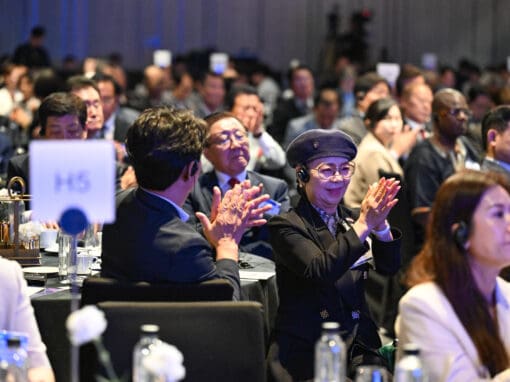
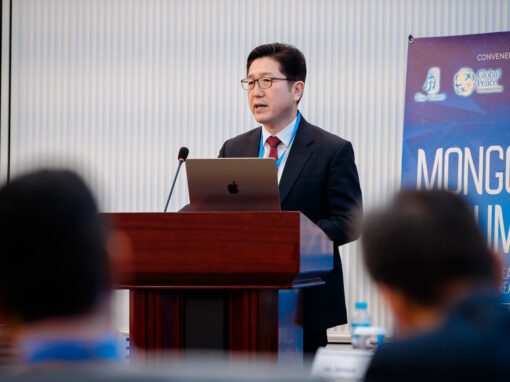
South Korea’s meteoric rise wasn’t accidental. It was a shared vision coupled with relentless determination and hope. As Dr. Hyun Jin Preston Moon, the founder of Global Peace Foundation, calls it, “the fruit of resilience and enterprise of the Korean people” during his keynote address at the Global Peace Conference 2023. He added, “The growth from a poor, war-torn, agricultural economy to an advanced industrial and technological one in just 50 years is unprecedented in human history. It was indeed a miracle.”
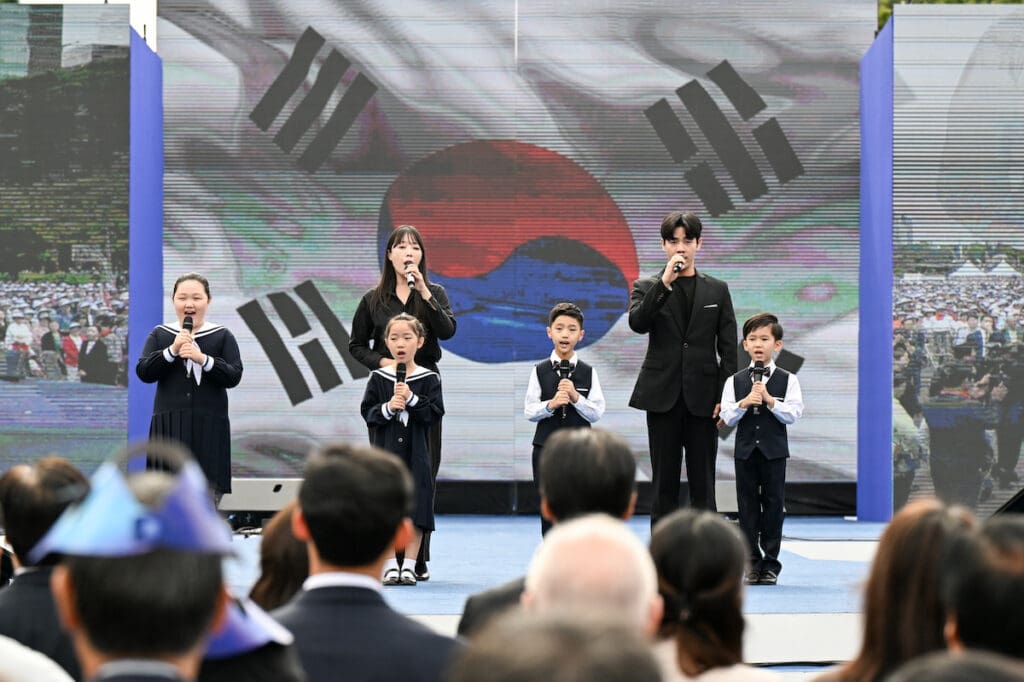
Korean National Anthem
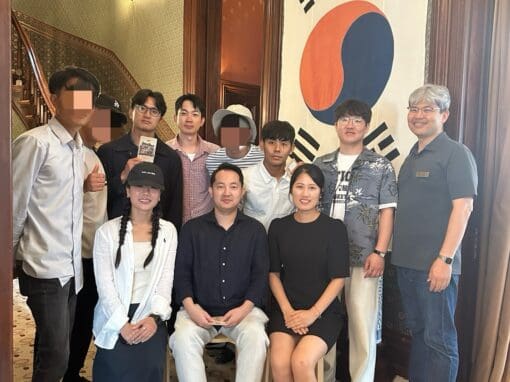
That same spirit now runs parallel in the One Korea Global Campaign, a growing international movement bringing together youths, civil society, the Korean diaspora, and global leaders towards a unified Korea. Through grassroots advocacy, music, education, and global forums, the One Korea Campaign calls upon the new generation, not just within Korea but from every corner of the world.
Risa Perea, a USA advocate for Korean unification, expressed her support, “Korea is a part of the global community. If one member of that community is in pain or is facing injustice, it affects us all…I felt like it’s also a duty.”
For those coming from divided regions, the campaign resonates deeply. Coming from India, which has a history of partition, Shreya expressed her interest, “I have seen and heard lots of stories from my older generation family members who said they miss their families, but they don’t know if they are alive or not. When I came to Korea, I was surprised that some people knew they had families in North Korea… Even the government is working for unification,” She added that reunification would enable Korea to be a moral example serving as inspiration across the globe and not just an “economic and political powerhouse.”
Ryota, a Japanese participant from Costa Rica, felt inspired by the principle of Hongik Ingan—meaning living for the benefit of all humanity—the guiding vision for the Korean Dream of One Korea. He said reunification is important and that it would be “a model for how to resolve conflict.”
Besides these, many programs, discussions, and movements have been organized internationally, from Japan to the USA and from Indonesia to Tanzania.
In May 2025, GPF Japan hosted a special dialogue session on Korean unification, where Kawasaki, a North Korean escapee, shared her story as she urged people to carry the Korean Dream forward. In the USA, a forum was organized titled “Opportunities Amidst Crisis: Achieving Free and Peaceful United Korea through the US-ROK Alliance,” which had expert speakers talk on the humanitarian crisis in the North, the need for unification, and the opportunities once Korea was reunited. Likewise, GPF Tanzania holds a number of programs including online activities, media advocacies, and sharing testimonies, encouraging participation among youths, professionals, and the broader public for One Korea. In addition, there are other countries, the Philippines, Indonesia, and Mongolia, to name a few, where many similar grassroots initiatives have called for participation and support for the Korean Dream and the One Korea Global Campaign.
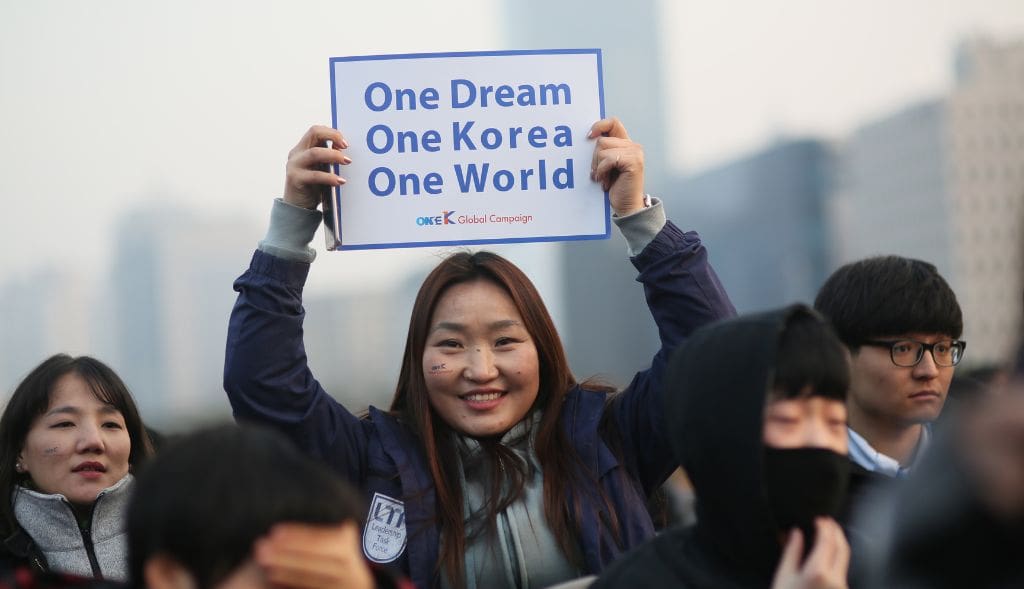
One Dream One Korea One World
The global support from grassroots initiatives from many countries paints a hopeful picture for the Korean Peninsula.
With the ongoing violence and conflict going on in different parts of the world, the headlines can often feel disheartening, raising questions and doubts. Amid such uncertainty, the dream of Korean reunification may seem distant or uncertain, but so did recovery in the 1950s. Emerging from the ashes of the war and poverty, South Korea’s transformation into a thriving democracy and global economic powerhouse is living proof that with relentless hope, dedication, and vision, change is possible. Miracles happen when people believe in them and work for them.
The Miracle on the Han reminds us that extraordinary progress is achievable when people are united by a clear and compelling purpose. It underscores the power of unity, civic responsibility, and leadership anchored in long-term values. Most of all, it shows that the Korean people are no strangers to transformation—they have already defied the odds once, and they can do so again.
The Miracle of Han transformed Korea’s economy, and this next miracle will transform its soul; one that is not measured in GDP and numbers alone, but in healed families, restored freedoms, and a vision that transcends borders. It would serve as a beacon for reconciliation.
The peaceful reunification of the Korean Peninsula is not a far-off dream; it is the next great chapter Korea is destined to write. And Korea does not walk this path alone. Around the world, hearts are turning to the Korean Peninsula with hope, solidarity, and faith.