The eighth Mongolia Forum, centered on peace and prosperity in Northeast Asia and the issue of Korean unification, was held in Ulaanbaatar from June 19 to 24.
The forum brought together scholars, researchers, social activists, international relations experts, and students from Mongolia, the United States, China, Malaysia, South Korea, Japan, and India.
During the forum, participants focused on fostering understanding, peace, and cooperation in international relations. They listened to presentations covering political, social, environmental, and youth issues, specifically regarding Mongolia’s past and future position in Northeast Asia, and discussed potential joint initiatives.
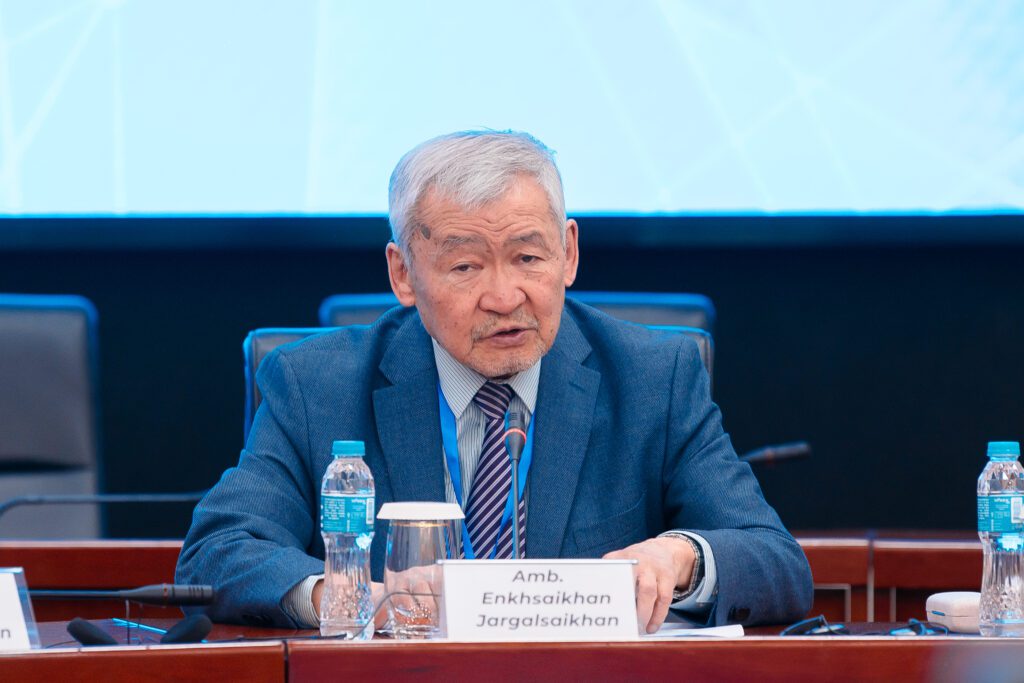
Amb. Enkhsaikhan Jargalsaikhan, chairman, Blue Banner, former Mongolian Ambassador to the United Nations
J. Enkhsaikhan, executive director of the “Blue Banner” NGO and a veteran diplomat, stated:
“Participants at this forum exchanged views on specific issues and discussed directions for cooperation and future responsibilities. We plan to adopt a formal document at our next meeting, which will outline the core directions of our cooperation and the responsibilities of participating organizations. This work can be understood as part of the preparations for the COP17 conference to be held in Mongolia in August. Through our organizations, we aim to promote Mongolia’s work in the environment and sustainable development sectors globally. In recent years, we have focused on tree planting and environmental protection, aiming to contribute significantly to the ‘One Billion Trees’ national program. We prioritize not just planting trees, but ensuring long-term maintenance and monitoring. For example, when planting trees with foreign guests and delegates, each tree is assigned a QR code, allowing them to track the growth and development of the tree online even after a year or two. This builds trust and encourages more active participation in environmental protection activities.”
The following are the reflections of scholars who attended the forum:
John Hancock Dickson, senior advisor to the Global Peace Foundation:
“The increasing participation of scholars, policymakers, and international experts each year enhances the prestige and importance of this forum. International delegates participating in the forum discover shared values, mutual understanding, and new opportunities for cooperation. The real impact of this forum is that, upon returning to their home countries, they disseminate these ideas and experiences to policymakers, academic institutions, and political circles. We place great importance on participating in this forum because we believe that if we can strengthen cooperation and mutual trust among citizens, scholars, and experts, the Northeast Asian region can make a tangible contribution to world peace and sustainable development.”
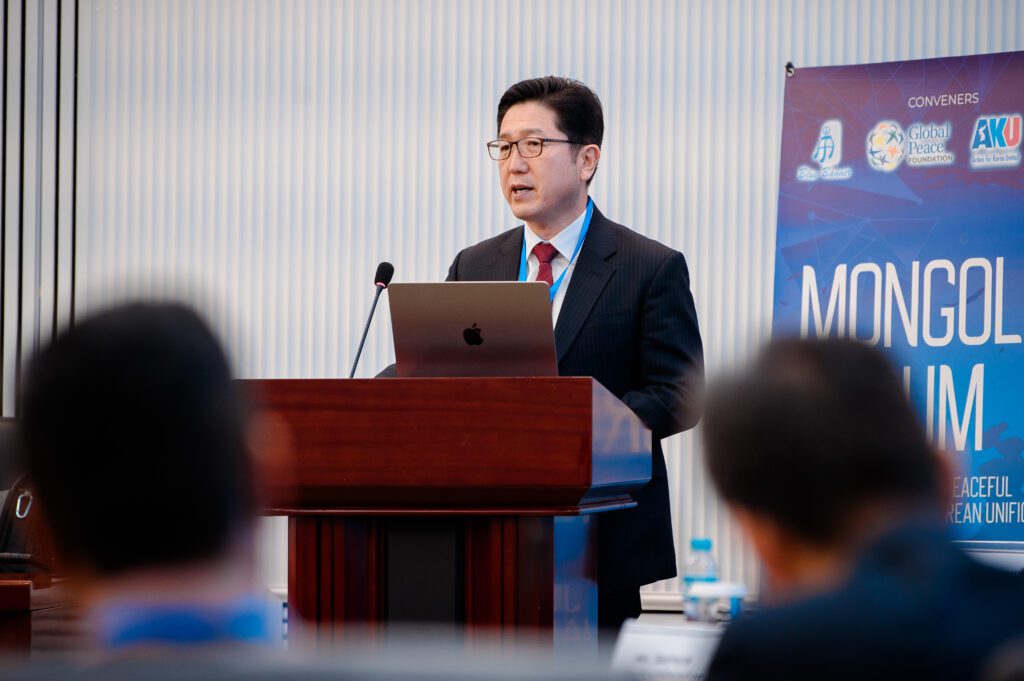
Mr. In-teck Seo, co-chair, Action for Korea United
Seo In-teck, co-chair of Action for Korea United (NGO):
“Beyond seeking pathways and solutions to strengthen regional peace and stability, the Mongolia Forum serves as a vital platform for representatives, researchers, and policymakers from various countries to meet and build mutual understanding and trust. We must acknowledge and appreciate the vision and insightful policy of Mongolia and the Mongolian people for creating such an opportunity and successfully implementing this initiative. The world expects new initiatives and tangible contributions from Mongolia based on peace, dialogue, and mutual respect. Mongolia is highly regarded by the international community for its practical contributions to promoting peace, stability, mutual trust, and diplomatic cooperation not only for its own national interests but also for the Northeast Asian region and the world at large. Therefore, Mongolia’s participation, leadership, and contributions are truly exceptional and a source of pride.”
The participants of the forum adopted a joint statement and called for the intensification of initiatives to establish national and international working groups for strategic cooperation on the issue of Korean unification.
As part of the two-stage forum, participants visited a nomadic family at the Bayangol Eco Resort, where they experienced nomadic life by horse riding, archery, and learning traditional games, while also learning about Mongolian history, culture, and traditions, and participating in a tree-planting activity.