Reflections on the 2026 International Forum on One Korea, Korean Dream Hangang Festival, and an unforgettable journey of friendship, hope, and humanity.
Some journeys end when we return home. Others find a permanent place in our hearts.
When I returned to Bangladesh from South Korea on October 6th, my suitcase was a little heavier, my phone was full of photographs, and my heart was carrying something I could hardly put into words. I had traveled to Korea to attend the International Forum on One Korea and the Korean Dream Hangang Festival. I expected an inspiring experience, new friendships, and beautiful memories. What I did not expect was to return with a deeper understanding of peace, humanity, and the invisible bonds that connect us all.
My journey began on October 1st. As the bus carried me from Incheon International Airport toward Seoul, I watched the beautiful green landscapes through the window. Everything felt new, peaceful, and exciting. I had barely arrived, yet I was already falling a little in love with Korea.
Different Faces, One Shared Dream
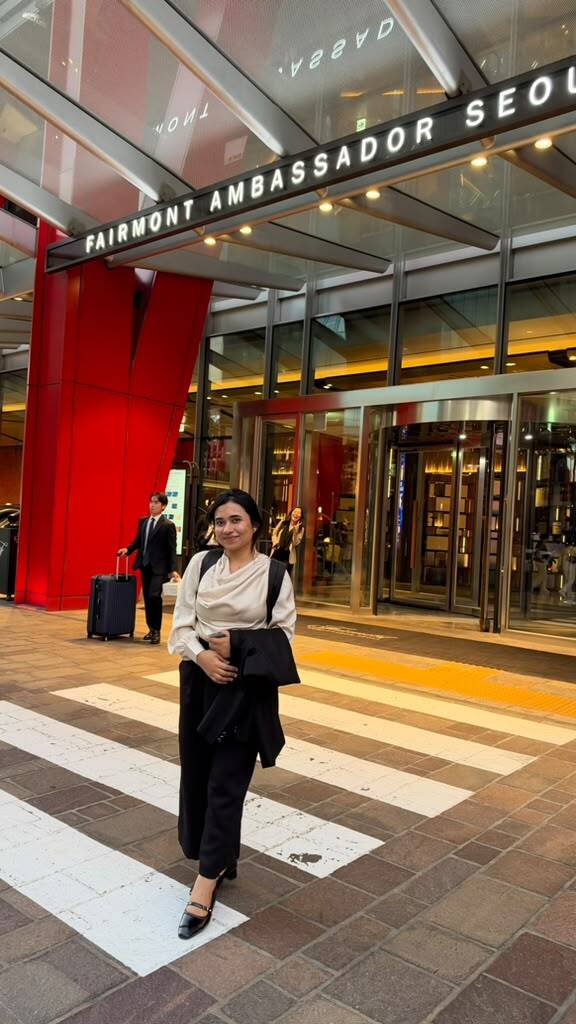
Tahmina Supti outside the Fairmont Hotel in Seoul, host of the International Forum on One Korea 2026
On October 2nd, I attended the International Forum on One Korea at the Fairmont Hotel in Seoul. The room was filled with people from different countries, cultures, and religions. We spoke different languages and came from different walks of life, yet something remarkable connected us: a shared hope for a more peaceful world.
Listening to Dr. Hyun Jin Preston Moon and other distinguished leaders was deeply inspiring. Their reflections on the Korean Dream encouraged me to think beyond borders and politics, toward something much more human: the desire to live in peace, dignity, and unity.
What particularly stayed with me was the idea that the Korean Dream is not simply about bringing two divided territories together. It is about rediscovering a shared identity, reconnecting families, and building a future rooted in freedom, dignity, and common values. Before the forum, I mostly thought of Korean reunification as a political and historical issue. But listening to these discussions made me realize that it is also about people reclaiming the opportunity to shape their future together. As someone from Bangladesh, I found this especially meaningful. It reminded me that a nation’s future is shaped not only by its leaders, but also by ordinary people who believe in a shared purpose.
But the magic did not end when the formal sessions concluded.
I met some genuinely beautiful, kind-hearted people who quickly became friends. Between programs, we exchanged stories, shared laughter, and discovered how much we had in common. Our breakfasts, lunches, and dinners became adventures of their own, filled with different foods, endless conversations, and plenty of friendly gossip.
One memory still makes me smile. My teammates were incredibly thoughtful about my meals, always checking whether the food was halal. Sometimes, I think they worried more about what I could eat than I did. It was such a small gesture, yet it made me feel deeply cared for.
Those moments reminded me that friendship does not always need a common language, a shared nationality, or years of familiarity. Sometimes, it begins with a simple smile, a thoughtful gesture, or laughter around a dinner table.
A Night When Hope Filled the Sky
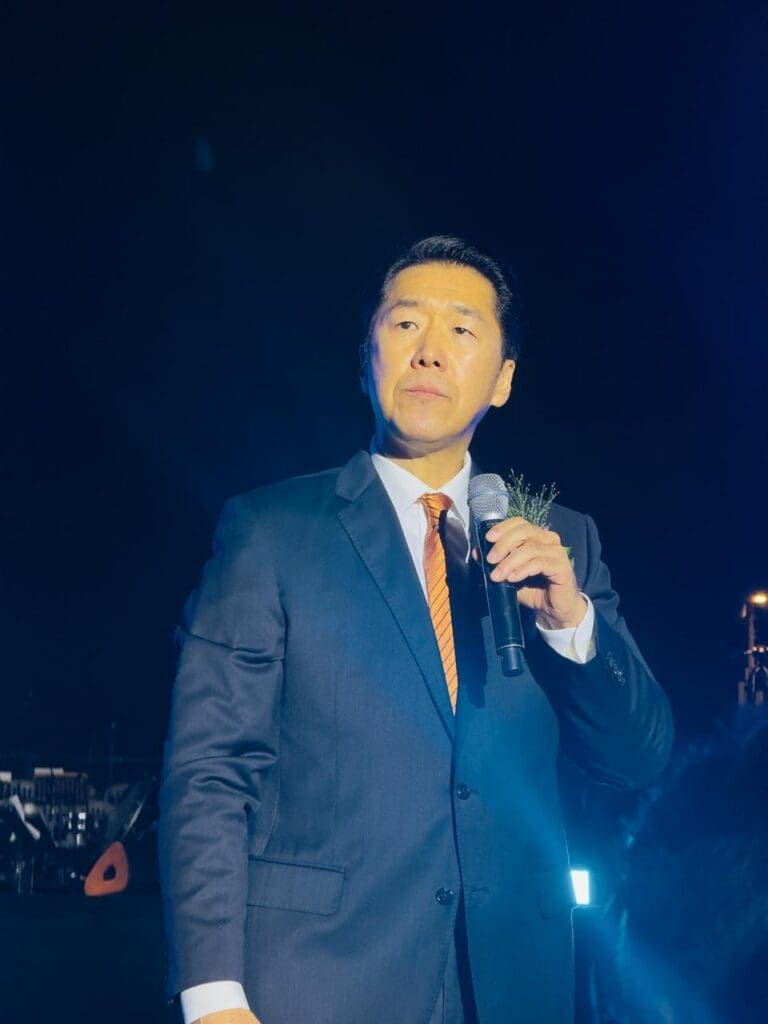
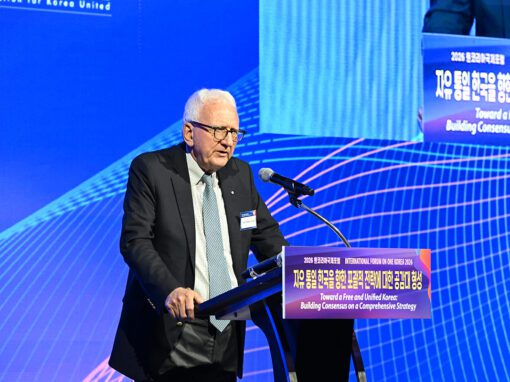
Dr. Hyun Jin Preston Moon speaking at the Korean Dream Hangang Festival
October 3rd was unforgettable.
It was also Korea’s National Foundation Day, known as Gaecheonjeol, a national holiday commemorating the legendary founding of Gojoseon, Korea’s first kingdom, by Dangun. Learning about this history made the day’s celebration even more meaningful, as it connected Korea’s ancient beginnings with the hope for its future.
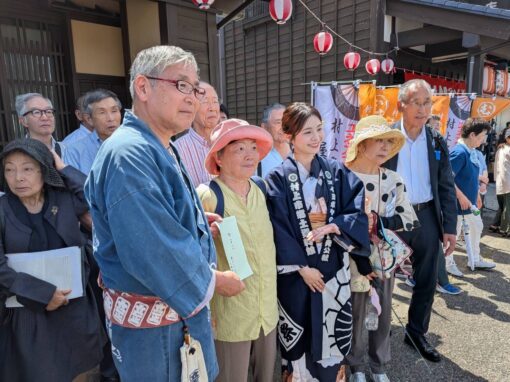
The Korean Dream Hangang Festival brought the Han River alive with music, performances, laughter, and celebration. Everywhere, I could feel the excitement of people coming together around a shared dream.
Yet, amid all the excitement, one moment touched me more deeply than I expected.
During his speech, Dr. Hyun Jin Preston Moon raised a powerful question about why people who share the same ancestry and history should need passports to meet their own family members across the Korean Peninsula.
I had goosebumps.
Imagine being unable to visit someone you love, not because of distance, but because a border stands between you. Imagine generations of families sharing the same roots, yet living apart.
Suddenly, the Korean Dream felt much more personal. I began to see reunification not only as a hope for one nation, but also as a powerful expression of something universal: the desire to belong, to reconnect, and to live without the pain of separation.
Later, as the unification song echoed across the festival grounds, people waved Korean flags and sang together. Standing among them, surrounded by my newfound friends, I felt an extraordinary sense of hope and belonging.
And then came the fireworks, lighting up the sky above the Han River.
They were breathtaking. But what touched me most was not the beauty of the fireworks. It was the hope shining in the faces around me.
Forty-Three People, Different Countries, the Same Tears
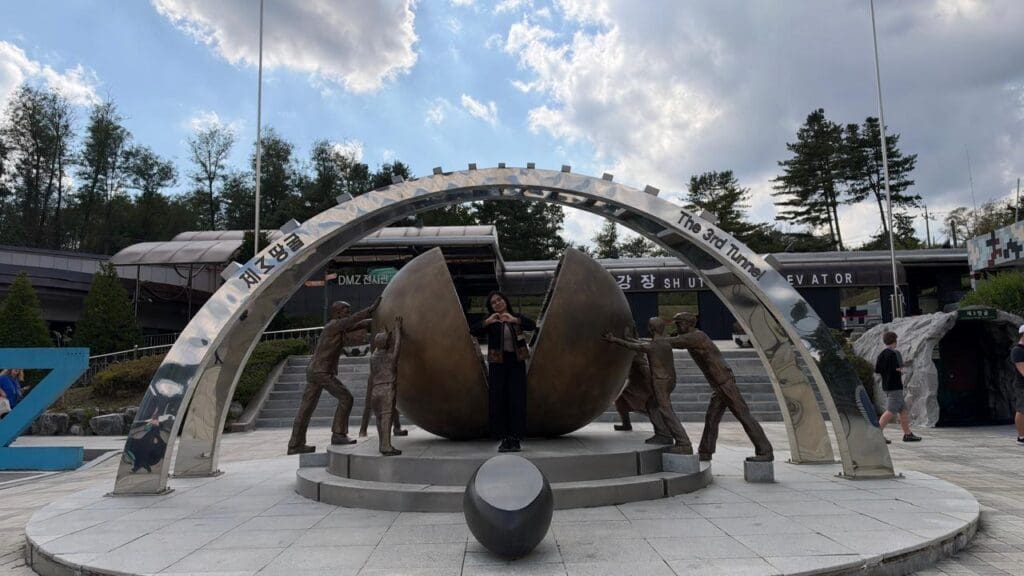
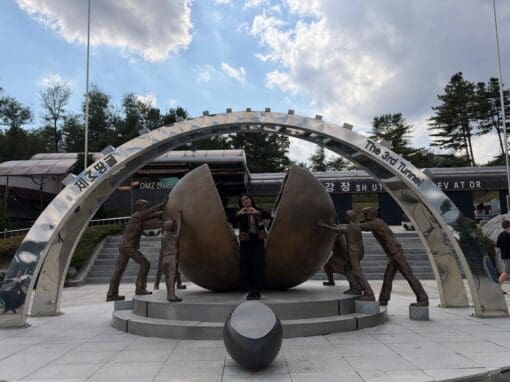
Tahmina Supti at the Demilitarized Zone (DMZ)
If October 3rd filled my heart with joy, October 4th brought tears to my eyes.
That morning, our group traveled to the Demilitarized Zone (DMZ). There were 43 people on our bus, from different countries and backgrounds. As we traveled, our guide shared stories of Korea’s division, including the historic 1983 KBS broadcast Finding Dispersed Families, which helped reunite thousands of people separated from their loved ones during the Korean War and its aftermath.
Hearing the voices and stories of families searching for one another was heartbreaking.
I tried to hold back my tears, but I couldn’t.
Then I looked around the bus. Others were crying too.
The same people who had been laughing, sharing meals, and enjoying the festival together were now silently wiping away tears for families they had never met.
We were from different countries, spoke different languages, and belonged to different cultures and faiths. Yet, at that moment, our hearts understood the same pain.
A mother’s longing for her child needs no translation. Neither does the sorrow of separation or the joy of reunion.
That was the moment I truly understood what it means to be one human family.
At the DMZ, we saw a sculpture depicting a mother and son reunited, explored a tunnel associated with North Korea, and looked across the border through binoculars. I even caught a glimpse of people on the North Korean side. They seemed so close, yet the distance between our worlds felt enormous.
We also met a North Korean escapee who shared her experiences of escaping North Korea. Her story left me stunned. It was difficult to imagine that someone could endure such hardships.
That day, the division of Korea was no longer just something I had heard about in speeches or read about in history. It had become profoundly human. I thought of the years families had lost, the celebrations they had missed, and the embraces they were still waiting for.
I left the DMZ with a quiet prayer for peace and a future in which families would no longer be separated by such barriers.
The Memories I Carried Home
On October 6th, I returned to Bangladesh, but a part of my heart remained in Korea.
I still smile when I remember the friends I made, our endless conversations, our little food adventures, and the laughter we shared. I have written many of those moments in my diary because some memories are simply too precious to leave to photographs alone.
Before visiting Korea, I understood peacebuilding largely through conferences, community initiatives, and meaningful discussions. This experience reminded me that peace is also found in ordinary acts of humanity: respecting someone’s beliefs, caring for a stranger, sharing a meal, or feeling another person’s sorrow as though it were our own.
I arrived in Korea as a visitor. I left with friendships that crossed borders, memories that will last a lifetime, and a deeper personal connection to the Korean Dream.
I know reunification is not simple. It will take courage, dialogue, trust, and extraordinary commitment. After witnessing the hope and determination of people working toward that vision, I now understand why the Korean Dream matters far beyond the Korean Peninsula. It reminds us that even in a divided world, people can still find strength in a shared history, common values, and a vision of a better future.
And if the day of peaceful reunification comes, I hope to look back and proudly say I was there. I heard the stories, shared the tears, and stood among people who believed in that dream. In my own small way, I was part of its journey.
I went to Korea expecting to discover a new country. Instead, I discovered beautiful friendships, the power of shared humanity, and something I will carry far beyond this journey.
Borders may separate nations, but they cannot stop us from caring for one another.
Perhaps that is where peace truly begins.