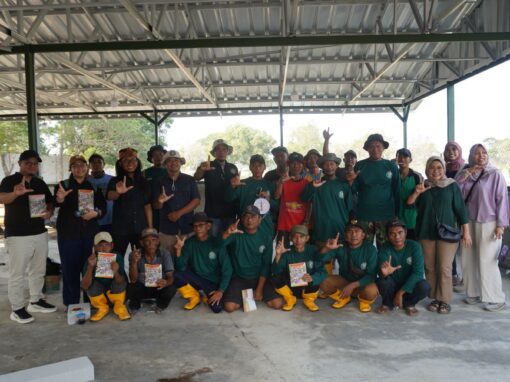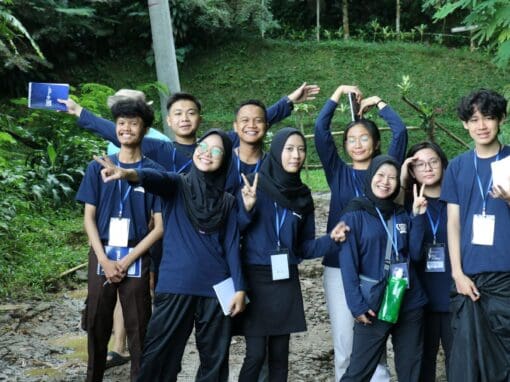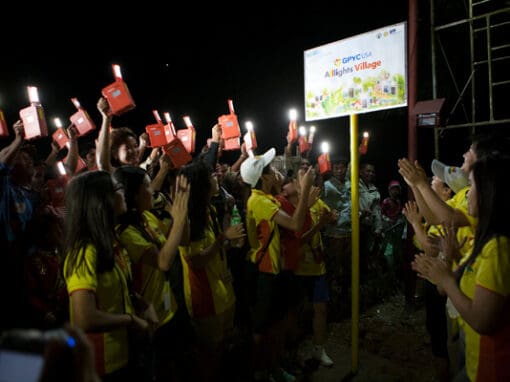
Young people can contribute to peacebuilding through the way they care for and protect their communities. Environmental activities such as planting trees, restoring ecosystems, organizing clean-ups, raising awareness, and bringing people together around shared environmental concerns create opportunities for cooperation, leadership, and community participation.
Global Peace Foundation (GPF) Indonesia explored this connection during the UGen Webinar, “Youth, Environment, and Peacebuilding: Taking Action for a Sustainable Future,” held in June 2026. The webinar brought together 40 students, young leaders, educators, and representatives of youth organizations to discuss environmental sustainability, community engagement, and peacebuilding. Here are six ways youth environmental action can contribute to peacebuilding.
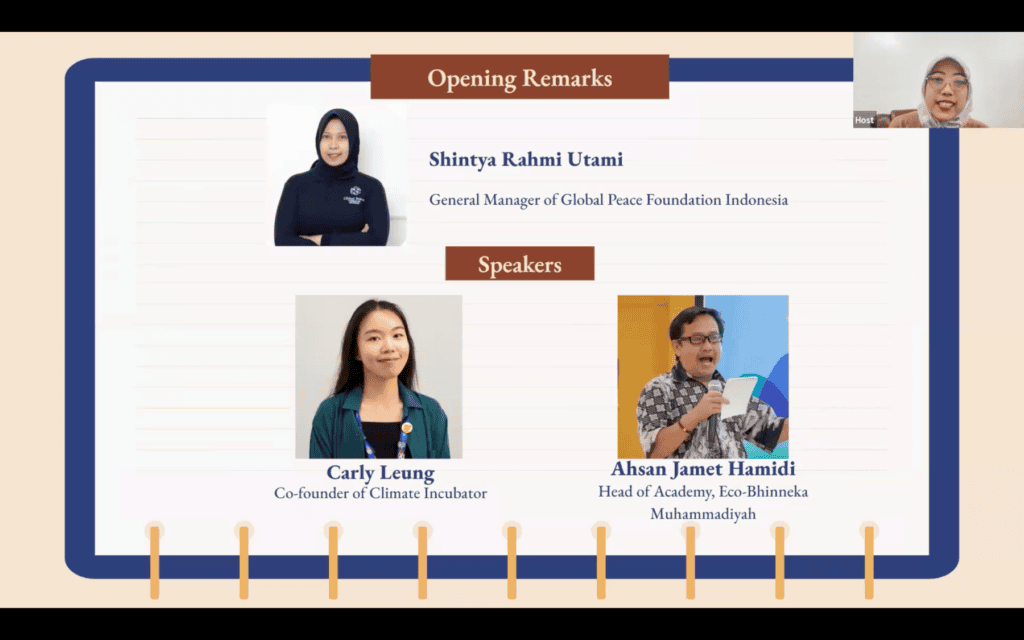
UGen Webinar: “Youth, Environment, and Peacebuilding: Taking Action for a Sustainable Future”
1. Turn environmental concerns into action
Young people can identify environmental problems in their communities and take practical steps to address them. These can include waste management, clean-up activities, tree planting, ecosystem restoration, and conservation initiatives.
At the UGen Webinar, environmentalist and author Ms. Charly encouraged young people to take simple and consistent environmental action within their local communities. She highlighted community initiatives as a way to raise awareness and encourage wider participation.
In Subang, West Java, GPF Indonesia, with support from SLB and in collaboration with local NGO partner YLNI, implemented a coastal resilience initiative through mangrove planting and wave breaker construction. The activities addressed coastal erosion and ecosystem degradation while helping restore coastal habitats and protect the shoreline.
Young people can apply the same approach to environmental concerns in their own communities by identifying a problem, bringing people together, and taking action.
2. Use creativity to inspire environmental action
Young people can use storytelling, art, digital media, and other creative approaches to communicate environmental issues and encourage participation.
Ms. Charly highlighted creativity as an important tool for environmental awareness during the UGen Webinar. Storytelling, art, and digital media can make environmental campaigns more engaging and help communities connect with local environmental concerns. This gives young people different ways to contribute to environmental stewardship.
A student can create a social media campaign, produce a short video, tell a community story, design educational materials, or use art to encourage people to care for their surroundings. Creative communication can also help more people understand why an environmental issue matters and how they can participate in addressing it.
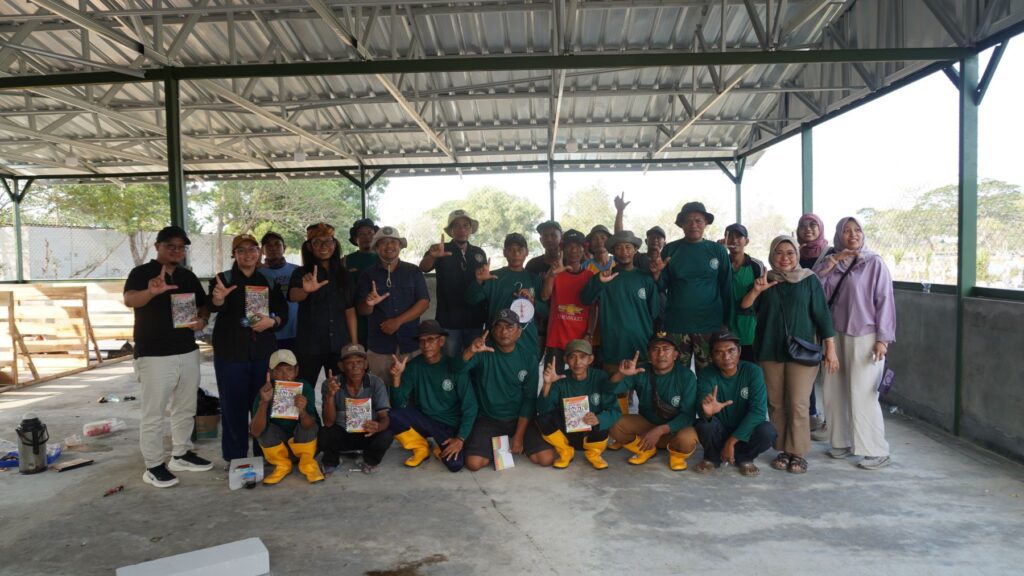
Building the Nation Project in Subang
3. Bring people together around shared challenges
Environmental problems often affect entire communities. Working together to address them can strengthen cooperation and shared responsibility.
The Subang coastal resilience initiative involved community members, volunteers, and other stakeholders in responding to coastal erosion. Mangroves help reduce wave impact, stabilize shorelines, provide habitats, and support biodiversity, while wave breakers help reduce wave energy and erosion.
Participants also reflected on the value of collective action. “This activity was more than just planting mangroves. It brought people together to care for our environment and showed me the importance of collective action,” noted Hendra, a participant.
Young people can create similar opportunities by organizing activities that require people to cooperate around environmental issues affecting their communities.
4. Connect people across faiths and differences
Environmental stewardship can create opportunities for people from different faiths and backgrounds to work together.
At the UGen Webinar, Ahsan Jamet Hamidi, head of Academy Eco-Bhinneka Muhammadiyah, discussed environmental responsibility from the perspective of faith and diversity. He highlighted environmental care as a shared moral responsibility across faith traditions and described how environmental programs can support interfaith collaboration, tolerance, mutual respect, and social cohesion.
Young people can use environmental activities to create spaces where people of different faiths, cultures, and backgrounds work toward a common goal. Community clean-ups, tree planting, conservation activities, and environmental awareness campaigns can bring people together while creating opportunities for dialogue and cooperation.
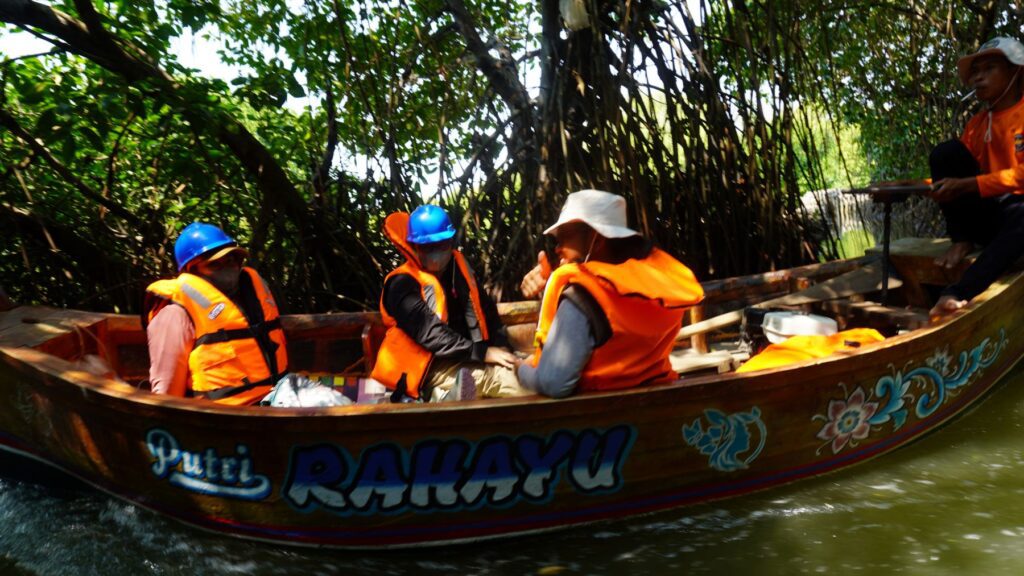
Building the Nation Project in Subang
5. Develop leadership through community participation
Environmental projects give young people opportunities to develop leadership skills through real community activities.
The Subang project involved people directly in mangrove planting and wave breaker construction. Participants gained a better understanding of coastal ecosystems and the role communities can play in strengthening environmental resilience.
“Participating in the mangrove planting activity made me realize how important mangroves are for protecting coastal communities and the environment. It was rewarding to take direct action and contribute to a more sustainable future,” Saimin, a participant, reflected.
“I learned that simple community actions can make a real difference in reducing coastal erosion and strengthening resilience against environmental challenges,” added Ikbal, another participant, recognizing the contribution of simple community action to reducing erosion.
Young people involved in similar activities can develop skills in teamwork, communication, planning, problem-solving, and working with different stakeholders. These skills are useful in environmental initiatives and in wider community peacebuilding.
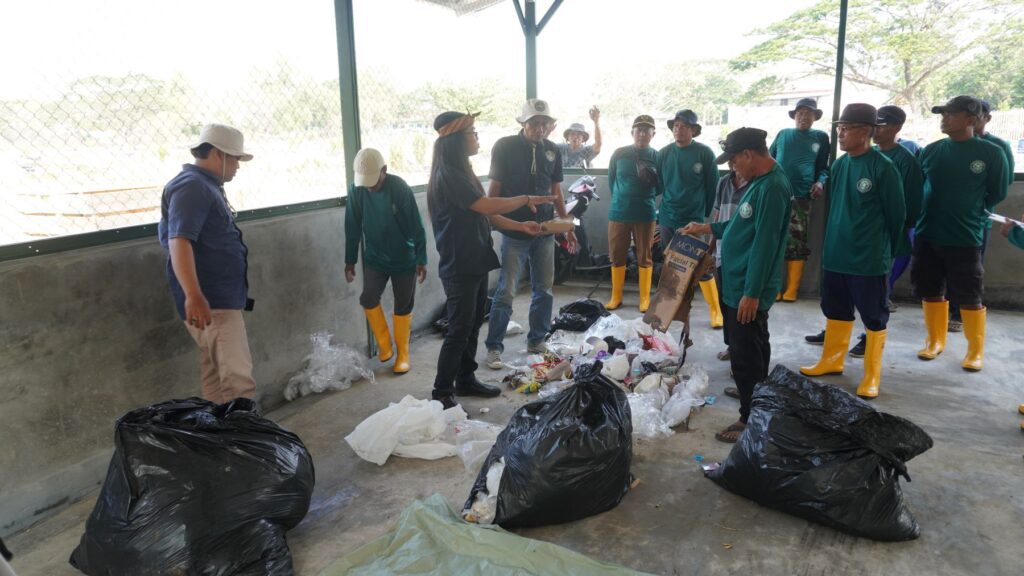
Building the Nation Project in Subang
6. Start with local action and build community resilience
Youth environmental action can begin with a local issue and grow through consistent community participation.
During the UGen Webinar, participants discussed environmental challenges in their communities and shared creative approaches to addressing them. The session encouraged cooperation across sectors and communities and highlighted the role young people can play in environmental movements. In Subang, mangrove planting and wave breaker construction addressed immediate coastal challenges while involving community members, volunteers and stakeholders in environmental restoration and resilience building. Local environmental action can therefore create opportunities for young people to participate in community decision-making, work with others and take responsibility for shared resources.
Youth participation in environmental stewardship creates opportunities for cooperation, responsibility, dialogue, leadership and community action. Across different communities, young people are finding ways to turn concern for the environment into action that strengthens the places where they live. Want to see how this works in practice? Explore the Global Peace Foundation’s environmental projects and discover more about how environmental action is being connected with community development and peacebuilding.