At the end of World War II, Korea, once a unified nation, was divided. What began as a temporary arrangement along the 38th parallel quickly hardened into one of the most enduring and painful divisions in modern history.
In the decades following, two very different Koreas have emerged, and the Korean War (1950–1953) only solidified the divide between North and South Korea. While South Korea has grown into a global economic and democratic power, North Korea has become isolated, its population largely cut off from the outside world.
However, the division goes deeper than politics or economics. For Koreans, this separation is not merely geopolitical; it is deeply personal. The border represents not just a line on a map, but an enduring wound; one that continues to shape attitudes, policy, and identity. It separated families, fractured a shared culture, and defined national identity for generations.
Since its inception, the Global Peace Foundation (GPF) has been an active advocate for Korean unification. Guided by the Korean philosophy of Hongik Ingan, i.e., to live for the greater benefit of humanity, the campaign emphasizes the importance of reconciliation, human dignity, and peacebuilding.
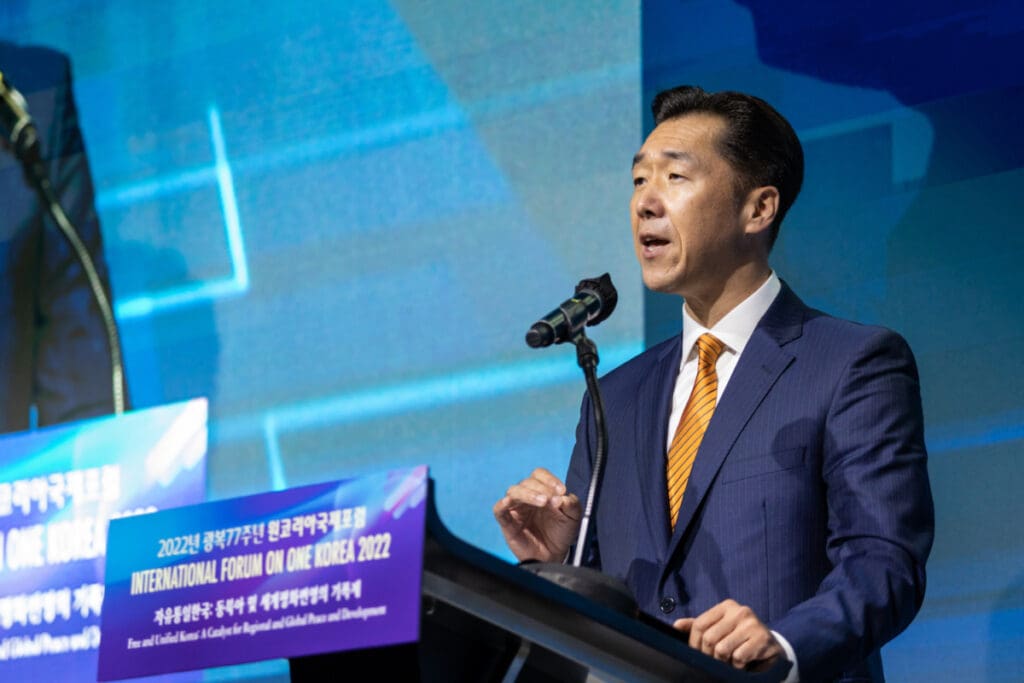
Hyun Jin Preston Moon speaking at International Forum on One Korea 2022
Dr. Hyun Jin Preston Moon, founder of GPF, said in his keynote address at the International Forum on One Korea in 2022, “Unification cannot be reduced to geopolitics—it is a moral mission rooted in the Korean Dream of hong ingan, carried forward as a grassroots One Korea movement, and championed globally through the Global Peace Foundation’s vision of One Family under God.”
August 2025 marks 80 years since the division of the Korean Peninsula. GPF has been a leading partner in the One Korea Global Campaign, which is gaining momentum and advancing a vision for peaceful reunification rooted in shared values and historical identity.
Youths are rising for One Korea, not just from Korea but from all over the world.
Yeonsun is a Korean youth advocate for reunification. She spoke to GPF about her grandmother, who had escaped North Korea during the Korean War, and how she wishes to meet her family. Yeonsun believes that if reunification happens, it would inspire other people and countries, too. She urges people to watch the documentary Beyond Utopia, which portrays the harrowing stories of North Korean escapees, and adds that “as human to human, automatically, I want to help, and everyone should take the matter as their own.”
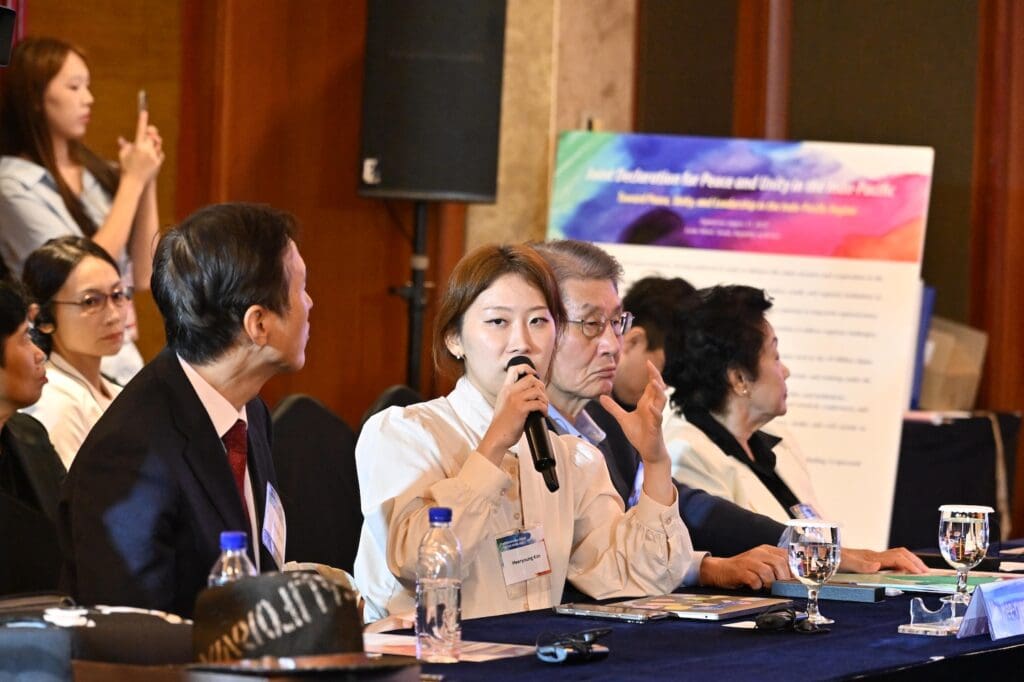
Ms Hee-ryeong Kim, Manager, Korean Dream Crew
Like Yeonsun, her friend Heeryoung also strongly supports Korean reunification. She has been contributing positively at the grassroots level by providing English lessons to North Korean escapees. She feels “not quite right” about the division and recalls how there was no language barrier with a similar culture and how it “clicked together” when she was interviewing 20 escapees. “I felt we are all the same people,” she adds. Heeryong is devoted to the unification campaign and shares, “In North Korea, people are technically living in jail; they have no freedom, to have to keep an eye on each other, they have to snitch…It is our role to raise awareness and make this important topic and agenda.”
From the USA, Aki Sano, a participant of GPF’s Korean Dream Crew, highlights the global significance of unification. She states, “worldwide support is more powerful,” and that “the idea that North Koreans cannot achieve peace and human rights, and the possibility for the North Koreans to be reunited with their families ” is what inspires her about Korean reunification. Likewise, Gambat, a participant in the International Forum of One Korea, referred to Korea as “the flower of the East” and shared that he cares about a united Korea because “peace is the breath and air” and that a unified Korea would be a peaceful and prosperous one.
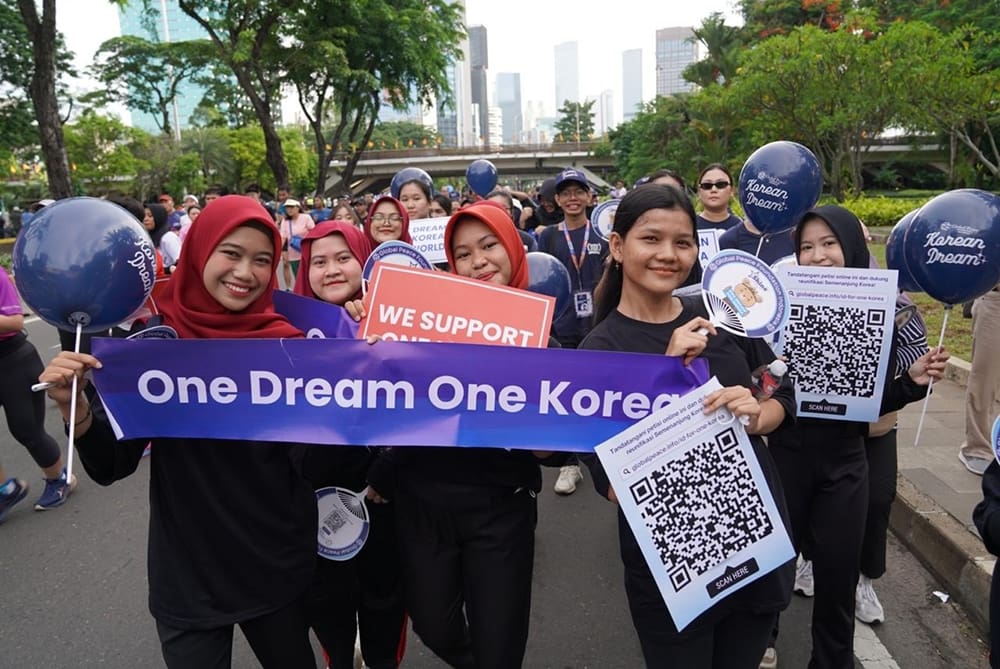
Indonesian people show support for the peaceful reunification of Korea
Like Aki and Gambat, many international youths believe that a unified Korea would be more than a regional solution, ending decades-long division. It would be a global symbol of peace, unity, and reconciliation, inspiring other countries to set aside their differences and work for peace. They stress that Korean unification matters not just to Koreans but to the whole world.
Reunification would mean more than ending a standoff. It would restore kinship and culture, an opportunity to build a new national identity informed by historical memory and global responsibility.
The Korean Peninsula remains a flashpoint in international relations. Yet its story is also a powerful symbol of unresolved conflict and enduring hope. If peaceful reunification were achieved in Korea, it could serve as a model of transformation, showing the world how long-standing divides can be healed through dialogue, vision, and shared humanity. Unification would not just heal hearts but also economies.
In an interview, Dr. Moon discussed the potential opportunities of a unified Korea. He said, “Reunification of the South and the North will be a tremendous opportunity. Reunification will bring all the elements needed for Korea’s growth and development, and all Koreans, especially the young, will have the opportunity to succeed and enjoy prosperity through reunification.”

GPYE campaigns for One Korea
A unified Korea would also address the global issue of security in the region. A peaceful, unified Korea would eliminate Korea would reduce military tensions in Northeast Asia, and shift the peninsula from a global flashpoint to a zone of stability and cooperation. One Korea offers not only lasting peace but a powerful model for conflict resolution worldwide.
Peace matters. A Unified Korea matters. It is no longer a distant hope but a tangible goal. As efforts for peaceful unification increase, GPF invites the world to stand in solidarity with the Korean people—not out of nostalgia but out of genuine commitment to building a better, more unified future.