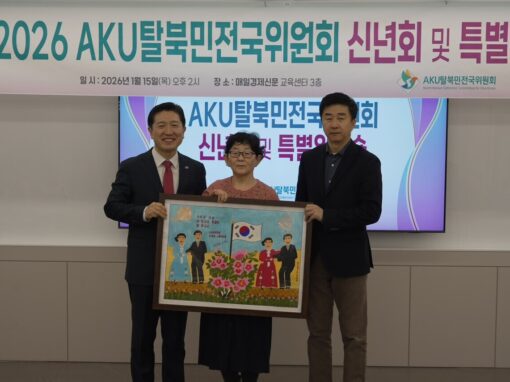
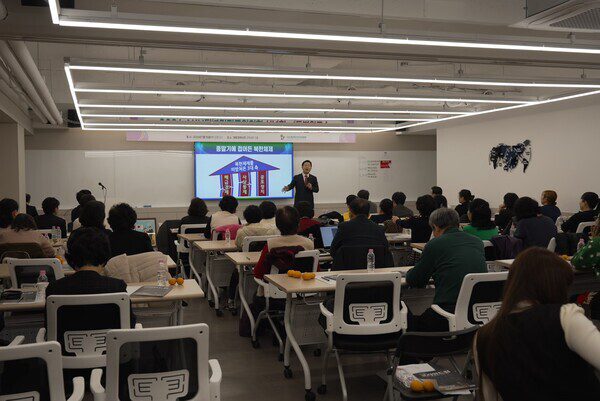
Photo courtesy of Korean Dream Times: Inteck Seo, Chairman of AKU, gives a lecture.
The peaceful unification of the Korean Peninsula cannot be achieved through political negotiations alone. It requires the active participation of citizens who share a clear vision rooted in human dignity, freedom, and coexistence. In early 2026, North Korean escapees in South Korea took a significant step forward by reaffirming their commitment to the Korean Dream—a citizen-led vision for a free, just, and unified Korean Peninsula.
From Survivors to Protagonists of Peace
At a gathering organized by the Action for Korea United (AKU) National Committee of North Korean Escapees, approximately 70 participants came together not as victims of division, but as protagonists shaping the future. Through shared experiences and dialogue, they expressed a collective determination to contribute to peace and unification based on the Korean Dream.
For many escapees, unification is not an abstract political goal—it is a deeply personal mission connected to family separation, human rights, and the hope of living together without fear. Their voices reflect lived realities that give moral urgency and authenticity to the unification movement.
The Korean Dream: A Vision Beyond Nationalism
Speakers at the event emphasized that the Korean Dream is not a narrow nationalist ideology, but a unification philosophy rooted in the ancient principle of Hongik Ingan—living for the benefit of all humanity. While the American Dream has historically centered on individual success, the Korean Dream aspires toward collective peace, shared prosperity, and global responsibility.
This vision frames unification not as an end in itself, but as a contribution to regional stability and global peace—aligning closely with the values promoted by the One Korea Global Campaign.
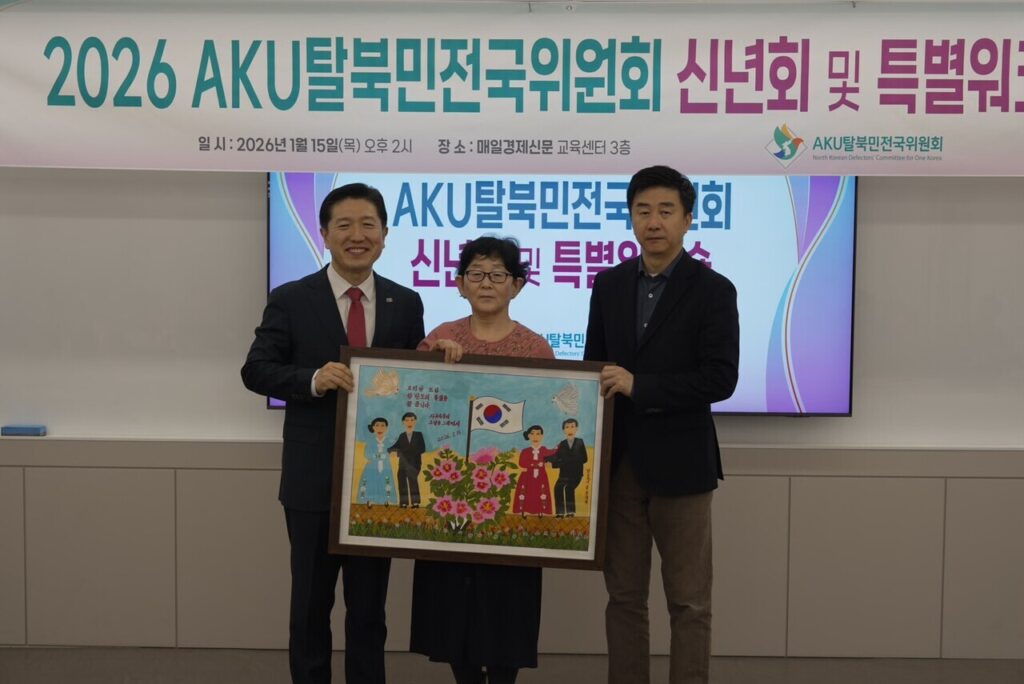
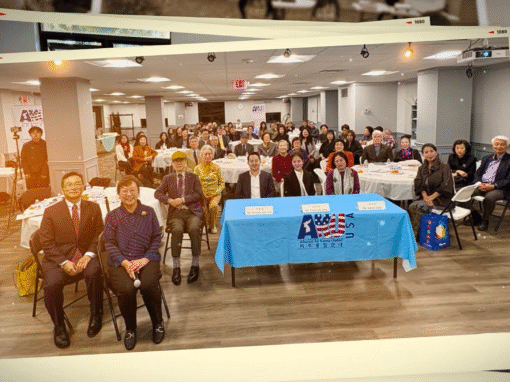
Photo courtesy of Korean Dream Times: AKU representatives during a New Year’s event for the Korean Dream.
Why North Korean Escapees Matter in This Moment
Discussions also addressed the internal changes taking place within North Korean society, particularly the rise of generations shaped by informal markets and lived hardship. Participants highlighted that these social transformations, combined with sustained international attention to human rights, make this a critical moment for citizen-led engagement.
North Korean escapees, with their firsthand knowledge and transnational perspectives, are uniquely positioned to bridge divides—between North and South, and between the Korean Peninsula and the global community.
A Call to Global Solidarity
This initiative demonstrates how Korean-led, citizen-driven movements can open pathways toward peaceful unification. By centering human rights, dignity, and shared responsibility, the Korean Dream offers a framework through which people around the world can engage with the future of the Korean Peninsula.
As part of the One Korea Global Campaign, such efforts invite global citizens to move beyond observation—to stand in solidarity, amplify hope, and participate in building a future where one Korea contributes to the peace and prosperity of all.
Read the original article in Korean