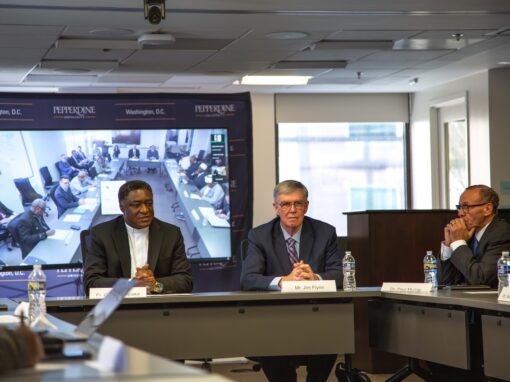
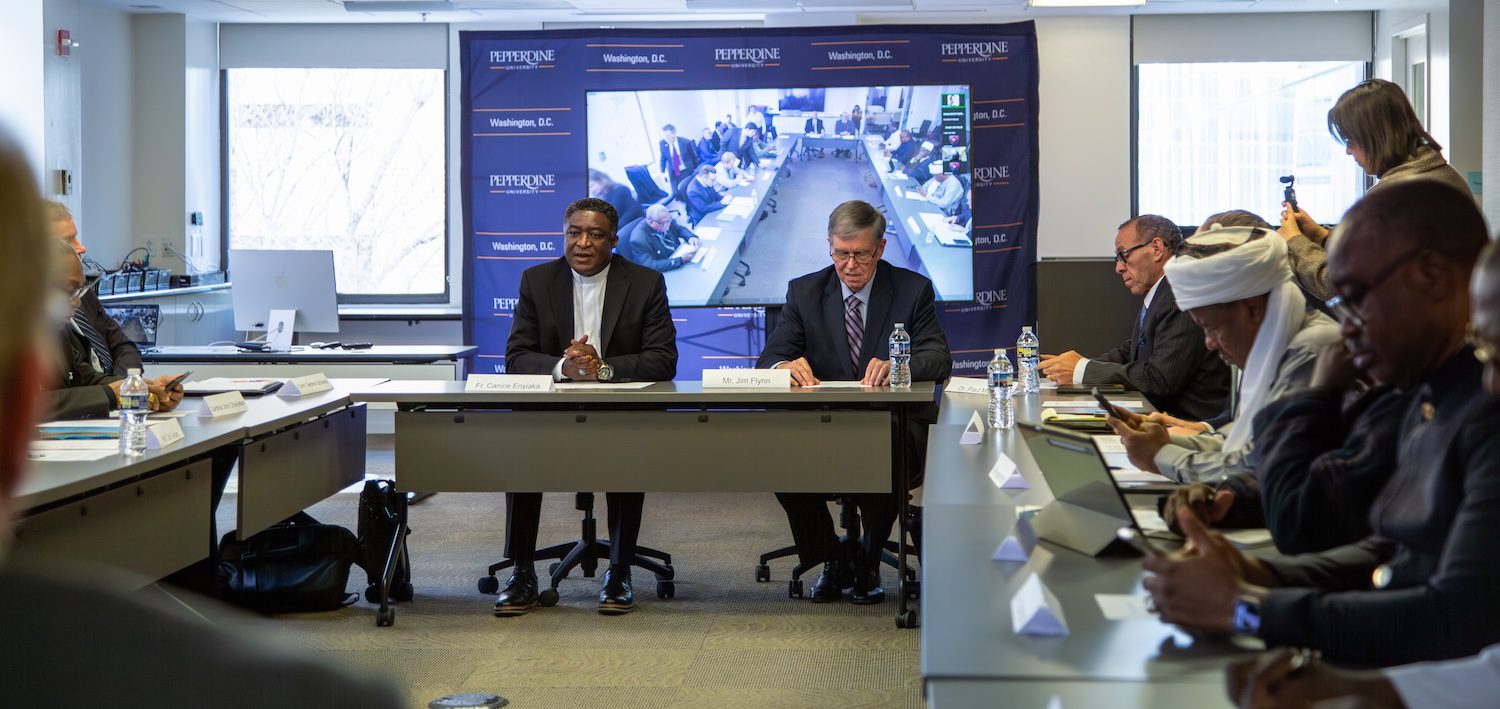
Rev. Fr. Canice Chinyeaka Enyiaka (left) welcomes faith and peacebuilding leaders to a forum addressing conflict in Nigeria.
Senior Christian, Muslim, and traditional rulers appealed for support to address escalating violence that threatens the foundations of the Nigerian state at a forum convened at Pepperdine University in Washington, D.C., on February 4.
Africa’s most populous country, Nigeria has been wracked by sectarian violence, terrorism, conflict over land rights, and endemic corruption. Armed gangs have seized control of villages and carry out mass kidnappings, often targeting school children who are held for ransom. More than 40,000 people have been killed since the emergence of the jihadist group Boko Haram in 2009, thousands of schools destroyed, agricultural regions despoiled, and internally displaced persons numbering in the millions living in nightmarish squalor.
The meeting was sponsored by the Global Peace Foundation, Pepperdine University, and Religious Freedom Institute.
Abuja communique
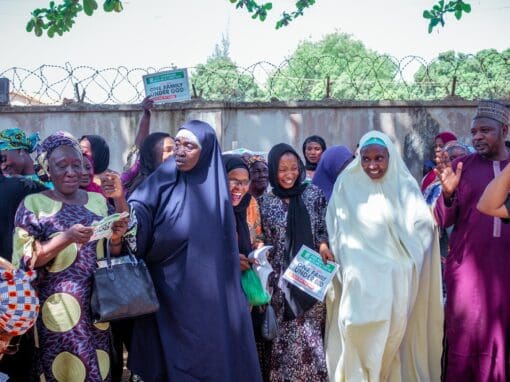
The urgency of the crisis was underscored at a December 9, 2025, meeting of Nigerian religious and traditional rulers in Abuja, who confronted Nigeria’s political leadership with its failure to meet basic governance obligations of security and rule of law. The leaders issued a forceful communiqué addressed to Nigeria’s president and National Assembly:
“The president should realize that everything that will be done will be meaningless if we don’t tackle the issue of insecurity in the Country. Similarly, members of the national assembly should also realise that we will have no job to do if their constituencies are consumed by insecurity and violence.”
The Abuja meeting resolved to establish a Joint Interfaith Advocacy Committee on Freedom of Religion or Belief, hold quarterly interfaith consultations, and document incidents of violence and hate speech. The meeting was organized by Global Peace Foundation Nigeria.
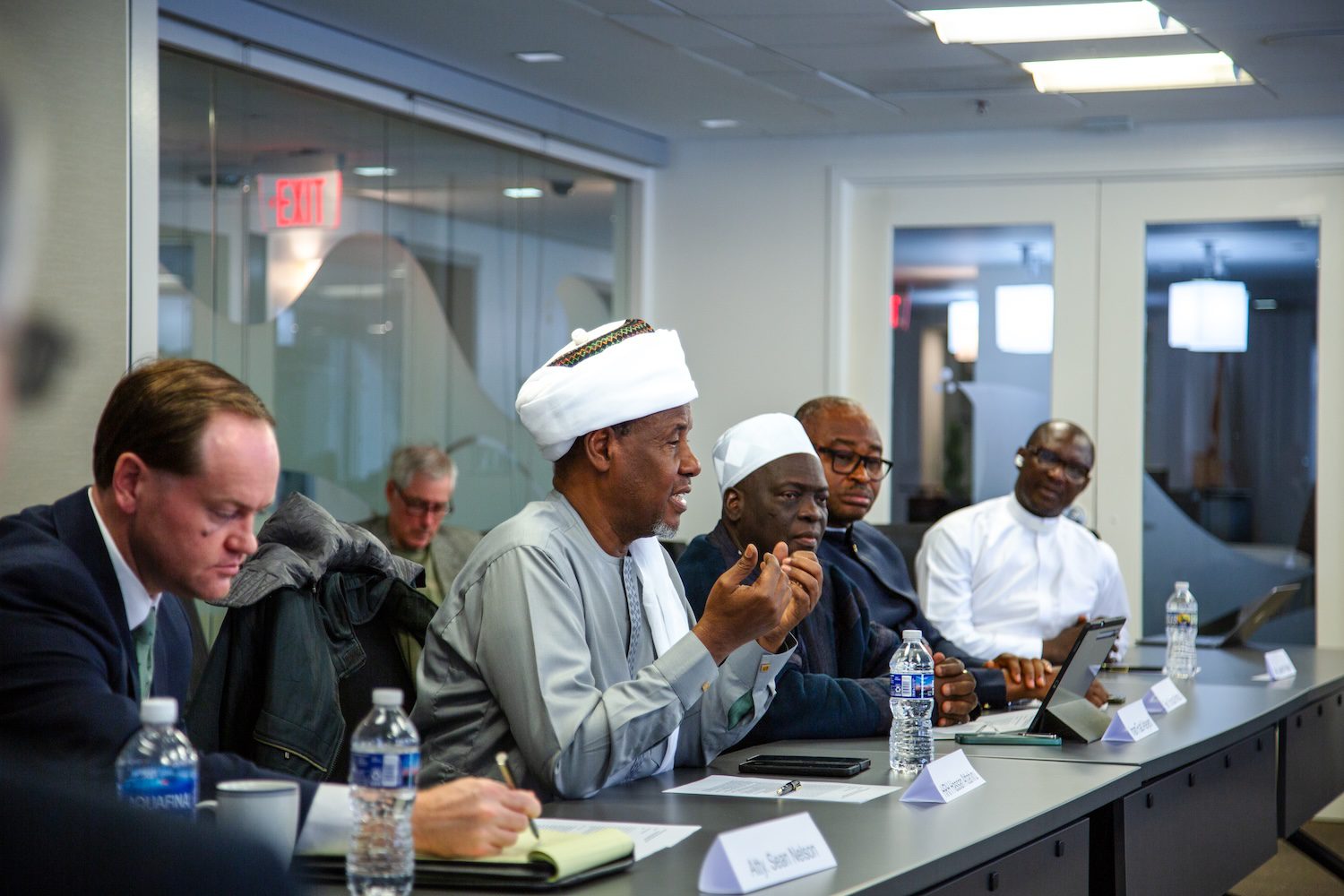
Faith leaders gather in Washington D.C. to address escalating tension in Nigeria.
Role of faith leadership
Pepperdine forum moderator Rev. Fr. Canice Chinyeaka Enyiaka said, “Africans are notoriously religious; that is why, to engage in a peace process, it is important not to ignore the role of faith leaders.”
Rev. Yunusa Nmadu Jnr said faith leaders in Nigeria have influence and trust. Advocating for greater daily interaction across faith traditions, he said there should be joint services, shared spaces, and moral education to teach compassion and coexistence among Muslims and Christians. “I shouldn’t be afraid to attend a service at a mosque,” he said.
Cardinal John Onaiyekan, elevated to the rank of Cardinal by Pope Benedict XVI, said when Nigeria was subject to the British monarchy, “We were told that with independence, Nigeria will be a great nation like France, UK, or the U.S. Older people are aware of what a good country should be. Young people may not even know. Our problems are self-inflicted, so we need our own solutions. But no nation is an island, so we also need support.”
The communique, he said, is the result of sharing, a roadmap, an action plan, while Nigeria is in crisis. “Leaders all claim to be religious. They go to church and mosque and make generous contributions, but neglect their religion when performing their official duties. We have talked about moral compass, but many leaders put the ‘compass’ in their pocket.”
Underscoring the seriousness of Nigeria’s current crisis, Ambassador Sam Brownback, former U.S. Ambassador-at-Large for International Religious Freedom and chairman of the 2026 International Religious Freedom Summit that concluded in Washington on February 3, said, “If this moment is not wisely used, you could lose the country. I fear this is the road we are starting down without sustainable solutions. You don’t have a lot of time.”
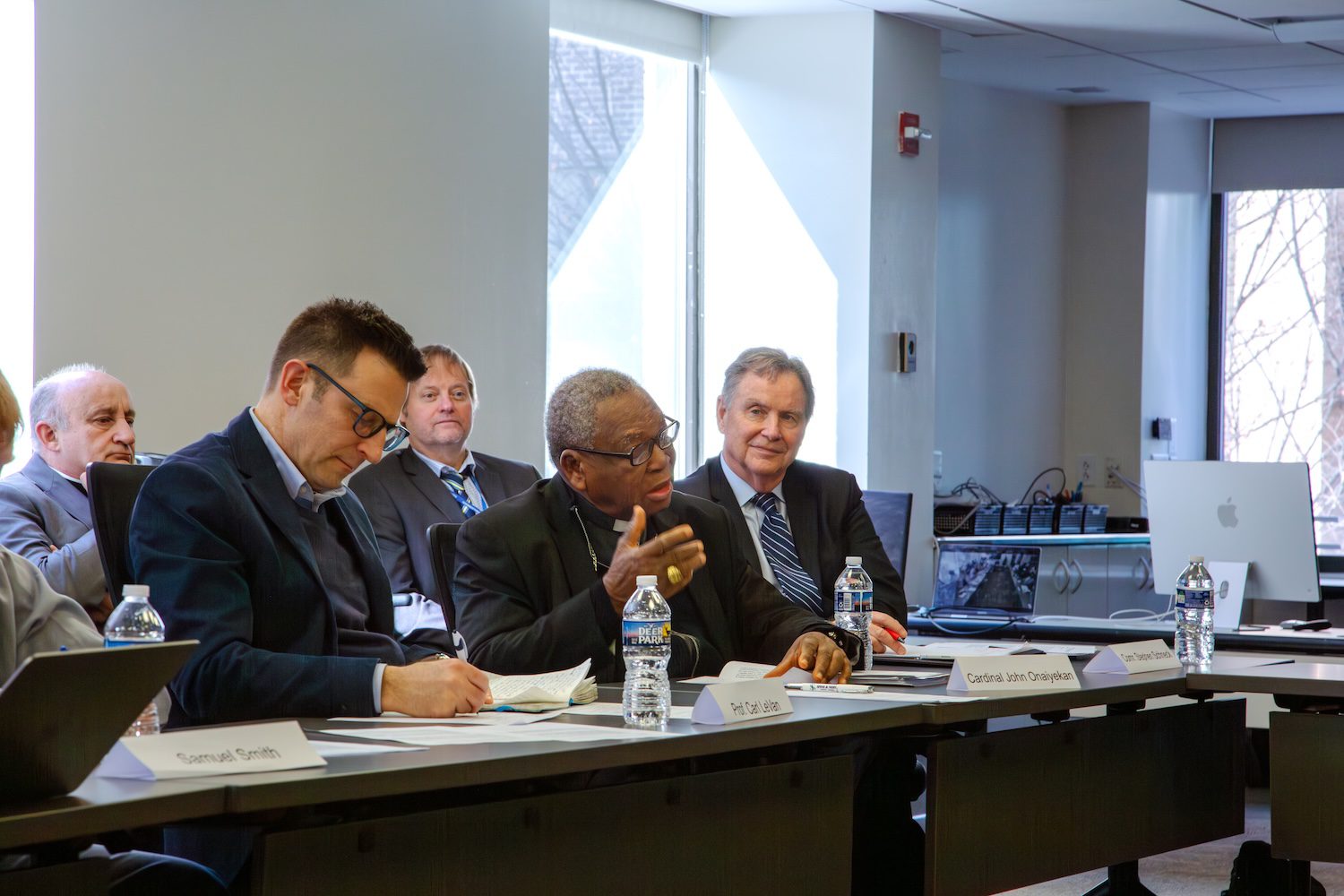
Cardinal John Onaiyekan (center) delivers remarks at Pepperdine University forum in Washington, D.C.
Enlisting international support
“As the United States evaluates policy options and cooperation with the Nigerian government, it is essential that decision-makers also hear directly from faith leaders who carry moral authority and real influence within Nigeria’s communities,” said Dr. Paul Murray, Global Peace Foundation’s International Vice President for Religious Freedom Initiatives.
“By bringing three Christian and three Muslim leaders of national prominence to the United States,” Murray added, “we are providing policymakers with firsthand insight into what is working at the local level, what is not reaching the headlines, and what is truly required for national transformation. Governments can negotiate policy. Faith leaders shape conscience, credibility, and community trust. Without their voices at the table, any long-term strategy will remain incomplete.”
Representatives from the U.S. Commission on International Religious Freedom, Global Impact, Religious Freedom Institute, Alliance Defending Freedom, the U.S. State Department, and American University expressed full support as well as long-standing commitments to religious freedom and civil rights in Nigeria and throughout Africa.
Daniel J. DeWalt, senior vice president for Global Impact and chief of staff at Pepperdine University, noted that the university has relationships with 20 African countries to advance justice reform. “We are committed to continental reform.”
Among the urgent concerns addressed were the virtual overthrow of state sovereignty in some rural areas, where terrorists occupy towns, extort taxes, commandeer crop harvests, stand for sham elections, and attempt to institute their own form of government, while the government does nothing.
Internal displacement camps that force millions away from their homes offer nightmarish living conditions. Yet returning home can mean living under the threat of terrorist control.
“This should not be possible in 2026,” remarked Cardinal Onaiyeka.
Sheikh Muhammad Abubakar Sadeeq also emphasized the involvement of women and youth. “They are the ones who rear children before entering the larger community. Once youth are involved and committed [to peace], terrorists and bandits will have a harder time looking for recruits.”
“We want to be part of the solution,” concluded Rev. Fr. Canice. “Bringing the experience and insights of faith leaders here to Washington is very important because of the seriousness of the current crisis. Religious faith is a powerful force in Nigeria, and I am grateful for all the organizations supporting religious freedom and human rights represented here. With a united voice, we can bring positive change to Nigeria.”
The meeting included distinguished and influential religious and traditional leaders, including John Cardinal Onaiyekan; His Royal Highness Alhaji (Dr.) Hassan Attahiru, Emir of Bungudu in Zamfara State; Reverend Joseph John Hayab, chairman of CAN Northern Nigeria and country director of the Global Peace Foundation Nigeria; Sheikh Muhammad Abubakar Sadeeq, imam of the National Mosque; Imam Fuad Adeyemi, chief imam of the Abrahamic Mission, Rev. Yunusa Nmadu Jnr, CEO of Christian Solidarity Worldwide Nigeria; and Rev. Fr. Canice Chinyeaka Enyiaka, director of African Peace Initiative and Engagement at the Global Peace Foundation.
Learn more about Global Peace Foundation’s peacebuilding work in Nigeria.
Read more on UPI: Nigerian interfaith leaders seek support, understanding in Washington, D.C.