“We have lots of things to be proud of. Koreans have this word, Jeong. It’s a special bonding between different people. Jeong is what makes me Korean.”
– Yeonsun, advocate for One Korea
“It’s some sort of warm feeling. So, even if you come to Korea, we talk to each other, we eat something together, and you are family to us.”
– Heeryoung, advocate for One Korea
Yeonsun and Heeryoung deeply care about Korean reunification. For them and for many others, Korean reunification is not just about politics or history. It’s about people, family, and Jeong.
Jeong (정) is felt more than it is defined. It is one of the most profound and uniquely Korean concepts. Koreans understand it intuitively. It is a deeply rooted emotional bond that grows over time through shared meals, moments, hardships, or even simple daily life. Soft but strong, it is an unspoken understanding and mutual care.
The tragedy of Korea’s division is that it separated not just land and systems, but relationships filled with Jeong. Families who had spent lifetimes together were torn apart. Friends lost contact. Lovers forced to say goodbye.
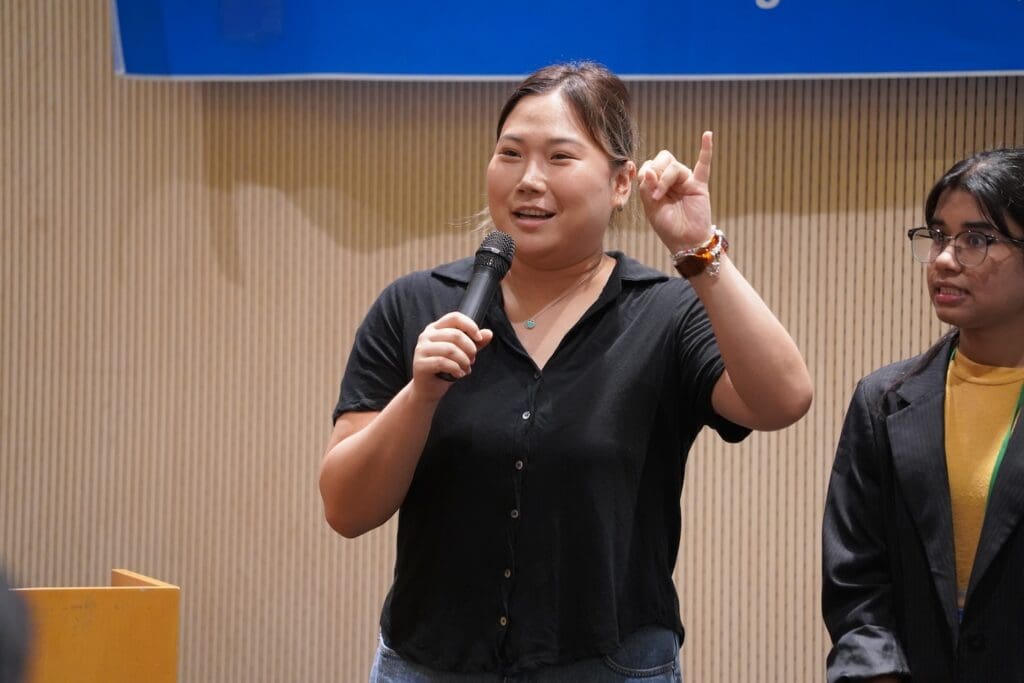
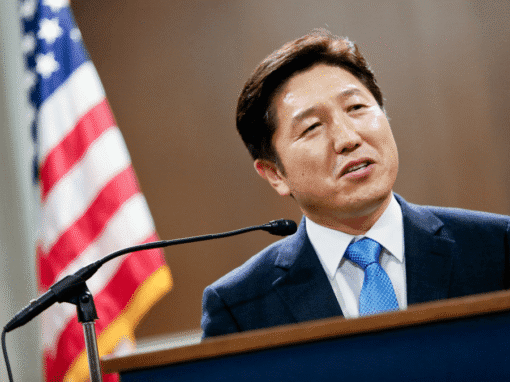
Yeonsun, a native Korean who advocates for the reunification of the two Koreas, speaks internationally to young leaders.
Despite this division, it seems the emotional warm feeling for the family in the North still remains in the hearts of the Koreans, like Yeonsun. Jeoung is within Yeonsun as she carries within her the longing of her grandmother, a North Korean escapee during the Korean war. “She talks about it often and wishes to meet her family,” says Yeonsun.
Heeryoung sat beside Yeonsun, sharing her own perspectives with the Global Peace Foundation. Although born decades after the war, Heeryoung feels the weight of division, and it is heavy. She talks of her North Korean friend, an escapee who tragically passed away after gaining freedom.
“She lost her parents because her parents couldn’t get the right treatment. Although it was very treatable in South Korea. She also suffered a lot when she was in China, in the border area; basically, because they are fugitives and don’t hold a legitimate passport,” recalls Heeryoung.
“That’s why it became personal to me,” says Heeryoung as she reaffirms her commitment to Korean reunification and raising awareness about the important issue.
Korea remains divided, but the heart is still connected, and the feeling is there. Jeong is still there. Like a sacred thread connecting people beyond the 38th parallel, and that thread is expanding, touching more lives and connecting more people, as seen in the growing momentum behind the One Korea Global Campaign.
Risa Perea, an advocate for Korea from the USA, affirms her dedication to One Korea and says, “Korea is a part of this global community, and if one member of the community is going through difficulty, then it affects everyone.”
She added, “It’s also a duty being a citizen of the United States to be able to bring peace and freedom to different countries. I feel like this is a part of my duty and identity.”
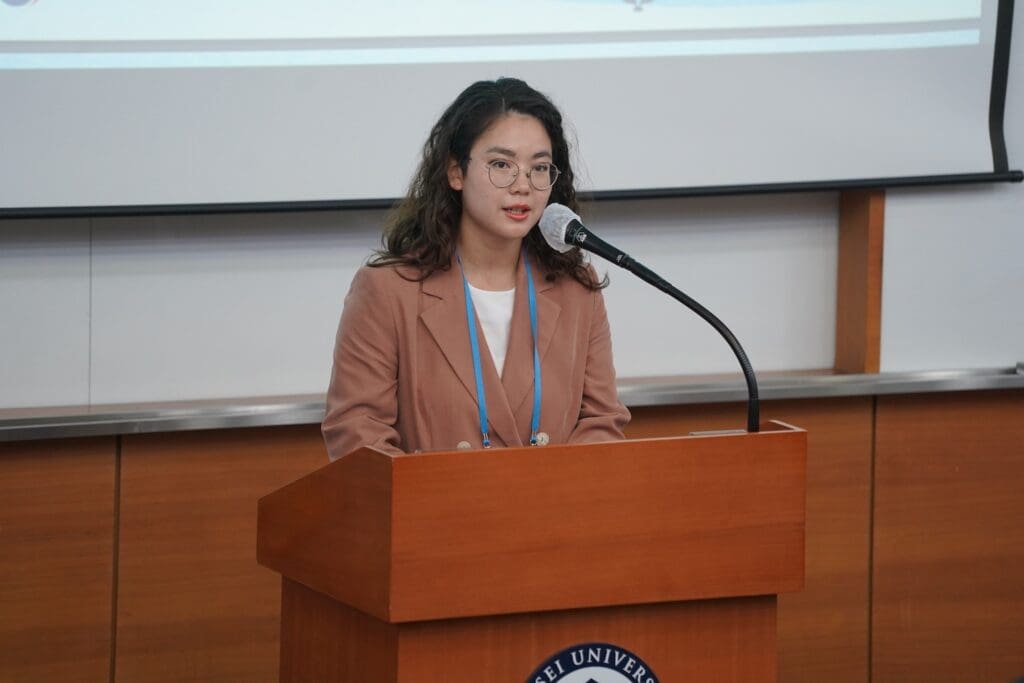
Risa Perea from the United States is an advocate for the One Korea Global Campaign.
Like Risa, many other people from the international community have raised their voices for a unified Korea through social media, conferences, forums, and public gatherings. From Japan to the USA and India to Indonesia, people have showcased their support for the One Korea Global Campaign.
Sanoat from Tajikstan says the Korean division is “not just an issue only for Koreans.” She adds that it is an issue of human rights, and if the international community came together as human beings, the world would be more peaceful.
Dr. Lakhvinder Singh, a professor and speaker for the International Forum of One Korea, said he cares about Korea. His family resides in Korea, and he added, “We are part of the Korean family. We care about it because Korea is a bigger part of us, our house. ”
People like Risa, Sanoat, and Lakkvinder might have direct families in the North, but their support for Korean unification speaks volumes.
Perhaps Jeong made them care—an intimately human thing—to care, hope for, and support those who are suffering. This warm feeling binds not just South and North Koreans but people from around the world to those they’ve never met.
The One Korea Global Campaign makes its most powerful impact as it connects people beyond nationalities to feel for the North Koreans. It moves towards trust, reconnection, and support, calling on youth, artists, educators, and global leaders to pursue unity not as a strategy, but as a shared destiny.
It nurtures emotional and moral foundations for unity, emphasizing shared identity, cultural values, and the Korean ideal of Hongik Ingan (“to live for the benefit of all humanity”).
It invites the world to feel Jeong; to care, to act, and to hope.
August 2025 marks 80 years since the Korean Peninsula was divided; hope still lingers, and efforts only multiply. Though decades have passed, that emotional thread remains unbroken. Even today, older generations speak of lost siblings and cousins in the North, with voices full of longing, not bitterness. Despite the pain, Jeong holds on with a quiet hope that one day, what was broken may be made whole again. The ties of Jeong were stretched thin, but not broken.
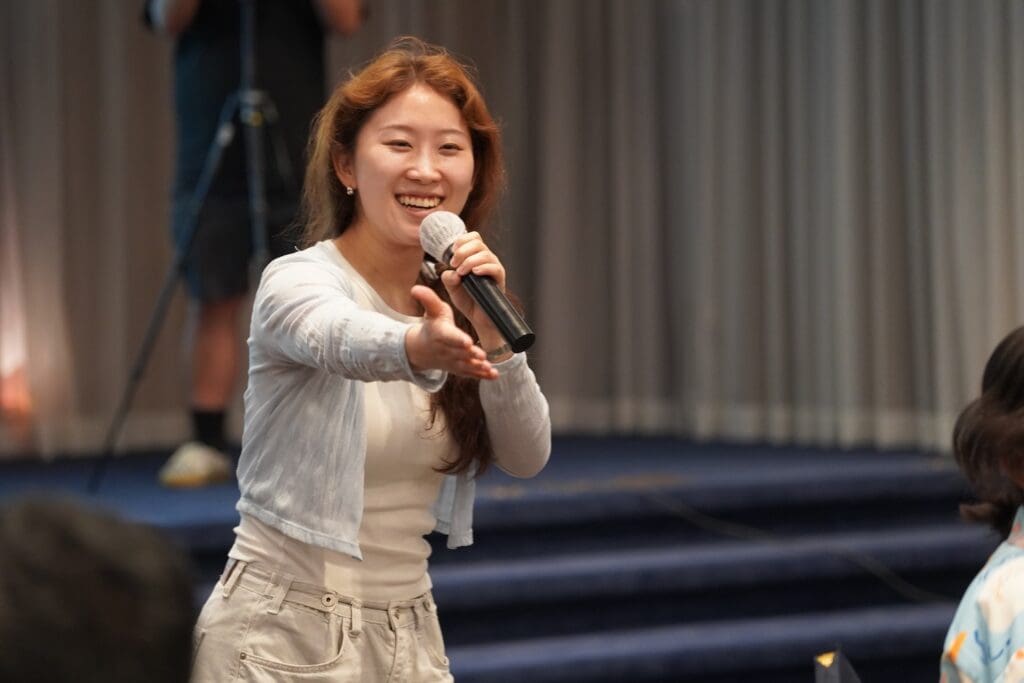
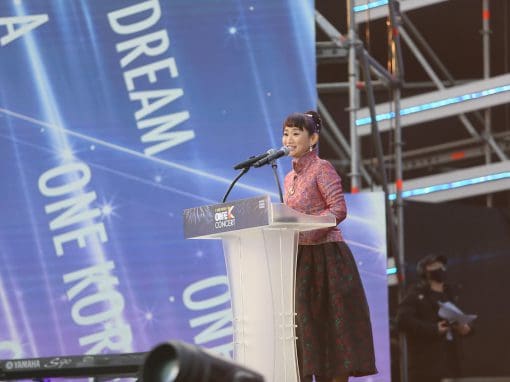
Heeryoung, an advocate for the One Korea Global Campaign, shares her passion during international youth leadership programs.
Jeong is the heart of Korean reunification. It isn’t just personal, it’s national for Korea. Korean youths like Yeonsun and Heeryoung may not have lived through the war, but they inherit its consequences and its hopes. As they participate in movements like One Korea, they are not just learning history. They are embodying Jeong by listening, empathizing, collaborating, and imagining a future that reconnects rather than divides.
In a time when many societies are becoming more individualistic, divided, and transactional, Jeong offers a quiet counterexample. It reminds us that peace is not only negotiated, it is lived. It is practiced in the way we treat each other, the way we forgive, and the way we hold space for one another’s pain.
As Korea looks ahead to the possibility of reunification, Jeong will reconnect severed relationships and bring people home. Jeong will take Heeryoung to visit her friend’s hometown, the first thing she would do if Korea were to be reunited.
Jeong might not have an English translation, but it doesn’t demand translation. It demands nothing but to be felt naturally in spaces among people.
What greater way to feel and witness this than the One Korea Global Campaign, when people from across nations come together for their brothers and sisters in the North, for people they don’t know and have never met?
How beautiful it is.
Jeong.
Jeong hasn’t faded with time. It has only become stronger and fiercer, a quiet force driving the Korean reunification.