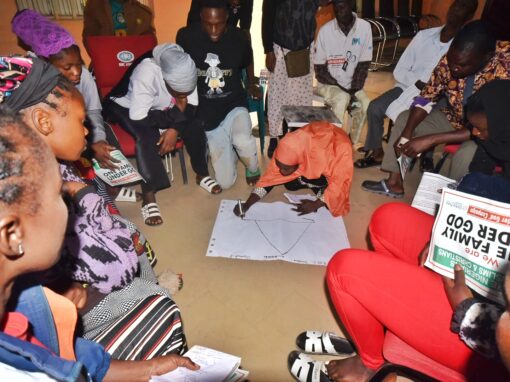
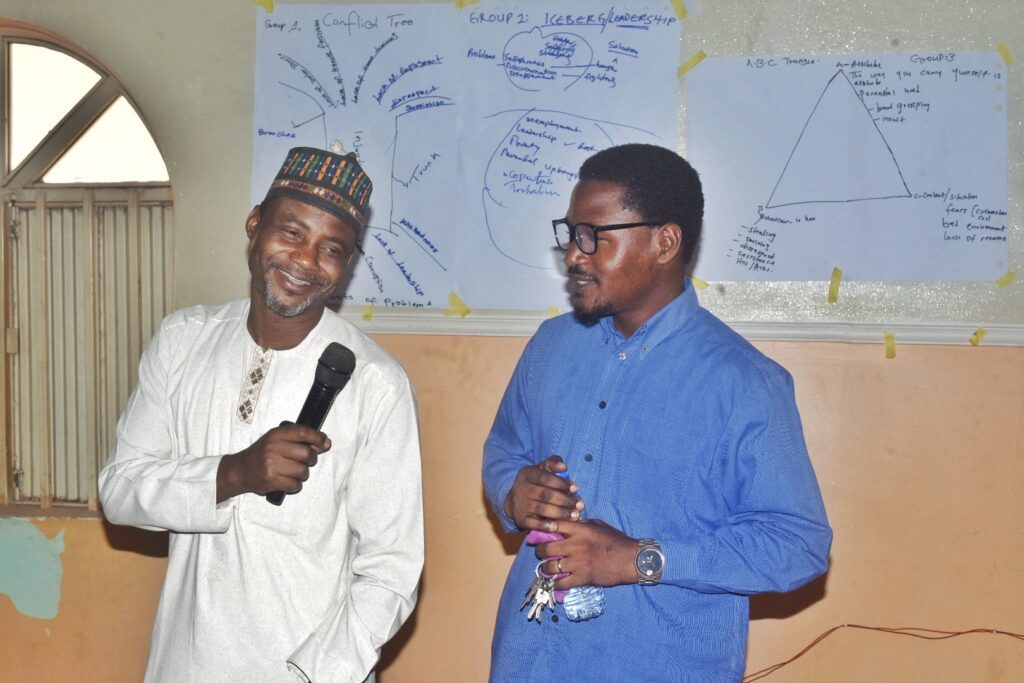
Community leaders participate in a workshop on conflict analysis hosted by Global Peace Foundation.
Global Peace Foundation (GPF) Nigeria took a significant step toward strengthening local peacebuilding capacity by convening a two-day capacity-building workshop on conflict analysis, interfaith engagement, and mediation at the Unguwan Gwari Community Hall in Nigeria on January 13-14, 2026. The workshop brought together over 110 participants from diverse backgrounds, including religious leaders, youth, women, community members, and GPF Nigeria staff. Designed as an interactive and practice-oriented training, the program aimed to equip participants with practical tools to analyze conflicts, engage constructively across faith lines, and promote peaceful coexistence within families and communities.
The workshop opened with a strong emphasis on shared humanity and the moral responsibility of individuals to contribute to peace, regardless of religious or cultural differences. Through facilitated discussions, participants explored common sources of conflict in their communities, including resource-based disputes and identity-related tensions. These sessions grounded the learning in real community experiences, ensuring relevance and immediate applicability. Participants were then trained on core conflict analysis tools such as conflict tree analysis, stakeholder mapping, conflict timelines, and force field analysis, methods that help uncover root causes, key actors, and pathways toward conflict resolution.
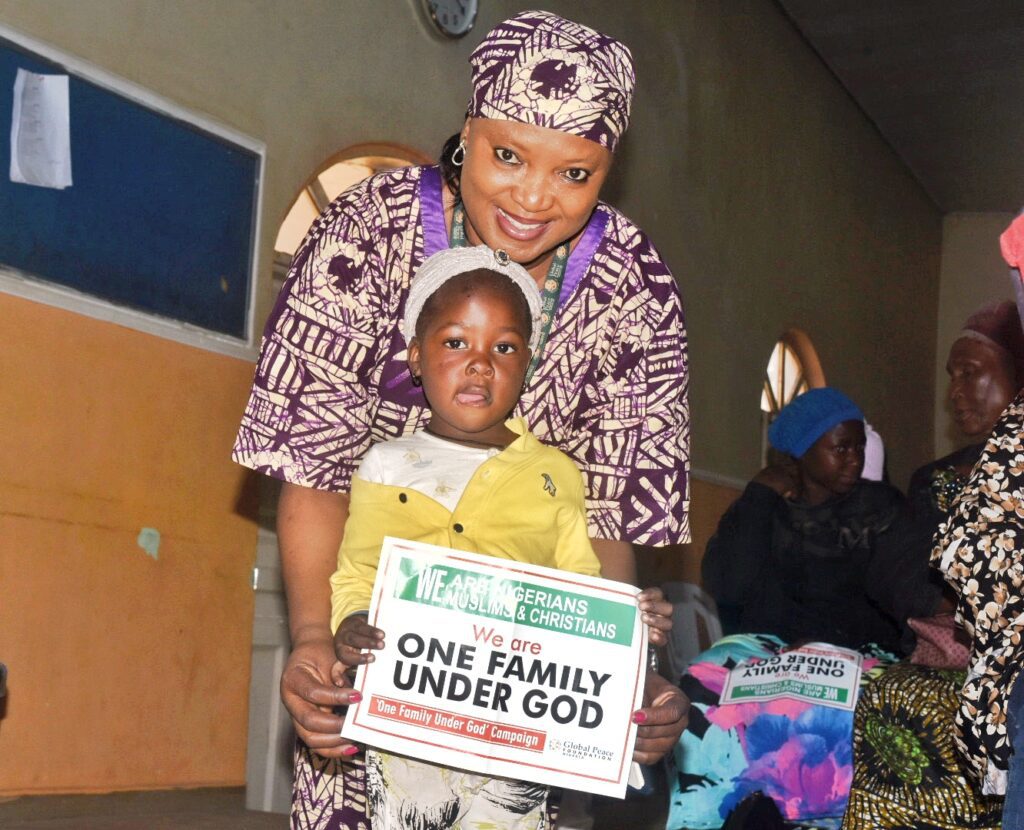
Community leaders participate in a workshop on conflict analysis hosted by Global Peace Foundation.
A central pillar of the program was interfaith engagement. Participants from different religious backgrounds engaged in sessions on dialogue principles and nonviolent communication, learning how respectful listening, empathy, and values-based communication can reduce tensions and build trust. Training on negotiation and mediation further strengthened participants’ ability to respond constructively to disputes. By focusing on collaboration, mutual respect, and problem-solving, the workshop encouraged participants to see themselves as peacebuilders capable of guiding others toward nonviolent solutions.
On the second day, learning moved decisively from theory to practice. Participants were divided into three groups, each applying a different conflict analysis framework: Conflict Tree Analysis, Iceberg Analysis, and the ABC Triangle, to real-life conflict scenarios. These hands-on exercises allowed participants to identify visible issues, underlying causes, attitudes, behaviors, and contradictions driving conflicts in their communities. Group presentations and shared learning sessions created space for collective reflection and peer-to-peer learning.
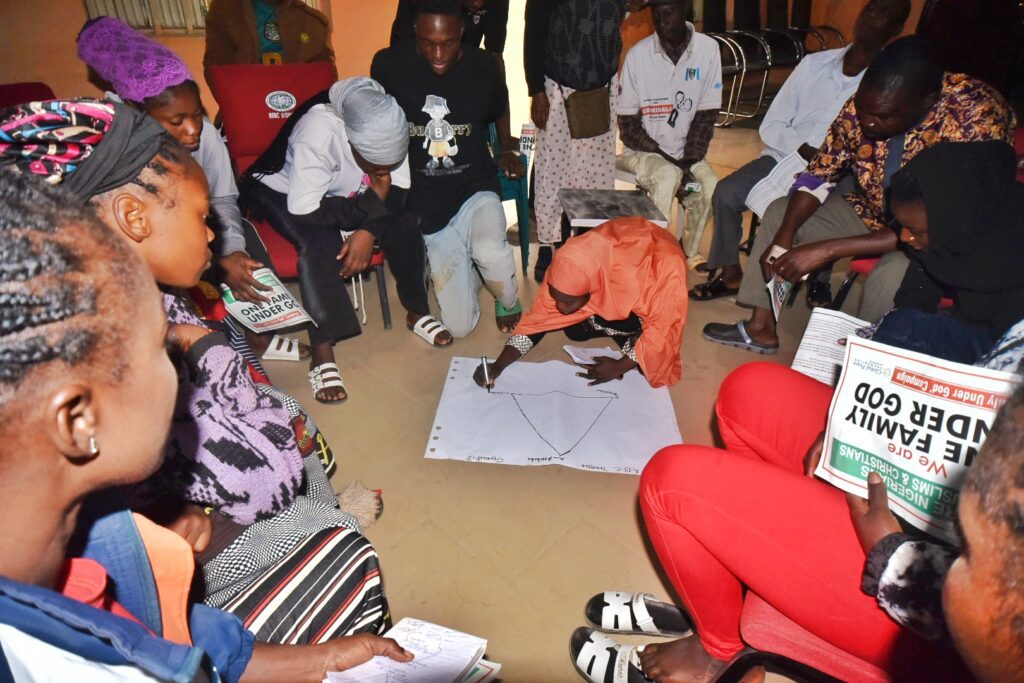
Community leaders participate in a workshop on conflict analysis hosted by Global Peace Foundation.
By the end of the workshop, participants exhibited increased awareness of conflict dynamics, improved skills in negotiation and mediation, and a deeper appreciation for interfaith cooperation. Participants also reported greater confidence in promoting dialogue and peaceful coexistence within their families and neighborhoods.
Esther Madaki reflected that the workshop “reawakened the consciousness of our society” and deepened her understanding of how conflicts can be resolved peacefully. Sani Aliyu highlighted the value of the practical exercises, noting that they equipped him with skills to mediate disputes in his community. Monday Samuel emphasized how learning about negotiation and nonviolent communication strengthened his ability to contribute to harmonious coexistence.
Participants expressed their eagerness to apply the tools and approaches learned within households, youth groups, faith communities, and neighborhood forums, ensuring that peacebuilding continues beyond the training room. Building on this momentum, GPF Nigeria plans to follow up with community awareness initiatives focused on drug-related issues and continued dialogue for peaceful coexistence.
Learn more: Nigeria | Global Peace Foundation