
Leaders show support for peacebuilding at a workshop on Peace Reporting for National Development.
Ethical reporting is essential for global peace because the stories shared by journalists shape public understanding, influence policies, and guide the direction of national and community dialogue. When reporting prioritizes accuracy, fairness, and sensitivity, it becomes a powerful tool for building trust and fostering a stronger social fabric. In societies facing conflict or division, ethical journalism encourages reconciliation, supports healing, and lends visibility to voices that can guide communities toward unity. It helps citizens see beyond fear and prejudice, opening a pathway for collective action toward peace and transformation.
This belief in the transformative power of ethical media practice guided the one-day capacity-building workshop on Peace Reporting for National Development, held in Kaduna by the Correspondents’ Chapel of the Nigeria Union of Journalists, the Global Peace Foundation (GPF) Nigeria, and the Kaduna State Ministry of Information. The workshop brought together representatives from thirty media organizations, communication scholars, civil society actors, and government agencies. Their shared goal was to enhance the capacity of journalists to report in a manner that reduces conflict, fosters dialogue, and supports Nigeria’s long-term national development.
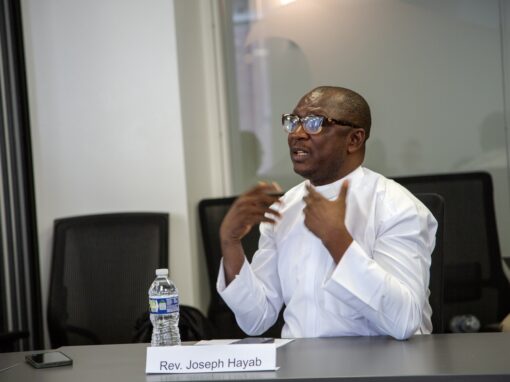
The training began with a strong reminder from Rev. Joseph John Hayab, the country director of GPF Nigeria, who described peace journalism as the heartbeat of national transformation. He emphasized that peace is a foundation on which national progress is built. Journalists hold the power to shape narratives that either deepen mistrust or inspire hope. Rev. Hayab encouraged media practitioners to frame stories with empathy and balance, giving attention not only to the challenges that confront communities but also to the solutions that emerge from dialogue, reconciliation, and social healing. He reminded participants that the principle that guides the Global Peace Foundation, that we are one family under God, should be reflected in the stories the media tells.
The Kaduna Peace Model was presented by Malam Ahmed Maiyaki, the Kaduna State Commissioner for Information. He highlighted the enormous progress the state has made by replacing fear with cooperation and by building trust between communities and institutions. Rather than relying solely on force, the Kaduna Peace Model employs a multifaceted approach that combines dialogue, intelligence sharing, socioeconomic engagement, and support for traditional institutions. These efforts have contributed to the safe release of hundreds of kidnapped persons and opened paths for the reintegration of former bandits as community mediators. Malam Maiyaki noted that journalists play an important role in shaping public perception of these initiatives. When the media reports stories of successful mediation, community resilience, and positive state interventions, it encourages citizens to believe in the possibility of peace and motivates continued cooperation. He urged journalists to avoid sensationalism and misinformation and instead verify facts and highlight the possibility of transformation.

Mrs. Fatimah Shuaibu, Head of the Department of Strategic Communication and Media Studies, Kaduna Polytechnic, delivering her presentation during the one-day Capacity Building Workshop on Peace Reporting for National Development.
Mrs. Fatimah Shuaibu, Head of the Department of Strategic Communication and Media Studies at Kaduna Polytechnic, spoke on the role of the media as a shield for national growth. She described how misinformation, hate speech, and the misuse of digital platforms can quickly inflame tensions in a diverse nation. For this reason, journalists must uphold ethical standards, verify information thoroughly, and consider the potential impact of the stories they publish. She encouraged practitioners to avoid stereotyping and to elevate stories that show how communities are resolving conflict peacefully. According to her, ethical journalism protects national unity and strengthens the nation’s capacity for long-term development.
The workshop emphasized interfaith leadership by showing how people of different religions can work together to counter misinformation, challenge harmful stereotypes, and build cohesion. The role of the family was also highlighted as central to peacebuilding, since strong family units make communities more resilient and discourage the dehumanization often seen in conflict reporting. In addition, the workshop encouraged a culture of service, urging journalists to use their skills to uplift the nation, celebrate community-led peace initiatives, and promote solutions rather than fear.

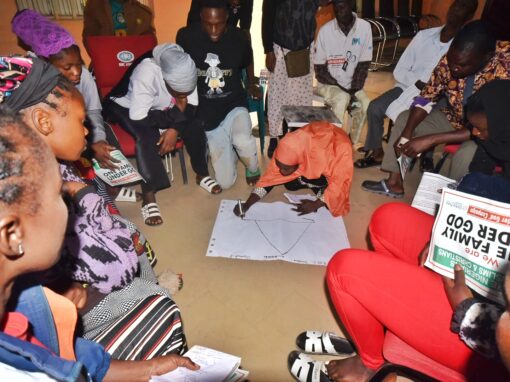
Participants in a workshop for ethical journalism hosted by GPF Nigeria.
Following the workshop, journalists expressed an increased understanding of conflict-sensitive reporting and the ethical principles that promote peace. They expressed renewed commitment to verifying information and amplifying the voices of marginalized or misunderstood groups. Participants also identified the need for collaboration among media organizations, government agencies, and local peace actors to sustain positive change. Many left the workshop with a fresh understanding of their role as contributors to national unity and transformation.
The impact of the training is already visible in improved reporting practices. Journalists who attended the workshop have begun sharing stories that focus on community dialogue, reconciliation, and progress. This shift in tone is helping to rebuild public trust and reduce the influence of misinformation. The presence of a new network of peace-minded media practitioners in Kaduna is expected to strengthen long-term peace efforts, influence newsroom policies, and encourage the public to engage in constructive conversations about security and development.
Ethical reporting has the power to strengthen families, communities, and institutions, making it a vital foundation for global peacebuilding. Learn more about, and support the Global Peace Foundation’s Community-driven Peacebuilding initiatives.
Your donation will help community members, faith leaders, and local officials establish dialogue, build trust, and forge lasting relationships in communities globally.