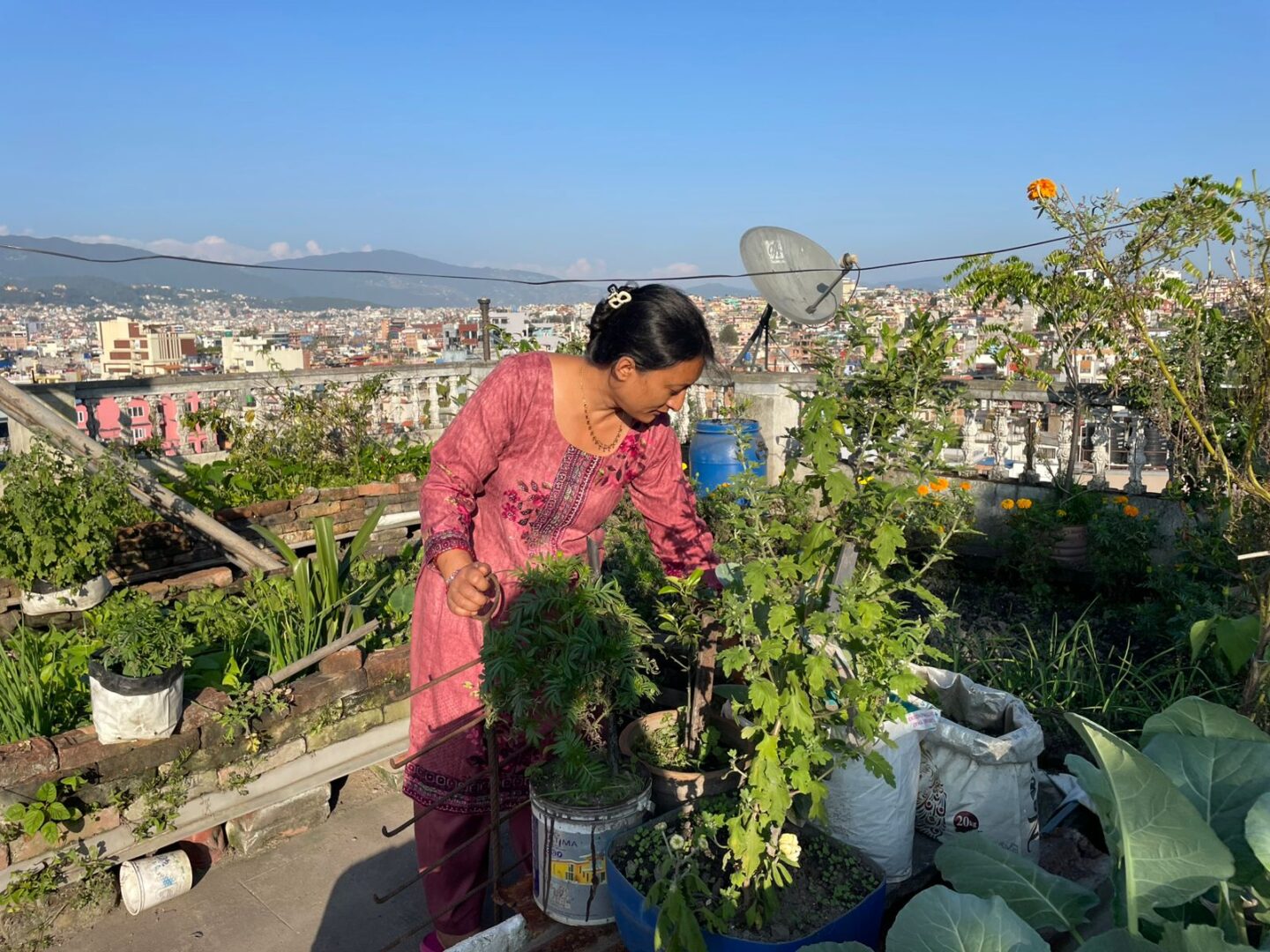
A woman in the Green Homes; Green Kathmandu program shows her rooftop farm.
Environmental stewardship is becoming an essential pathway to community resilience in Nepal, where families and local leaders are facing growing water and waste management challenges. In October 2025, Global Peace Foundation (GPF) Nepal advanced this work through a series of hands-on trainings and monitoring visits under the Green Homes; Green Kathmandu, and Green School initiatives. These activities reflect the Global Peace Foundation’s broader commitment to development and service, which encourages communities to cultivate shared responsibility, protect natural resources, and strengthen social cohesion. The programs also support GPF’s environmental projects that promote sustainable living through renewable energy, rainwater harvesting, waste reduction, and practical conservation skills.
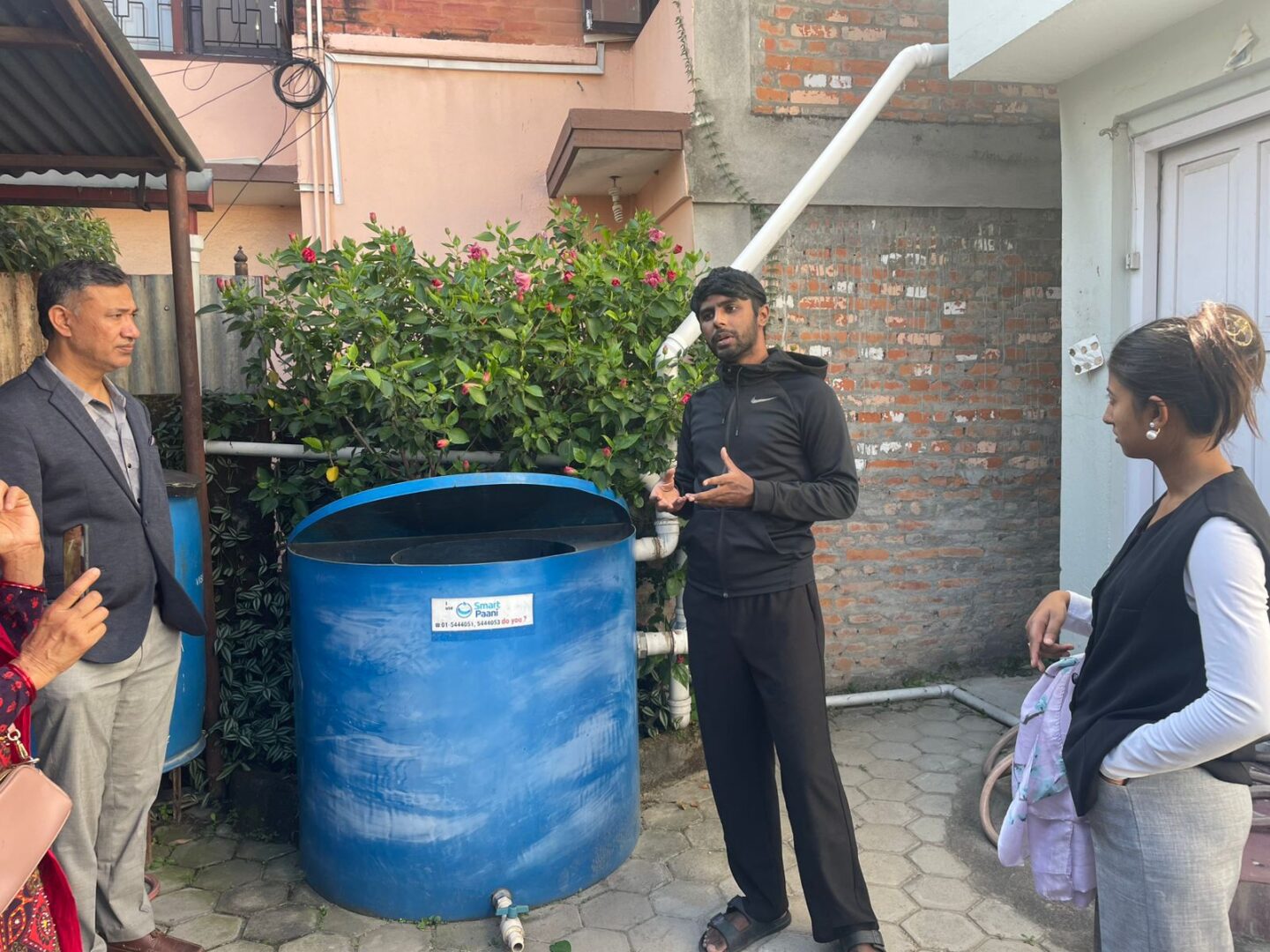
GPF Nepal gives presentation on safe rainwater harvesting.
The Green Homes; Green Kathmandu program brought together women from Kathmandu Metropolitan City Ward Five and Ward Fifteen to learn practical solutions for water scarcity and household waste management. At Smart Paani, participants received training and demonstrations on rainwater harvesting, groundwater recharge, biosand filtration, rapid sand filtration, and safe water purification methods. The field session helped them see how science and everyday practice meet in a real household system. One participant, Ramita Bajracharya, shared that the concept of rainwater harvesting was new to her. She explained that her community experiences water shortages during dry seasons and often has to buy water. She added that the training offered a sustainable solution that she plans to discuss with her family because it is a useful and long-term investment.
Women from the earlier cohort of Green Homes; Green Kathmandu continued to demonstrate the lasting impact of the program. During monitoring visits, they demonstrated their practices in solid waste management, rooftop farming, and the utilization of renewable solar energy. Their examples illustrated how environmental knowledge transforms homes into centers of innovation and learning. Anjali Prajapati expressed appreciation for the continuous encouragement she received from GPF Nepal. She described how rooftop farming and composting have enhanced her family’s life, and how installing a solar water heating system has made her home more energy-efficient. She also noted that the growing demand for the bar soap and liquid soap she produces has contributed to her household income and strengthened her resolve to continue these practices.
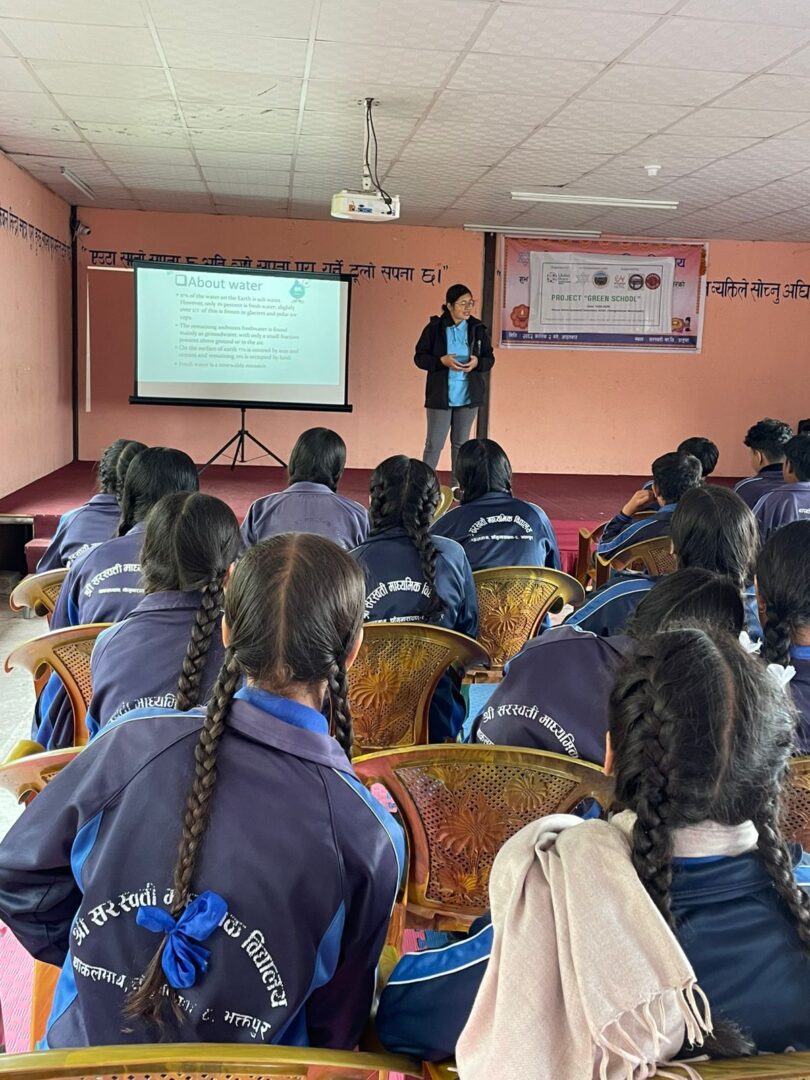
GPF presents for the Green School initiative at Shree Saraswati Secondary School.
The program also invested in young people through the Green School initiative at Shree Saraswati Secondary School. Students explored the importance of water, its sources, global distribution, and the value of responsible use. They learned how water can be harvested, filtered, and stored to benefit families and entire communities. After the session, participant Anusha Puri shared that she now understands how she can contribute to conserving water at home and in school. Monitoring of student-led composting projects showed encouraging results. Bins were free of plastic, biodegradable waste was well managed, and students received guidance on how to maintain healthy vermicomposting systems.
The impact of these efforts goes far beyond technical knowledge. The programs actively connect learning with service, family engagement, and community leadership. Participants are encouraged to dream beyond their immediate surroundings, take ownership of environmental challenges, and work collaboratively. This reflects the Global Peace Foundation’s values-centered approach, where families are strengthened, interfaith cooperation is welcomed, and service becomes a shared culture. Through these principles, environmental action becomes a tool for peacebuilding as neighbors work together for the greater good.
The initiative aligns closely with the Global Peace Foundation’s global development and service programs, which empower communities to create practical solutions rooted in shared values. By integrating environmental education with community service, these programs build bridges between generations, institutions, and local leaders. They support families in developing habits that reduce waste, protect water sources, and utilize renewable energy in their daily lives.
Discover more about GPF’s work in Development and Service.
Learn more Nepal | Global Peace Foundation