Global Peace Foundation (GPF) Malaysia is advancing its commitment to development and service through the Moringa Chicken Malaysia initiative, a community-based farming program developed in partnership with Orang Asli communities. The program focuses on strengthening food security, building sustainable livelihoods, and improving market access through ethical free-range chicken farming.
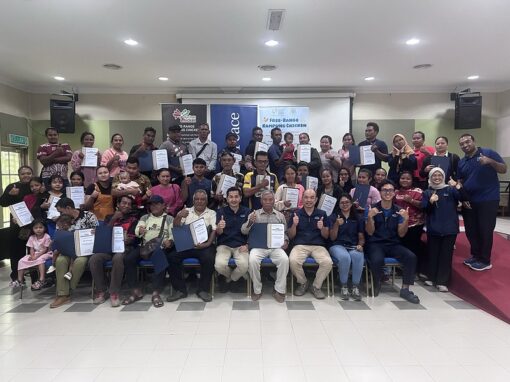
Recently, 32 Orang Asli chicken farmers from Rompin and Bera gathered in Muadzam Shah for a day of appreciation and reflection. Farmers, field officers, and marketing partners came together to reaffirm their shared commitment. The Moringa Chicken initiative was born in response to a crisis. During the COVID-19 pandemic, vulnerabilities in rural food security became starkly visible. Disrupted incomes and fragile livelihoods revealed that access to affordable, nutritious protein could not be assumed. In response, Global Peace Foundation (GPF) Malaysia launched a dignity-based livelihood program rooted in ownership and long-term sustainability. Chicken farming, initially chosen due to community interest and strong market demand, became the foundation.
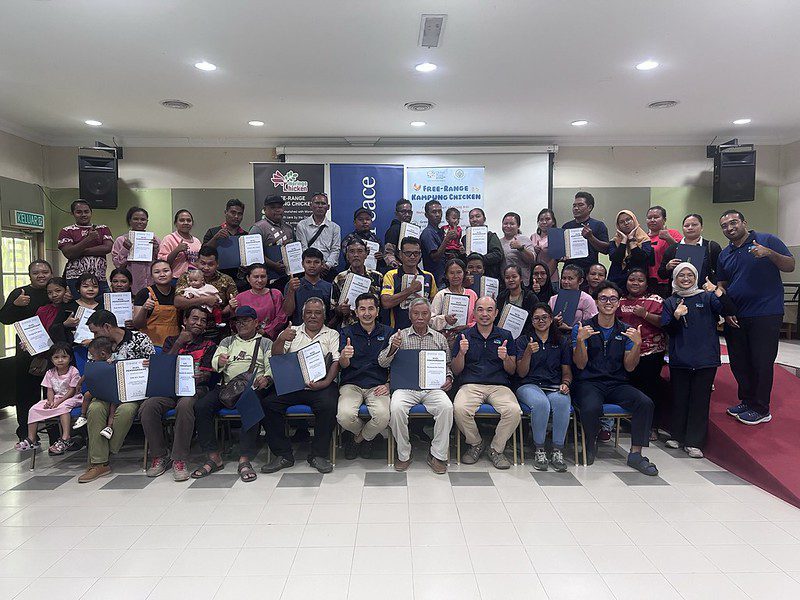
Orang Asli chicken farmers
What began as the delivery of day-old chicks into villages across Rompin and Bera soon unfolded into a process requiring training, adaptation, and continuous learning. Farmers were equipped with coop hygiene, disease prevention, feeding practices (including Moringa supplementation), and free-range management. Some had prior experience, while others were starting from scratch.
“This project has been a deeply valuable experience for me. Before this, I ate chicken, but I had no idea how to actually care for them. I have learned so much through this journey,” shared farmer Nasaruddin.
The learning extended both ways. The GPF team adapted technical guidance to the realities of rural life. Farmers like Azhari improved coop hygiene by turning sawdust bedding daily and sourcing materials independently. Nenek Alan and Batin Mat Noheng established safe free-range areas, quarantining sick birds and treating them with traditional herbs. Over time, the chickens themselves became indicators of progress, appearing calm, responsive, and healthy, reflecting improved environments and attentive care.
The journey has not been without difficulty. Dr. Teh reflected candidly:
“I believe the Moringa Chicken project is one of the most significant and challenging initiatives for the GPF team. It was truly a ‘mission impossible’, an extraordinary mission.”
Operational and financial hurdles tested the program at every stage. Early setbacks, particularly in processing quality, required resilience. As program lead Chung Siu explained, “Failure is not a stopping point, only a signal that improvement is needed.” That mindset continues to shape the initiative’s steady growth.
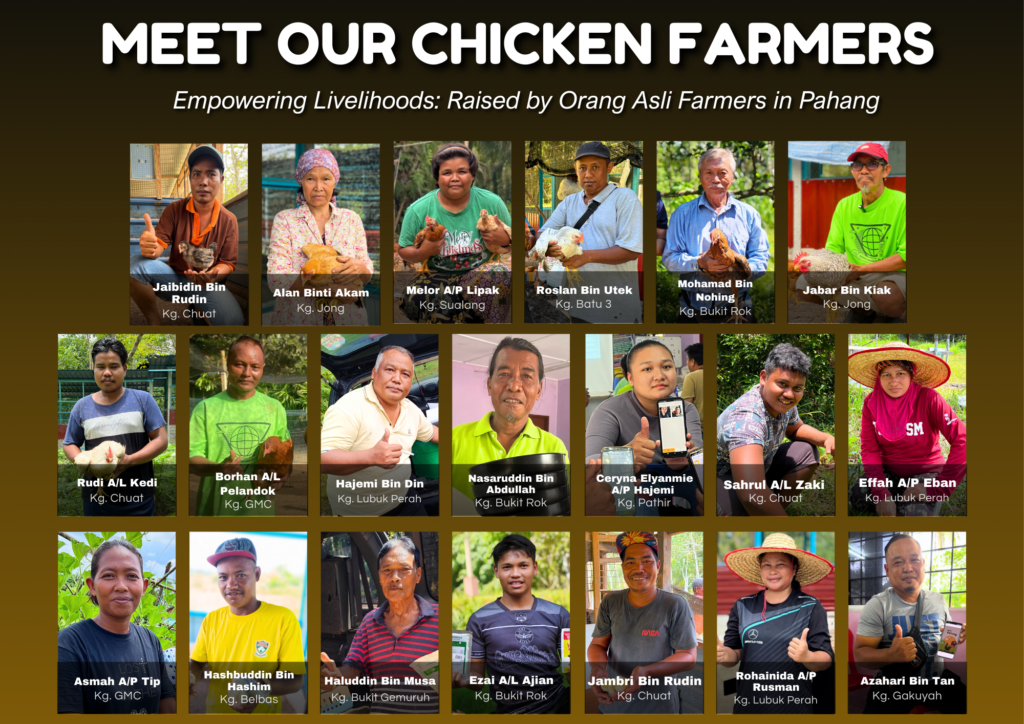
Meet Our Chicken Farmers
Marketing introduced additional complexity. Free-range, antibiotic and hormone-free Moringa Chicken requires longer maturation and commands a higher price than conventional commercial chicken. At times, supply exceeded demand. At other times, demand outpaced capacity, particularly for specific chicken parts. Balancing quality, quantity, and market expectations became an ongoing discipline.
As production matured, the program strengthened its entire value chain. With support from the Malaysia UN SDG Trust Fund, GPF Malaysia scaled up post-harvest handling and market readiness. A dedicated kitchen and packing facility now supports ethical food production with blast freezers, hanging racks, and cutting machines, replacing earlier open area processing. These upgrades have enhanced hygiene standards, ensured consistent quality, and created income opportunities for Orang Asli women who play a vital role in cleaning and packaging.
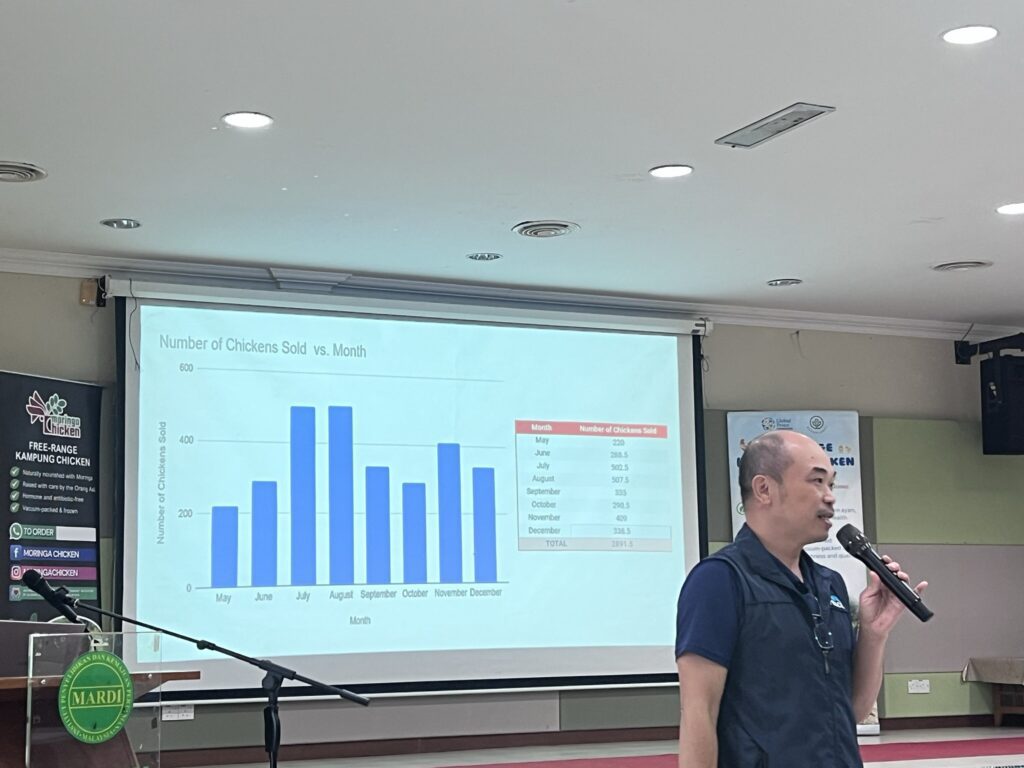
Nicholas Lee, GPF Malaysia head of outreach and volunteering
Today, Moringa Chicken supplies fresh-packed products to households, restaurants, and schools, linking Orang Asli farmers in Pahang to more reliable markets. Farm visits, including those by fine dining chefs, have reinforced confidence in the quality and care behind the product. Customer stories provide quiet yet powerful affirmation. One regular customer shared that her daughter, previously unable to consume chicken due to an allergy, has been able to eat Moringa Chicken without issue, an encouragement that care and quality truly matter.
Community leaders have also affirmed the program’s impact. Batin Mat Noheng, a respected village chief from Bera, expressed appreciation for the consistent engagement and updates from the GPF team. His hope remains that as long as there is market access, farmers will continue producing with commitment. In another instance, the Bera Veterinary team commended the maintenance practices observed in one farmer’s coop, noting that they ranked among the best seen in small-scale chicken farming projects in Malaysia.
Several years into implementation, Moringa Chicken Malaysia remains a living program that continues to learn and adapt. Aspirations extend beyond local markets. There is a long-term vision of entering Singapore, known for its stringent food safety standards, as a benchmark for excellence. Yet the core purpose remains unchanged: to enable families to access healthier, more nutritious chicken while ensuring dignity, stability, and purpose for Orang Asli farmers.
This initiative reflects the broader mission of the Global Peace Foundation’s work in development and service. It represents far more than agricultural output. It is a model of values-driven development in action, where livelihoods are strengthened, confidence is rebuilt, and communities gain the tools to shape their own economic future with dignity. By linking farmers to skills, infrastructure, and reliable markets, the program is helping lay the foundations for long-term resilience that can withstand future shocks.
Learn more about the project: Global Peace Foundation Malaysia.