About
Program
Speakers
The economic implications of Korean unification are one of the most daunting challenges of the unification process, yet among the least discussed. A comprehensive U.S. strategy to support a free and unified Korea must bring special focus to the economic aspects of reunification. Session One of this forum will present an economic analysis and U.S. policy recommendations relating to unification and its impact on the Korean peninsula and in the Northeast Asia region.
Every ROK and U.S. president since the first Korean Vision statement in 2009 has expressed support for unification. In 2023 the ROK/U.S. Summit in April and Camp David Summit in August both expressed support for a free and unified Korea, with Japan’s Prime Minister Fumio Kishida further endorsing the goal of peaceful unification.
It is now time for government officials and citizens in all three countries to follow through with their leaders’ vision and strategically advance the unification process along three lines of effort: (1) a human rights up front approach; (2) an information campaign to inform and educate the Korean people in the north; and (3) the pursuit of a free and unified Korea by governments and civil society.
Ideas and concepts developed during this forum will be consolidated in a draft plan to support a free and unified Korea through creating the conditions for change inside North Korea and by building broad international consensus to support Korean unification.
These policy recommendations can inform both U.S. strategy in support of Korean unification and ROK government policy, which is actively pursuing unification.
12:30PM EDT - Registration (In-Person Only)
1:00PM EDT - Opening
1:30PM EDT - Session One: Economic Considerations: Opportunities from Korean Unification
Concept: Dr. Eberstadt will present his paper: “The Economics of a Korean Unification: Thinking the Unthinkable?” The purpose is to dispel some of the fears of the economic aspects of unification. Panel members will provide their views on economic opportunities arising from a free and unified Korea and seek to answer the question “What are the long-term economic potential for a free and unified Korea?”
3:00PM EDT - Break
3:15PM EDT - Session Two: "Operationalizing Government and Citizen Support for Korean Unification – Challenges – How to Create Conditions for Change in North Korea."
Concept: Although every president has expressed support for Korean unification since 2009 no administration (that we know of) has ever provided implementing guidance to the bureaucracy to develop a strategy to support Korean unification (which must be led by the Korean people while the US must be prepared to play a supporting role). The moderator will provide a brief introduction about the pursuit of a free and unified Korea to introduce the concept for the panel that self-determination of government is a universal human right and that the Korean people have an unalienable right to determine their government. The panel will attempt to broadly answer the question of how to support creating conditions for change that will lead to a free and unified Korea.
4:15PM EDT - Closing Remarks
5:00PM EDT - Adjourn
We have a limited number of 100% and 50% scholarships for youth, young adults, community members and nonprofit organizations. You may elect to apply for a scholarship during the application process, which will be reviewed and awarded by our organizing committee. Scholarships include support for tuition and fees, accommodations in single rooms, meals and snacks, modest give-away supplies and training materials, and some transportation. GPF encourages all applicants to apply. Mini-grants will be awarded to support community service projects developed during the convening. Eligibility is restricted to conference participants and based on evaluation of participant project plans / proposed designs.
1:00 PM EDT – Opening
Emcee: Mr. David Maxwell, Senior Fellow, Global Peace Foundation; Vice President, Center for Asia Pacific Strategy
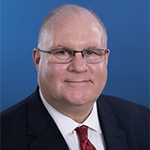 Emcee: Mr. David Maxwell is a retired US Army Special Forces Colonel and has spent more than 30 years in Asia as a practitioner and specializes in Northeast Asian Security Affairs and irregular, unconventional, and political warfare. He is the Vice President of the Center for Asia Pacific Strategy and a Senior Fellow at the Global Peace Foundation where he focuses on a free and unified Korea. He is a member of the board of directors of the Committee for Human Rights In North Korea and is the editor of the Small Wars Journal.
Mr. James P. Flynn, International President, Global Peace Foundation
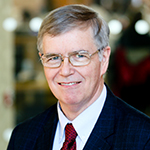 Mr. James P. Flynn is International President of the Global Peace Foundation. As the executive officer of a large, global network of chapters, he provides leadership and management for Global Peace Foundation’s diverse portfolio of peacebuilding and international development work. His robust leadership is reflected in the planning and convening of Global Peace Leadership Conferences on four continents and in the preeminent Global Peace Convention, as well as in the organization’s branding, educational content, and operational management. Mr. Flynn has worked in the nonprofit sector for more than thirty years, and served as an educator, international conflict mediator, interfaith facilitator, and grassroots leader of family strengthening and youth violence prevention programs.
Hon. Congressman Rob Wittman (R-VA), Vice Chairman, Armed Services Committee and Chairman of the Tactical Air and Land Forces Subcommittee
 Congressman Rob Wittman has served the First Congressional District of Virginia since 2007. Rob has been focused on strengthening the military and supporting veterans, promoting economic development, increasing access to high-speed internet, and promoting workforce development. In the U.S. Congress, Rob serves as Vice Chairman of the House Armed Services Committee and Chairman of the Tactical Air and Land Forces Subcommittee. In addition, as Co-Chair of the Congressional Shipbuilding Caucus, he is a staunch advocate for a robust Naval fleet and a healthy domestic shipbuilding industry. He also currently serves on the U.S. Naval Academy’s Board of Visitors, as Chairman of the Readiness Subcommittee and as Chairman of the U.S. Naval Academy’s Board of Visitors. As a member of the House Committee on Natural Resources, Rob brings his professional expertise in water quality, fisheries, and other natural resource issues. He serves as co-chair of the Chesapeake Bay Watershed Caucus and as a Co-Chair of the House Rural Broadband Caucus. Dr. Wittman holds a Ph.D. in Public Policy and Administration.
1:30 PM EDT – Session One: “Economic Considerations: Opportunities from Korean Unification.”
Moderator: Hee Eun Kim, President and CEO, Center for Asia Pacific Strategy (confirmed) Panel Members
 Moderator: Hee-Eun Kim is the Founder, President, and CEO of the Center for Asia Pacific Strategy, a Washington DC-based international security think tank that provides policy recommendations about present and future threats to security and stability across the Asia Pacific region. Her mission is to bring awareness to leaders and the general public about real-world defense and security issues pertaining to Asia Pacific nations.
Mrs. Kim received her bachelor’s degree in political science and her master’s degree in international relations (Foreign Policy and National Security) from SungKyunKwan University in Seoul, Republic of Korea.
From 2007 – 2008 Mrs. Kim worked at the Gyeonggi Research Institute, a think tank affiliated with Korean Government research on the US-ROK Alliance and US Forces Korea. While at GRI she led the Kaesung Industrial Complex outreach program.
From 2009 – 2011 Mrs. Kim served as the chief manager for an exchange program between the United States and ROK at the Ministry of Foreign Affairs and the Ministry of Education, where she led the pilot program to include North Korean defectors students in the exchange program.
From 2011 – 2012, she served on the staff of the Senior Secretary of Foreign Policy and National Security within Cheonghwadae, the Office of the President. She was responsible for writing the monthly internal Think Tank Report and led the outreach program for the Senior Secretary of National Security.
At the end of the Presidential administrative term in 2012, Mrs. Kim joined the staff of United Nations Command, Combined Forces Command, and United States Forces Korea located in Seoul. She initially started her position as International Relations Officer at the Multi-national Logistics Division and moved her position as the Chief of United Nations Command Logistics Branch.
In 2016 Mrs. Kim was appointed as Deputy Director of Political-Military Engagement on the Commander’s Strategic Initiatives Group for the US four-star Commander of United Nations Command, Combined Forces Command, and United States Forces Korea. She supported Commander and the leadership group as a Pol-Mil Advisor and plan and execute Key Leaders Engagements.
In 2020, she established the Center for Asia Pacific Strategy in Washington DC as a non-governmental and multinational think tank. Recently, she also joined on the Advisory Board for the Economic Conflict & Competition Research Group at King’s College London.
Dr. Nicholas Eberstadt, Henry Wendt Chair in Political Economy at the American Enterprise Institute (AEI)
 Dr. Nicholas Eberstadt is Henry Wendt Chair in Political Economy at the American Enterprise Institute and is Senior Adviser to the National Bureau of Asian Research. He is also a founding member of the US Committee for Human Rights in North Korea and a member of the advisory council for the Korea Economic Institute. His many books on Korean affairs include The Population of North Korea and The North Korean Economy Between Crisis and Catastrophe. His AB, MPA and Ph.D. are from Harvard and his M. Sc is from the LSE.
Dr. Kent Hughes, Public Policy Fellow and Former Director, Program on America and the Global Economy, Woodrow Wilson Center
 Dr. Kent H. Hughes is currently a Public Policy Fellow at the Woodrow Wilson International Center for Scholars. Earlier he had directed the America in the Global Economy program at the Center. Previously, Dr. Hughes served as Associate Deputy Secretary of Commerce, President of the Council on Competitiveness, and in several senior positions on Capitol Hill. He was an International Legal Center Fellow and a Latin American Teaching Fellow in Brazil 1967 to 1969.
Dr. Hughes is the author of Three books: International Decision Making in Congress, Building the Next American Century: The Past and Future of U.S. Economic Competitiveness, and The Middle Kingdom at Center Stage: China’s Past and Future Growth Strategy. He is currently working on an assessment of the innovation eco-systems in the Persian Gulf. Dr. Hughes has a B.A. from Yale, a LLB from Harvard Law School, and a PhD in economics from Washington University in St. Louis.
Mr. John Dickson, Senior Advisor, Global Peace Foundation
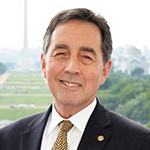 Mr. John Dickson is a Senior Advisor on Economy and Government Relations at the Global Peace Foundation and president of World Trade Partnership. He has founded World Trade Centers in Okinawa and Afghanistan, and advised on others. Mr. Dickson was the founding chairman of the World Trade Centers Association’s Committee on Peace and Stability through Trade, organizing initiatives highlighting the contribution of the private sector to peace and stability. John serves on the steering committee of the UN’s Alliance of NGOs for South South Cooperation and serves on the boards of several significant civil society organizations including the Latin American Presidential Mission. Mr. Dickson is a co-founder and chairman of the Global Young Leaders Academy.
Prof. William Brown, Principal, Northeast Asia Economics and Intelligence, Advisory LLC; Professor, University of Maryland
 Prof. William Brown is principal of his consulting firm, Northeast Asia Economics and Intelligence Advisory LLC.(NAEIA.com). He retired from a federal government career in CIA, Commerce Department, the National Intelligence Council, and ODNI’s North Korea and East Asia Mission Managers Offices, during which he focused much of his attention on the economies of China and Korea. Bill grew up of American parents in Kwangju, Korea in the 1950s and 60s and worked as senior analyst in the US Embassy in Seoul in the mid-1980s and in the US Consulate General in Hong Kong in the early 1980s. He has a B.A. in International Studies from Rhodes College, Memphis, TN and a M.A. in Economics and Chinese studies from Washington University, in St. Louis, with most courses completed for the PhD. He has taught economics of China and North Korea as an adjunct professor for twenty years in George Mason, George Washington, and Georgetown Universities (the “3 Georges”) and currently teaches a course on Contemporary China for University of Maryland Global Campus. He is Chair of the North Korea Economic Forum at George Washington University and sits on the Board of Directors of the Korea Economic Institute of America. He continues to do consulting work for the US government and writes and speaks regularly for Korean government think tanks and for Voice of America. He lives with his wife, Helen, and daughter in Oak Hill, Virginia. His three sons live in Boulder, Co., Atlanta, GA, and Cary, NC.
Dr. George Hutchinson, Editor, International Journal of Korean Studies; Board Director, International Council on Korean Studies
 Dr. George Hutchinson is the Editor of the International Journal of Korean Studies as well as a board member of the International Council on Korean Studies. Additionally, Dr. Hutchinson is a Senior Regional Planner supporting and advising U.S. Air Force basing issues in the Republic of Korea. Previously, he specialized in supporting wargaming and energy policy as a consultant at the Pentagon. Dr. Hutchinson served as both a commissioned and noncommissioned officer in the U.S. Air Force in roles as a Logistics Readiness Officer, Northeast Asia Foreign Area Officer, and Korean linguist. His writings have been published in the International Journal of Korean Studies, U.S. Naval Institute Proceedings, the Air Force Journal of Logistics, and the Marine Corps University Press as well as in reports by the Committee for Human Rights in North Korea and the Korea Economic Institute of America. Dr. Hutchinson holds a Ph.D. from George Mason University’s Schar School of Policy and Government and a master’s in logistics management from the U.S. Air Force Institute of Technology.
3:15 PM Eastern – Session Two: “Operationalizing Government and Citizen Support for Korean Unification – Challenges – How to Create Conditions for Change in North Korea.”
Moderator: Mr. David Maxwell, Senior Fellow, Global Peace Foundation; Vice President, Center for Asia Pacific Strategy
Moderator: Mr. David Maxwell is a retired US Army Special Forces Colonel and has spent more than 30 years in Asia as a practitioner and specializes in Northeast Asian Security Affairs and irregular, unconventional, and political warfare. He is the Vice President of the Center for Asia Pacific Strategy and a Senior Fellow at the Global Peace Foundation where he focuses on a free and unified Korea. He is a member of the board of directors of the Committee for Human Rights In North Korea and is the editor of the Small Wars Journal.
Ambassador Robert Joseph, Senior Scholar, National Institute for Public Policy; Former Under Secretary of State for Arms Control and International Security
 Ambassador Robert Joseph is Senior Scholar at the National Institute for Public Policy. In the George W. Bush administration, he was Under Secretary of State for Arms Control and International Security and later U.S. Special Envoy for Nuclear Nonproliferation. Prior to his positions at the State Department, Ambassador Joseph served in the National Security Council as Special Assistant to the President for Proliferation Strategy, Counterproliferation and Homeland Defense. Prior to 2001, Dr. Joseph was Professor of National Security Studies and Founder of the Center for Counterproliferation Research at the National Defense University. He served as U.S. Commissioner to the Standing Consultative Commission and as head of the U.S. delegation to the U.S.-Russian Commission on Nuclear Testing. Dr. Joseph has a BA from Saint Louis University, MA from the University of Chicago, and Ph.D. from Columbia University. He taught at the Fletcher School of Law and Diplomacy, Tulane University, and Carleton College.
Mr. Greg Scarlatoiu, Executive Director of the Committee for Human Rights in North Korea (HRNK)
 Mr. Greg Scarlatoiu is the Executive Director of the Committee for Human Rights in North Korea. For ten years, he has been a visiting professor at Hankuk University of Foreign Studies and Yonsei University. Scarlatoiu is vice president of the International Council on Korean Studies. He has authored and broadcast on Radio Free Asia for the past 20 years. Scarlatoiu holds a Master of Arts in Law and Diplomacy from the Fletcher School, Tufts University, and a Master of Arts and Bachelor of Arts from Seoul National University’s Department of International Relations. He completed the MIT XXI Seminar for U.S. national security leaders in 2016-2017. Scarlatoiu was awarded the title ‘Citizen of Honor, City of Seoul,’ in January 1999. Born and raised in communist Romania, he is a naturalized U.S. citizen. Scarlatoiu is fluent in Korean, French and Romanian.
Commander Fredrick “Skip” Vincenzo, USN (ret.), Nonresident Senior Fellow, Center for Naval Analyses and the Indo-Pacific Security Initiative at the Atlantic Council’s Scowcroft Center for Strategy and Security
 Commander Fredrick “Skip” Vincenzo, USN (ret.), is a nonresident senior fellow with both the Center for Naval Analyses and the Indo-Pacific Security Initiative at the Atlantic Council’s Scowcroft Center for Strategy and Security. He graduated from the U.S. Naval Academy in May 1993 and completed Basic Underwater Demolition/SEAL training. With a Naval career spanning twenty-eight years—more than two thirds of that spent deployed on operations or permanently assigned overseas—he has extensive experience in the full spectrum of Special Operations, Korean security, information operations, counter terror, NATO, and countering hybrid threats. After more than fifteen years of assignments focused on Korean security issues, Vincenzo was US Special Operations Command’s de facto bench of Korea expertise prior to his retirement in 2021.
His groundbreaking work on information-based sub-national deterrence is emerging as one of the most promising options for dealing with aggression coercion of authoritarians like Russia, China, and North Korea. His professional writing has appeared in numerous online security publications, and his largest collaborative piece, “An Information Based Strategy to Reduce North Korea’s Increasing Threat,” was cited by both the Wall Street Journal and Foreign Affairs Magazine as one of the few underexplored options for dealing with an increasingly dangerous North Korea.
Dr. Sung Yoon Lee, Fellow, Wilson Center
 Dr. Sung-Yoon Lee is a fellow at the Woodrow Wilson International Center for Scholars. Previously, he taught Korean history and politics at the Fletcher School of Law and Diplomacy at Tufts University. He has also served as a Faculty Associate at the Program on U.S.-Japan Relations in the Weatherhead Center for International Affairs at Harvard University. He is the author of The Sister: The Extraordinary Story of Kim Yo Jong, North Korea’s Most Powerful Woman (London: MacMillan, 2023).
Dr. Lee’s essays on the international politics of the Korean Peninsula and Northeast Asia have been published multiple times in The New York Times, The Wall Street Journal, The Washington Post, The Los Angeles Times, Foreign Affairs, Foreign Policy, Christian Science Monitor, CNN, and other outlets. He is a regular contributor to The Hill.
Dr. Lee has testified as an expert witness at the U.S. House of Representatives Committee on Foreign Affairs and Subcommittee on Asia Hearings on North Korea policy and has advised senior officials and elected leaders, including the President of the United States. He has also testified as an expert witness on behalf of the plaintiffs in the U.S. District Court for the District of Columbia in the Warmbiers v. DPRK case, in which the plaintiffs were awarded $501 million, and on behalf of the defendant in the U.S. District Court for the Central District of California (LA) in the USA v. Christopher P. Ahn extradition hearing.
Dr. Lee has a B.A. in American and British literature from the New College of Florida, and obtained his M.A. and Ph.D. from the Fletcher School of Law and Diplomacy at Tufts University.