
The lingering challenge of COVID-19 has forced local and international governments and institutions to scramble for solutions to the global health pandemic and its accompanying humanitarian crisis. In various communities in Nigeria, and across Africa, the economic, social, emotional, and spiritual anxiety caused by the virus is reaching a breaking point.
The Nigerian economy, which has struggled for some time, took a real nose dive at the beginning of the pandemic, and the negative consequences are apparent. A staggering economy in a country with a high unemployment rate, poor health infrastructure, social unrest, and depressing poverty created a challenging situation for the majority of Nigerian citizens and communities during the pandemic.
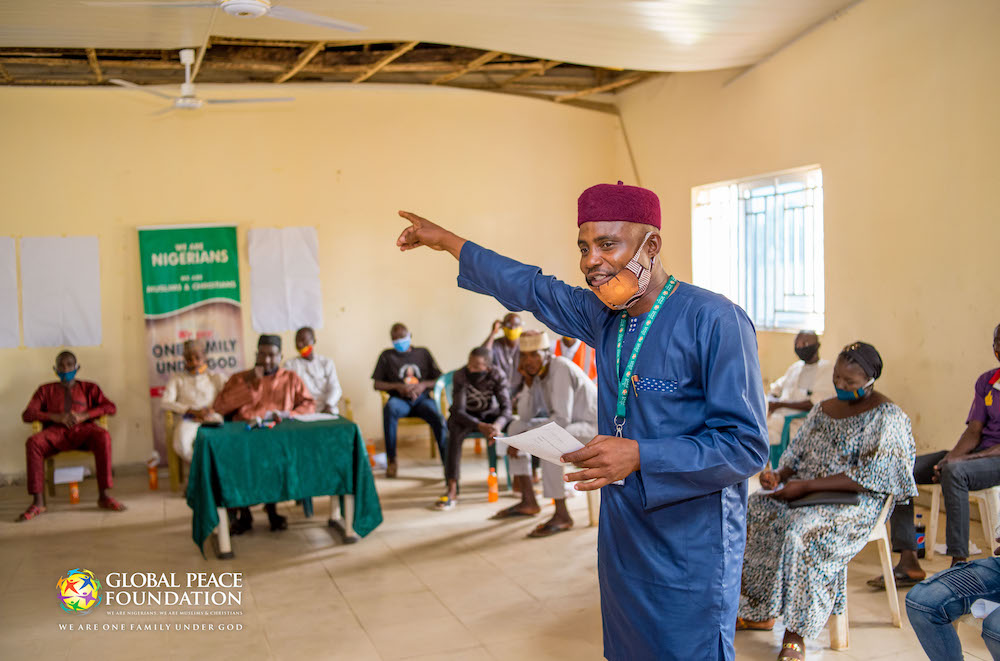
Peacebuilding efforts through dialogue with diverse ethnoreligious people
Since solidarity plays a significant role in Nigerian society’s social-cultural life with remittance as part of the mainstay of support and development, the response of the diaspora became imperative. In line with the basic principles of the Global Peace Foundation and its effort to advance the goals of peacebuilding and development in Nigeria, a virtual diaspora forum was organized by the GPF. The aim was to elicit the contributions of various diaspora groups to alleviate the sufferings of communities during these unprecedented times. The responses and action steps shared by the different Nigerian diaspora groups representing diverse ethnic extractions of the country gave credence to community and values-based collaboration championed by the GPF.
The Panelists highlighted collective actions to support communities and alleviate the suffering caused by the virus’s eruption. The responses include but not limited to the provision of PPE to hospitals and clinics, provision of food assistance, seminars on basic hygiene, community leadership, and training, as well as educational programs for children during the lockdown. Such joint community efforts spread across the country brought reassurance to those anguished by economic, social, and emotional constraints of the virus.
 The Itsekiri Diaspora Association provided a network of online programs and activities for students in their various communities to continue their academic life during the pandemic. This was set up with the collaboration of the community leaders in the target areas. The program has helped many of the students to be on track with their curriculum and reduced the anxiety of parents.
 The Ezinne Association of Old Orlu Province provided various food items to multiple towns in their area and assisted women with financial assistance for their business.
 Mbaise USA, the umbrella organization for the Mbaise nation in the United States, visited every town in Mbaise Imo through the development unions of every community. It provided food items, face masks, and basic hygiene training for their communities. The actions of the express the culture and ethics of encounter, which asserts the innate dignity of the person, promotes love of the neighbor, heals divisions, and promotes social cohesion through respect and responsibility (Mescher, 2020).
Among other things, the forum offered diaspora groups to reflect on strengthening coalition among different Nigerian diaspora organizations in the United States. I submit that the diaspora organizations have the tools to collaborate with the civil societies in Nigeria to advance social change at various levels. They are leveraging the availability of diaspora professionals in different sectors to assist communities in the homeland. The importance of grassroots leadership was highlighted during the forum, which suggests that collaboration with grassroots leadership with moral authority is a prerequisite for peacebuilding and sustainable development in Nigeria using the bottom up approach. Nigeria faces the challenge of identity conflict at various levels. What if the diaspora organizations introduce cross-community outreach and development programs across ethnic and regional territories?