North Korea’s rejection of reunification has changed a framework that shaped the peninsula for decades and raised new questions about who will define Korea’s future.
In an interview with UPI, Global Peace Foundation Chairman Hyun Jin Preston Moon reflects on this shift and the opportunity for South Korea to put forward a positive vision for a free and unified Korea.
The following is an excerpt from the article:
North Korean leader Kim Jong Un’s abandonment of reunification amounts to an acknowledgment that Pyongyang can no longer win its decades-long competition with South Korea over the future of the Korean Peninsula, Hyun Jin Preston Moon, founder and chairman of the Global Peace Foundation, said Friday.
Kim declared at a ruling party plenum in late December 2023 that reunification could never be achieved and recast relations between the two Koreas as those of two hostile states. At a Supreme People’s Assembly session on Jan. 15, 2024, he said unification was no longer possible and called for the constitution to be rewritten to designate South Korea as the North’s principal enemy and to remove references to reunification.
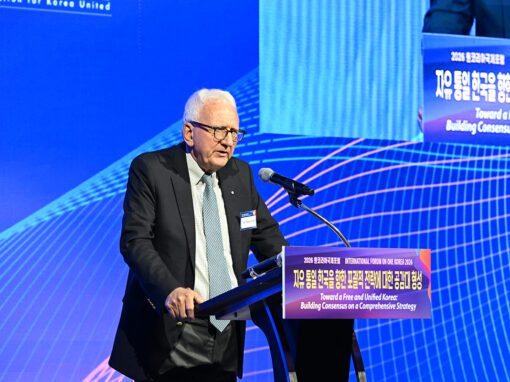
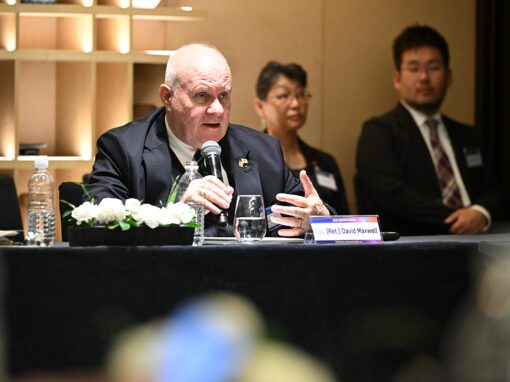
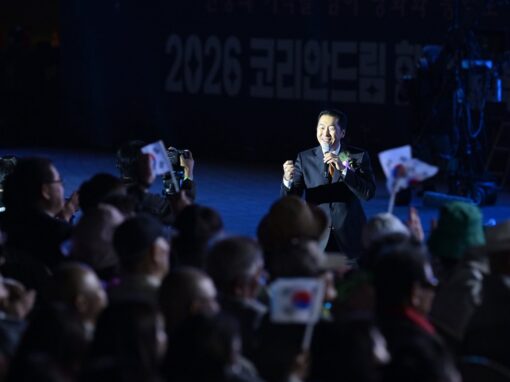
“From both a historical and geopolitical perspective, North Korea’s abandonment of its traditional unification policy is enormously consequential,” Moon said in an interview with UPI following the 2026 One Korea International Forum in Seoul.
Both Koreas were established with reunification as a national objective, Moon said, with each seeking to demonstrate the superiority of its own system and eventually unify the peninsula on its terms.
– Hyojoon Jeon, UPI