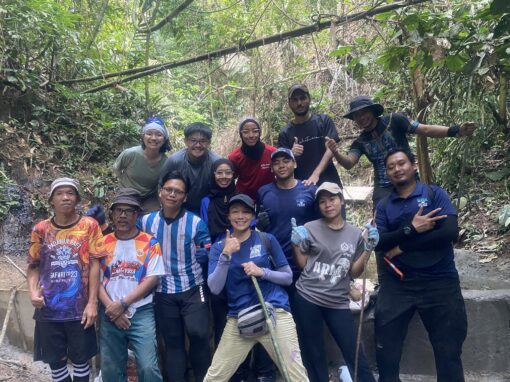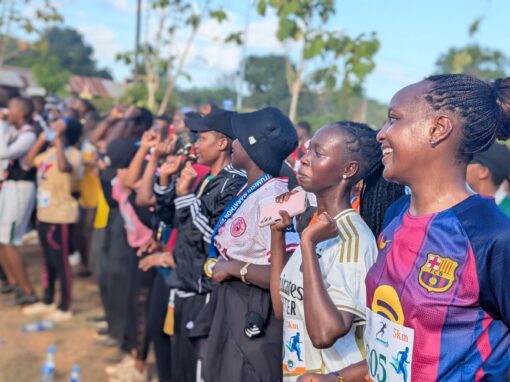
Would you spend a week deep in the forest without electricity, cell service, and soft beds?
That’s exactly what 10 Global Peace Volunteers (GPV) signed up for—leaving behind the convenience of modern life to spend seven days in the hills of Kuala Lipis, building a gravity-fed water system for an Orang Asli village in Ulu Semul.
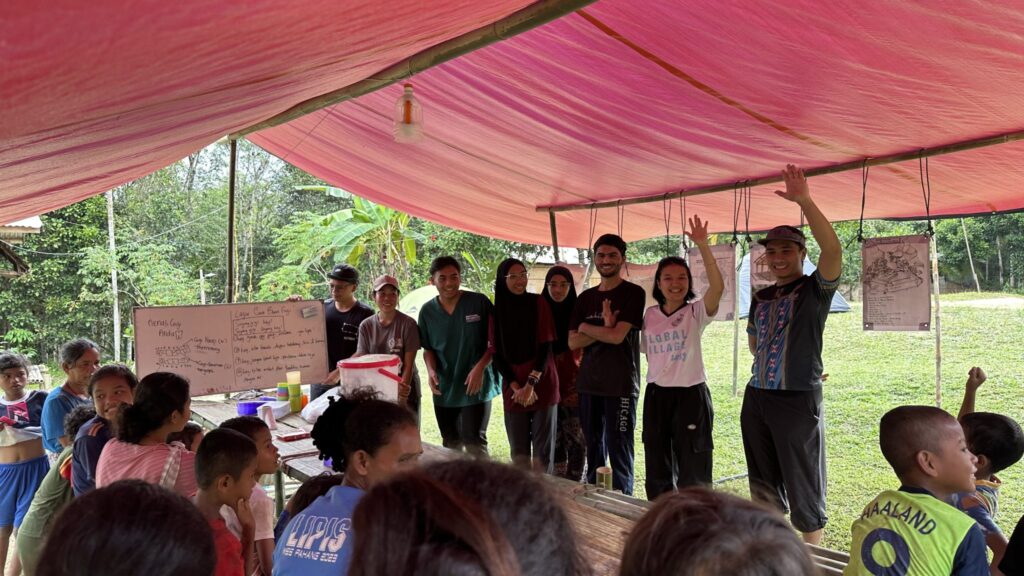
Global Peace Volunteers in Ulu Semul
Organized by Global Peace Foundation Malaysia with support from Yayasan Hasanah, this seven-day project went beyond the task of building a water system. It became an experience shaped by human connection and where physical labour gave way to shared purpose.
In fact, in the quiet hours of work and rest, many discovered that resilience grows stronger in the presence of community, and that’s what we are happy to share with everyone today.
Global Peace Volunteers in Ulu Semul
One village, One Goal
Set among the dense green landscape of Kuala Lipis, Pahang, the village had long depended on an inconsistent and aging water system. Leaks, broken pipes, an old system, and unsafe routes meant some villagers still collected water from rivers or rain, which meant the need for a safer, more reliable water source had become urgent.
That’s where the GPV team came in.
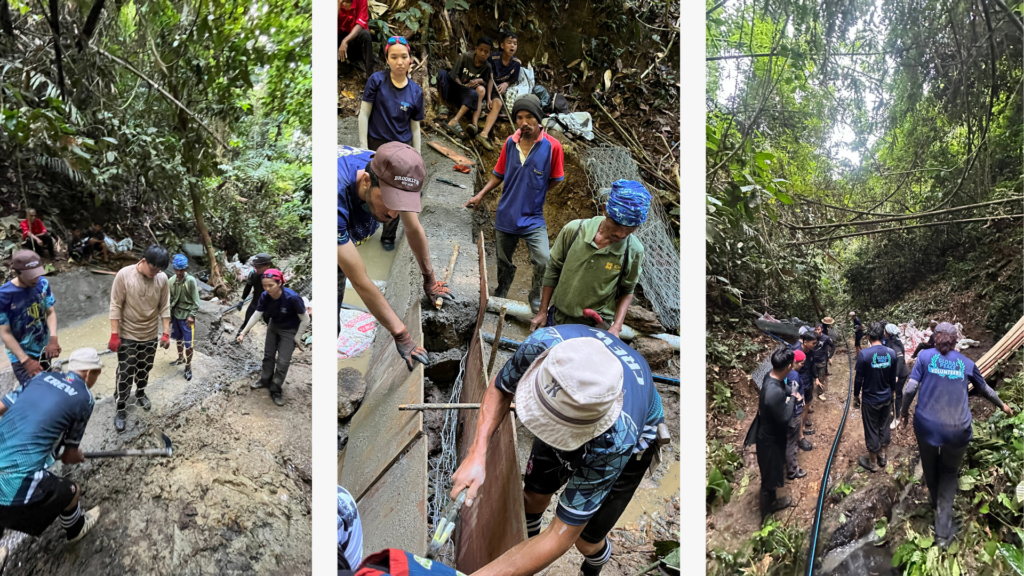
Under the guidance of Sylvia and Jo, our on-site partners and technical lead, along with Jaclyn, a returning volunteer turned facilitator, the group was tasked with building the dam as well as repairing and extending the water system, a project that required both physical endurance and mental resilience. The villagers worked alongside the volunteers from the very beginning, helping to carry materials and guide the group through the terrain they knew best. By the end of the week, the sense of accomplishment was not just in seeing water flow again but in the shared effort that made it happen.
“Living off-grid without the internet made me reflect on the difference between what I think I need and what I truly need. It hit me that the things I often overlook or complain about back home are the very things these villagers long for and would cherish deeply. This experience expanded my view of the world. I realized how much I didn’t know until I stepped beyond my comfort zone.” – Pheona
Read Pheona’s article here (Clean Water Seems Ordinary for Many, but Scarce for Others)
Global Peace Volunteers in Ulu Semul
From strangers to a team
The volunteers hailed from many different states. Among them, we had Safeer, an international student and our own GPV alumni, and Batrisyia, returning for her fourth volunteering program. Some were students, others were young professionals. Many had never been to an Orang Asli village or built a water system before, yet together they quickly grew into an amazing, capable team.
“What I enjoyed most was collaborating with the villagers to build the water system. I learned so much about laying pipes, constructing the dam, and how vital teamwork really is. It also gave me a deeper appreciation for rural life and how much difference a little help can make.” – Norley
Days started early, with the buzz of the forest and the clanking of tools. Volunteers hiked to the water source, cut through undergrowth, cleared paths, and laid out pipelines.
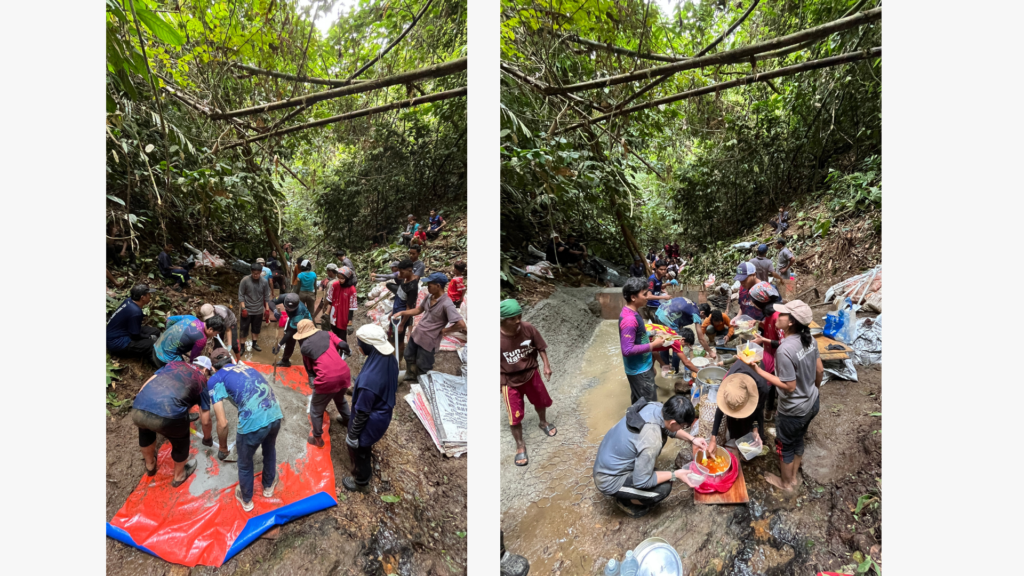
The first major task took place at the dam site. The team transported bags of soil, sand, and cement to the remote location. The work was repetitive and physical, of course, but it also brought so much experience.
Later, the focus shifted to the piping system. The water pipes were thick and heavy, coiled in massive rolls that required physical strength for people to move. It was the kind of teamwork that felt almost choreographed, like pushing a giant wheel through the forest. Still, the task never felt overwhelming. Everyone helped: men, women, even children.
There was no division of roles, only a shared sense of responsibility. The atmosphere was communal. If someone grew tired, others stepped in. Under the sun, with little shade, the work demanded both focus and stamina.
Despite the conditions, the spirit of the team never wavered. What began as a group of strangers had, by the end of the week, become something much closer, a team of volunteers shaped by shared purpose and mutual respect!
Something unforgettable somehow always comes through food. It’s not an everyday occurrence where we get the chance to eat in a simple setting at the same place we camp out for work construction. What made it even more special was the touch of tradition that gave the moment its meaning, lunch served in wrapped leaves, with rice, sambal, bamboo shoots, and hot broth with meat, all lovingly prepared together.
Global Peace Volunteers in Ulu Semul
Not without challenges
The journey wasn’t without its trials. Muddy and challenging trails, sore muscles, and a lack of electricity tested everyone’s endurance. With limited cell service, one often had to stand at one precise spot just to stay connected; one step away and the reception would fade. But every challenge became a story, and every obstacle became part of the shared experience.
“One of the most powerful lessons came from water itself. In the city, we take it for granted, but here, it’s survival. Building the dam from scratch helped me understand the effort and struggle behind every drop of clean water.” – Luqman
Global Peace Volunteers in Ulu Semul
A farewell and a beginning
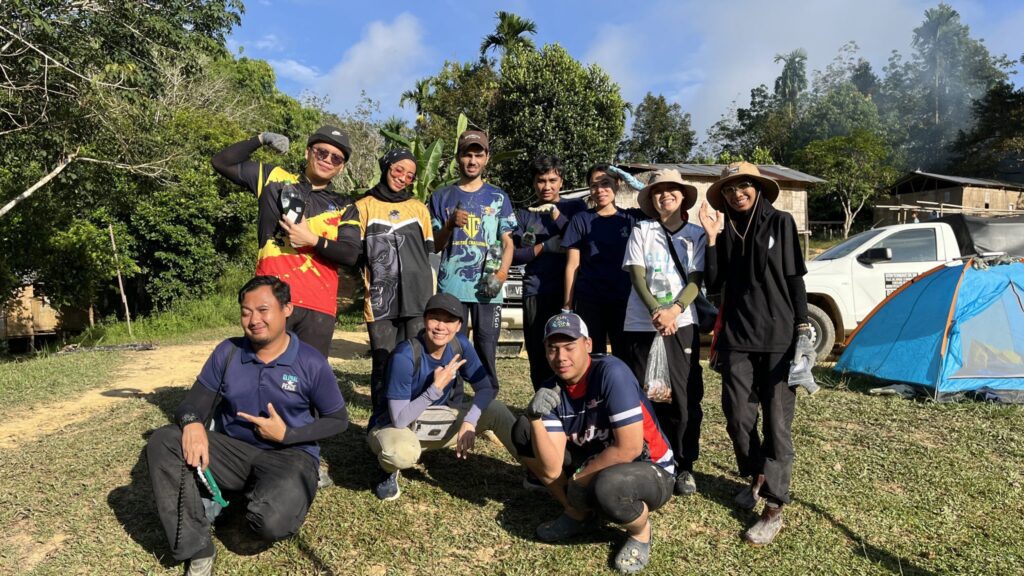
As the final water pipe was fitted and the last tank secured, the team gathered for a farewell dinner, a simple, joyful celebration of hard work, along with community in celebrating one shared purpose.
“Ulu Semul taught us that kindness doesn’t need words, it lives in quiet gestures and open hearts. When the water finally flowed, so did hope. This village is no longer just a place we visited, but a home we’ll carry with us always.” – Jamuel
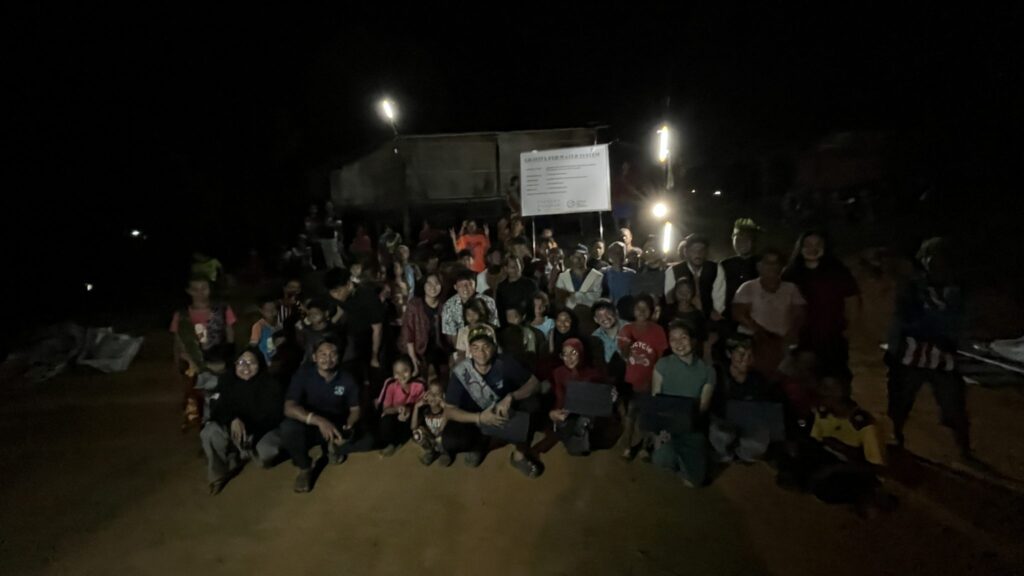
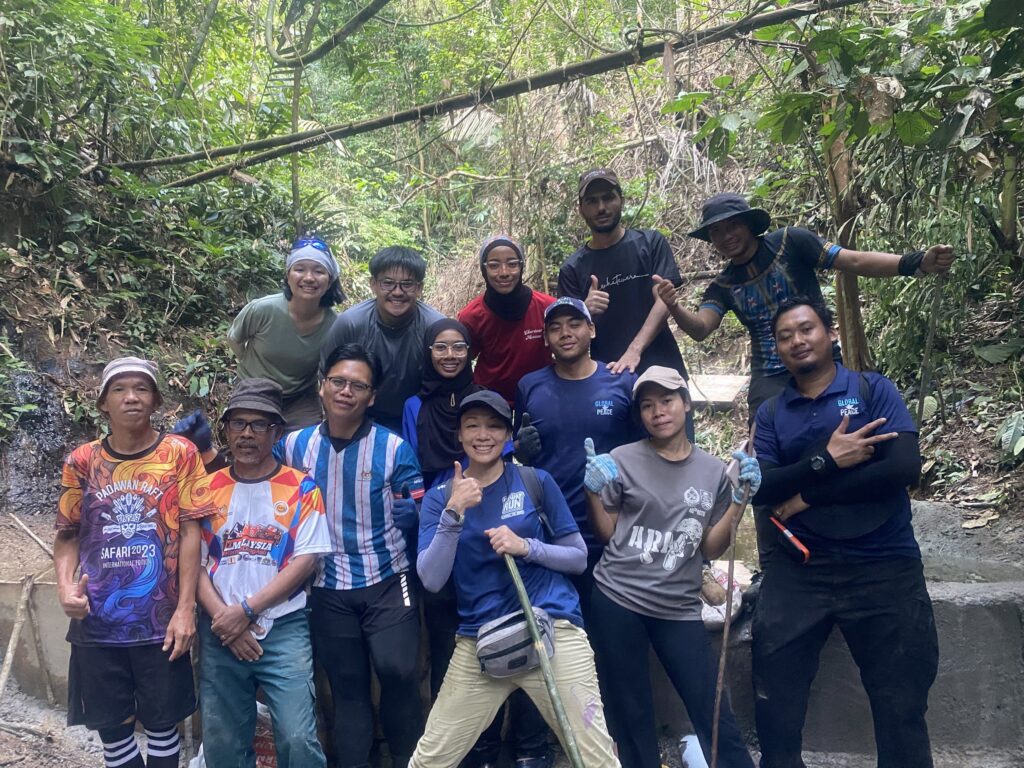
Global Peace Volunteers at the end of the 7-day gravity-fed water system project
Beyond the project, WHAT’S NEXT?
The GPV program is a JOURNEY. In fact, it’s a leap into the community and into services. Often time we may think we are there to “GIVE” yet without fail, we always “RECEIVE”. Be it friendship, perspectives, challenges, or gratitude – it all came full circle in the spirit of making a difference.
It reminds us that making a difference doesn’t always happen in big moments; sometimes, it happens when you carry a pipe up a slippery hill and feel the weight of purpose in your hands and share a meal with those who welcomed you as family.
At the end of the day, you don’t need much to make a difference, just the courage to show up and give your best.
Special acknowledgement to Yayasan Hasanah for supporting this initiative