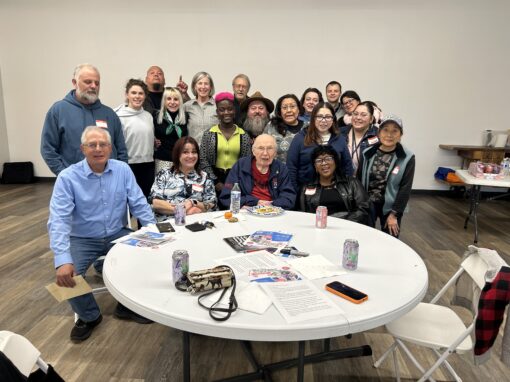
The Global Peace Foundation (GPF) partnered with the University of Baltimore (UBalt) to host a Conflict Transformation & Community Mediation Workshop on Saturday, April 18, 2026. Conducted on the university’s campus, the in-person workshop is part of the GPF-sponsored Baltimore Cross-Community Reconciliation Project’s (BCCRP) Community Peacebuilding Committee, designed to build ongoing engagement and strengthen peacebuilding skills and tools for adults ages 18 and older.
Baissou Sissoko, an adjunct professor at UBalt, led the informative, interactive session, which was attended by a group of diverse community members. An experienced conflict resolution practitioner trained in several mediation models and restorative justice processes, he opened the conference by telling attendees that “conflict and peace are two sides of the same coin.”
Drawing on GPF’s vision of “One Human Family” and its values-based approach to peacebuilding, attendees identified a value they brought with them to the workshop. Responses included connection, understanding, respect, compassion, dignity, curiosity, honesty, respect with expectations, optimism, idealism, and faith. When asked what comes to mind when you hear the word conflict, the immediate responses were negative—argument, scary, disagreement, miscommunication, anger, and power struggle. Only the last person to respond mentioned a positive association—opportunity.
Building on the discussion on values, Prof. Sissoko emphasized that everyone has the innate ability to manage conflict and that the key is to acknowledge this. He stated, “Today is a matter of empowerment; nothing you learn today you don’t already know.”
Participants were introduced to several mediation frameworks, with particular emphasis on Transformative Mediation, which views conflict as a breakdown in human interaction and focuses on empowerment, recognition, and our inherent ability for responsiveness. The session also underscored the value of uncovering the underlying interests beneath a person’s stated position, and the importance of asking “Why do you want what you want?”
To close the session, Prof. Sissoko offered a brief review of the formal mediation process. He emphasized, however, that while formal mediation follows a structured approach, the tools and skills explored in the workshop readily apply to everyday interactions with individuals, families, and the community.
Participants responded enthusiastically to Prof. Sissoko and the material he presented, remaining fully engaged throughout the workshop. A post-session survey reflected a 100 percent positive experience across all attendees. When asked about the most valuable part of the workshop, one participant noted, “That conflict is not necessarily negative. It helps to grow, change perspective, bring compassion and kindness.”
The clearest takeaway was unanimous: people want more. More time, more practice, and more opportunities to deepen their mediation skills.
Peacebuilding is everyone’s responsibility, and this workshop marks the beginning of a broader effort to engage residents across Baltimore and the surrounding area. The Conflict Transformation & Community Mediation Workshop is the first in a series of trainings that the BCCRP’s Community and Peacebuilding Committee will offer throughout the year. These sessions aim to build a sustainable foundation for community learning where participants gain peacebuilding tools and skills and discover new ways to manage conflict positively and confidently.